
Hawthorn scab
Venturia crataegi
The first symptoms of hawthorn scab appear in early spring on young leaves, petioles, and flower buds. They manifest as small brown or olive-black spots that gradually enlarge over the leaf surface.
What the section contains
Hawthorn scab
As the disease progresses, the spots darken and develop a velvety texture, which indicates active spore production by the fungus. Infected leaves often curl, deform, and wither prematurely, significantly impacting the plant's appearance.
In high humidity, the infection can spread to young shoots, causing them to twist and stop growing. Severe infestations lead to significant defoliation, weakening the shrub before the dormant winter season.
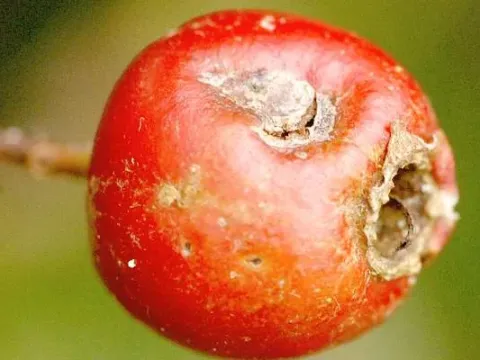
Fruit may also be affected, showing depressed dark spots that eventually crack or lead to fruit decay. These fruits lose their aesthetic and nutritional value for local wildlife.
By the end of the growing season, the fungus forms fruiting bodies on fallen leaves, which serve as the primary source of infection for the following spring.
The causative agent of the disease is the ascomycete fungus Venturia crataegi, which is a specialized parasite primarily affecting plants of the genus Crataegus.
The fungus has a complex life cycle involving both sexual and asexual stages, allowing it to propagate effectively throughout the growing season.
In spring, ascospores are released and carried by wind and rain to young plant tissues, initiating primary infection. Once established, the fungus produces conidia, enabling secondary infection cycles.
The pathogen overwinters as mycelium and pseudothecia within fallen leaves, ensuring its survival even in harsh environmental conditions.
The biological specialization of Venturia crataegi makes it particularly adapted to the development cycle of hawthorn, timing its growth with the host's vulnerable leaf emergence phase.
Prolonged leaf wetness is the most critical factor for Venturia crataegi spore germination. Rain, fog, or dew that keeps leaves damp for several hours creates ideal conditions for the fungus.
Optimal temperatures for infection development range from +15°C to +20°C. Under these conditions, the incubation period of the fungus is minimized, accelerating the disease spread.
Poor air circulation within the canopy, often caused by overly dense planting or lack of pruning, prevents foliage from drying out and promotes fungal colonization.
Low-lying areas or shaded sites where moisture lingers longer are significantly more prone to scab outbreaks compared to well-ventilated, sunny locations.
Excessive nitrogen fertilization can also promote disease susceptibility by encouraging rapid, tender shoot growth that is easier for fungal hyphae to penetrate.
Hawthorn scab severely reduces the ornamental value of shrubs, causing them to appear unsightly with withered and distorted foliage.
Premature leaf drop disrupts photosynthesis, preventing the plant from storing enough energy for winter survival and potentially leading to branch dieback.
The destruction of flower buds directly reduces bloom density, which is a major concern for gardeners and landscapers relying on the plant's decorative flowers.
Chronic infection weakens the overall health of the shrub, making it more vulnerable to secondary pests, other diseases, and environmental stressors like drought.
In nursery settings, hawthorn scab can lead to significant economic losses due to the culling of infected stock that fails to meet quality standards.
A comprehensive management strategy is essential for controlling hawthorn scab. This includes consistent sanitation and proper pruning to enhance canopy airflow.
Collecting and disposing of all fallen leaves in autumn is crucial, as this practice removes the primary overwintering source of the fungal spores.
Chemical control involves applying fungicides during critical growth stages, such as at bud break and immediately after flowering.
- Thinning out the canopy to improve ventilation.
- Removing and destroying all infected plant debris in autumn.
- Applying copper-based or systemic fungicides as recommended.
- Maintaining proper spacing between shrubs to limit spread.
It is important to rotate fungicide modes of action to prevent the development of resistance in Venturia crataegi populations.