
Hazelnut cytospora canker
Cytospora corylicola
Description
Symptoms
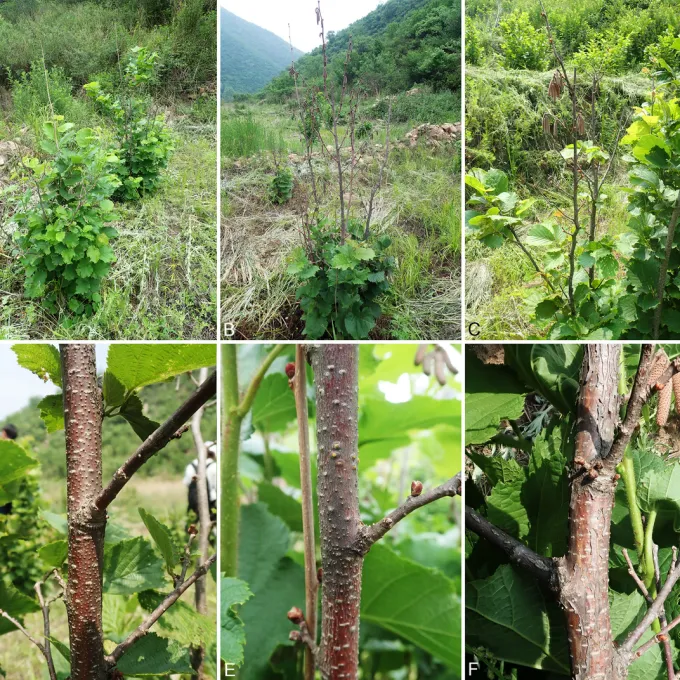
The earliest sign is the appearance of discolored, sunken areas on the bark. These lesions usually turn brown or dark brown as the tissue below the bark begins to die.
As the infection progresses, the characteristic pycnidia appear on the surface of the affected bark as tiny, raised bumps. Under wet conditions, these can release thin, coiled tendrils of spores.
Leaves on infected branches will show symptoms of chlorosis, curling, and eventually necrosis. Even after the branch is fully dead, these leaves often remain attached, creating a distinct visual symptom known as "flagging."
Internally, the bark loses its structure and becomes spongy or brittle. If the bark is peeled back, the underlying wood often exhibits reddish-brown staining and signs of decay.
In cases of severe infection, the cankers expand to girdle the entire branch or trunk, cutting off the supply of nutrients and water to the terminal parts of the tree.
Pathogen
The disease is caused by the fungus Cytospora corylicola (Ascomycota). This pathogen is a parasitic fungus that primarily attacks the bark and cambium of Hazelnut (Corylus) species, leading to localized tissue necrosis.
The fungus survives within the infected bark, where it develops pycnidia — small, flask-shaped fruiting bodies. These structures produce mass amounts of spores that are released during humid conditions.
As a facultative parasite, the fungus can live as a saprophyte on dead wood, allowing it to persist in orchards for extended periods. It acts as an opportunistic invader of weakened or stressed trees.
Transmission occurs through airborne spores, rain splash, and movement by insects. Once the spores land on a bark wound, the mycelium begins to colonize the healthy tissue surrounding the site of entry.
The life cycle is closely tied to the tree's physiological state; dormant or stressed trees are significantly more susceptible to successful infection by this pathogen.
Conditions for development
Cytospora canker thrives on stressed trees. Environmental stress, such as severe drought or waterlogging, significantly impairs the hazelnut tree's defense mechanisms and promotes fungal success.
Mechanical damage is the most common entry point for Cytospora corylicola. Wounds created by pruning, harvesting equipment, or animal damage serve as perfect infection sites for the fungus.
High humidity and moderate temperatures are ideal for spore dispersal and germination. Consequently, spring and autumn, with their frequent rains, are the seasons of highest infection risk.
Sunscald, caused by rapid temperature fluctuations during winter, frequently injures the bark, providing a vulnerable site for the pathogen to establish itself during the following spring.
Poor orchard sanitation, such as failing to remove infected wood, provides a constant reservoir of inoculum. Dense planting further exacerbates the problem by reducing airflow and maintaining a humid microclimate.
Why it matters
The economic impact of this disease is substantial due to the rapid dieback of productive branches. Severe infections can render entire sections of the orchard unproductive within a few seasons.
Once the pathogen infects the main scaffold branches or the trunk, the tree is often compromised beyond recovery, leading to the necessity of total tree removal and replanting costs.
The presence of cankers significantly weakens the tree's structural integrity, making it more prone to breakage during high winds or heavy nut loads.
Infected trees often show reduced vigor, leading to poor nut quality and lower yields. The disease creates a vicious cycle where a weak tree is further stressed by the fungal infection, attracting wood-boring insects.
Management costs increase drastically as the disease spreads, requiring intensive pruning and labor-intensive sanitation practices that increase the total production cost of the hazelnut crop.
Protection
Sanitation is the most effective management strategy. All infected branches must be pruned back into healthy wood (at least 15 cm below the visible canker) and immediately removed from the orchard for burning.
Disinfection of pruning tools after every cut is critical to prevent spreading the pathogen from infected branches to healthy parts of the tree or to other trees in the grove.
Preventative fungicide applications, particularly those containing copper, can help protect pruning wounds and exposed bark from spore germination during vulnerable periods.
Maintaining optimal tree vigor through balanced fertilization and appropriate irrigation is vital. A healthy tree can better compartmentalize and resist the spread of Cytospora mycelium.
- Seal large pruning cuts with protective wound dressings to prevent fungal entry.
- Control wood-boring insects that may carry spores or create bark entry points.
- Monitor the orchard regularly to identify and remove new infections at the earliest stage.
Discussion
No discussions yet — be the first.