
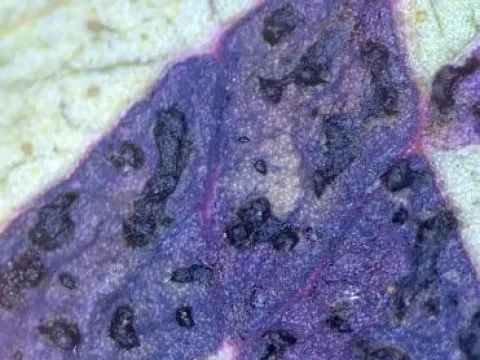
Eucalyptus leaf spot (Teratosphaeria)
Teratosphaeria maculiformis
The disease is caused by the ascomycete fungus Teratosphaeria maculiformis. This pathogen belongs to the order Capnodiales and is recognized as a serious threat to various Eucalyptus species in humid growing regions.
What the section contains
Eucalyptus leaf spot (Teratosphaeria)
The fungus completes its life cycle on leaves, producing fruiting bodies that release ascospores. These spores are wind-dispersed, allowing the pathogen to spread across plantations and infect new vegetative growth effectively.
The biology of the pathogen is highly dependent on leaf surfaces, where it establishes its mycelium. Once the penetration occurs, the fungus colonizes the leaf tissue, disrupting normal physiological processes of the tree.
Long-term survival of the fungus is ensured by its ability to persist in fallen leaf litter and plant debris. This reservoir of inoculum acts as the source for infection in subsequent growing seasons.
Advanced diagnostic methods, including molecular and morphological identification, are essential for researchers to confirm the presence of Teratosphaeria maculiformis in affected forest stands.
Initial infection manifests as small, chlorotic spots on the leaf surface. As the fungus colonizes the tissue, these spots expand, often becoming necrotic and turning brown or dark grey, clearly delimited by leaf veins.
The central parts of the spots may eventually dry out and fall away, leaving shot-holes in the leaves. Tiny black fruiting bodies of the fungus may become visible within these necrotic areas upon close inspection.
Severe infections lead to significant premature defoliation, where trees shed their leaves long before the natural leaf-drop cycle. This loss of canopy density is a hallmark of an advanced stage of the disease.
Deformation of young shoots and stunted growth are frequent observations in heavily affected specimens. The loss of leaves limits the tree's photosynthetic capacity, causing overall physiological stress.
Visual identification in the field can be challenging due to the similarity of symptoms to other leaf diseases. However, the characteristic distribution of lesions across the canopy is a strong indicator of this pathogen.
High relative humidity is the most critical environmental requirement for the development of the disease. Prolonged periods of rainfall or persistent fog provide the necessary moisture for spore germination.
Optimal temperatures for the growth of Teratosphaeria maculiformis typically range between 20°C and 25°C. These conditions facilitate rapid expansion of the pathogen within the leaf tissues.
Poor airflow within dense, unmanaged plantations significantly exacerbates the issue. When leaves remain damp for extended periods, the risk of infection escalates dramatically.
Stressed trees, whether due to nutrient deficiencies, poor soil, or drought, exhibit higher susceptibility to the disease. An impaired immune response makes them unable to repel the fungal colonization.
Nursery environments using overhead irrigation are particularly prone to outbreaks. Improper timing of water application keeps the foliage wet, creating an ideal microclimate for the spread of spores.
The economic impact of the disease is largely driven by reduced wood volume and poor biomass accumulation. Stunted growth significantly diminishes the value of the timber for industrial use.
Premature leaf loss depletes the tree's carbohydrate reserves, which are essential for winter survival. Weakened trees become prone to secondary pathogens and infestation by boring insects.
Nursery managers face heavy financial losses when seedlings are rejected due to damage. The cost of replacing dead stock and the expense of managing the disease are major economic burdens.
Widespread outbreaks can devastate entire plantations of susceptible eucalyptus clones. This requires expensive management interventions to protect the investment in the forest stand.
Beyond economic metrics, the disease ruins the aesthetic and ecological value of eucalyptus trees in parks and landscape designs, rendering them unattractive and unhealthy.
Strategic planting practices are the first line of defense. Ensuring proper spacing between trees promotes better airflow and reduces leaf wetness duration, which is crucial for preventing infection.
Sanitation measures, specifically the removal and destruction of leaf litter, help reduce the primary inoculum load. Regular maintenance of the plantation floor prevents the buildup of the fungus.
Application of fungicides is recommended in nurseries and young plantations where the risk of rapid spread is high. Systemic and copper-based treatments can provide effective control if applied early.
Developing and planting resistant eucalyptus clones is the most sustainable approach to managing the disease. Genetic resistance provides a permanent solution that reduces the need for chemical applications.
Continuous monitoring and early detection allow for the targeted management of disease hotspots. By identifying the problem early, managers can contain the infection before it becomes a widespread issue.