
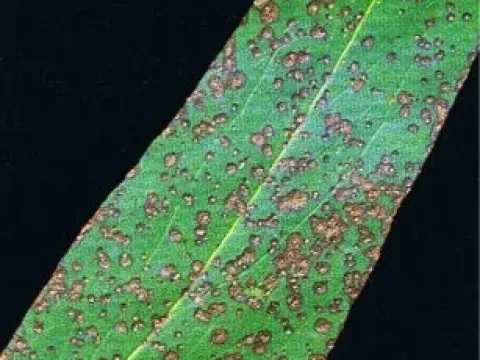
Eucalyptus leaf spot
Sonderhenia eucalyptorum
The causative agent of this disease is the ascomycete fungus Sonderhenia eucalyptorum, formerly classified under the genus Hendersonia. It is a specific plant pathogen that targets foliage, utilizing the host plant to complete its reproductive cycle.
What the section contains
Eucalyptus leaf spot
The fungus reproduces through the formation of pycnidia, small flask-shaped fruiting bodies that develop within the leaf tissue. Inside these structures, numerous conidia (asexual spores) are produced, which are dispersed to initiate new infections.
The mycelium colonizes the mesophyll cells, drawing nutrients from the host and causing localized tissue death. This process leads to the formation of necrotic spots, which eventually coalesce and result in significant leaf damage.
The pathogen persists over the winter months on fallen debris and diseased leaves trapped within the tree canopy. This debris serves as the primary inoculum source for the following growing season, making sanitation a critical management step.
Taxonomic classification of Sonderhenia eucalyptorum is essential for researchers and foresters, as different strains may exhibit varying levels of virulence across different Eucalyptus species and environmental conditions.
The initial symptoms present as small, scattered spots on the leaf surface. These spots vary in color from light brown to dark gray and often exhibit a distinct, darker border as the infection progresses further.
As the infection matures, tiny black dots become visible in the center of the necrotic spots. These dots are the pycnidia, which signify that the fungus is actively producing and releasing spores to spread the disease.
Severe infestations lead to the merging of individual spots, which can cause large portions of the leaf to wither and turn necrotic. Consequently, the foliage may curl, deform, and undergo premature abscission, falling from the tree prematurely.
In cases where young shoots are affected, they may show signs of stunted growth, bending, or tip dieback. The overall aesthetic quality of the plant is severely degraded, and the tree appears chronically stressed.
Differential diagnosis is often required to distinguish this disease from other leaf spot disorders. A microscopic examination of the fungal spores from the pycnidia remains the most accurate method for identifying Sonderhenia eucalyptorum.
High humidity and moderate temperatures provide the optimal environment for the spread of Sonderhenia eucalyptorum. The disease thrives in regions with frequent rainfall, morning mists, or high dew accumulation.
Poor aeration in dense plantings is a significant contributor to the severity of the disease. When leaves remain wet for extended periods, the conidia germinate easily and penetrate the leaf epidermis, accelerating the infection process.
The temperature range between 18°C and 25°C is ideal for the rapid development of the pathogen. During these periods, the fungus can complete its reproductive cycle in a matter of weeks, leading to rapid disease progression.
Trees that are already weakened by nutrient deficiencies, drought, or soil compaction are more susceptible to attack. These trees lack the vigor to build robust defenses, allowing the fungus to colonize them more effectively.
Environmental management, such as proper spacing and site selection, is crucial. Ensuring that the site allows for rapid drying of the foliage after rain can significantly reduce the infection pressure.
The primary harm caused by eucalyptus leaf spot is the reduction of the total functional leaf area. This limits the tree's photosynthetic capacity, leading to slowed growth rates and decreased wood production in plantations.
In nursery settings, the disease is particularly devastating, as young seedlings can suffer from severe defoliation and subsequent mortality. This represents a significant financial loss for nursery operations and reforestation projects.
The aesthetic value of trees in ornamental landscapes is severely compromised, as the foliage becomes blotchy and sparse. For many growers, the cost of replacing or treating severely affected trees is substantial.
Additionally, the necrotic tissues created by the fungus provide an entry point for secondary opportunistic pathogens. This can lead to more complex infections, potentially causing branch dieback and further structural damage.
Frequent disease outbreaks necessitate regular monitoring and management, adding to the labor and chemical costs associated with maintaining eucalyptus stands or commercial crops.
Sanitation is the cornerstone of control. Removing and disposing of infected leaves and debris from the base of the trees helps eliminate the primary inoculum source, reducing the risk of re-infection in the following cycle.
Managing tree density is essential for improving airflow through the canopy. Proper pruning and sufficient spacing between trees ensure that leaves dry quickly after rainfall, creating an unfavorable environment for fungal growth.
Chemical control involving fungicides can be effective if applied early in the infection cycle. Copper-based sprays are commonly used as protectants to create a barrier on the leaf surface against spore germination.
Effective management strategies include:
- Application of copper-based fungicides.
- Use of systemic fungicides containing triazoles or strobilurins.
- Regular pruning to increase canopy ventilation and light penetration.
Promoting overall tree vigor through appropriate fertilization and water management is vital. A healthy tree with a balanced nutrient profile is inherently more resilient and better equipped to resist infection by fungal pathogens.