
Marasmiellus
Marasmiellus
The disease is caused by fungi of the Marasmiellus genus, belonging to the Basidiomycota phylum. While often found as harmless saprotrophs, certain species can behave as opportunistic pathogens that target the root systems and crowns of various agricultural and ornamental plants.
What the section contains
Marasmiellus
The fungal mycelium is highly invasive, capable of penetrating plant tissues and disrupting vascular structures. This pathogen exhibits remarkable survival capabilities, as it can persist in the soil for extended periods as sclerotia or within dormant plant debris.
A key feature of Marasmiellus is the formation of rhizomorphs, which are thick, root-like mycelial strands. These structures enable the fungus to spread rapidly underground, connecting multiple hosts and creating localized infection hotspots across entire fields.
Reproduction occurs both vegetatively through mycelial expansion and sexually via basidiospores. These spores can be easily dispersed by wind or splashing water, making the pathogen difficult to contain once it has established a footprint in an open or greenhouse environment.
The host range for this genus is quite broad, affecting both herbaceous and woody plants. The pathogen is particularly dangerous in systems where high moisture and high levels of organic matter create an ideal breeding ground for basidiomycetes.
The earliest symptom is localized wilting, often occurring in patches across the field. Plants lose their turgor pressure despite adequate soil moisture, which indicates that the root system's ability to absorb water has been severely compromised by the infection.
Inspection of the crown and root area typically reveals a white or cream-colored mycelial mat. In advanced stages, the infected tissues appear soft, water-soaked, and may exhibit a distinct brownish discoloration or decay, often accompanied by a pungent odor.
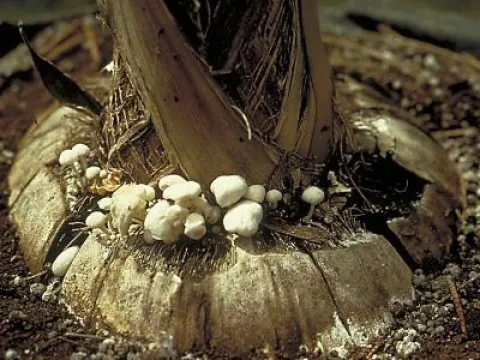
In humid conditions, small, delicate fruiting bodies (mushrooms) of the fungus may emerge around the stem base or on nearby rotting organic matter. These structures serve as definitive visual evidence of a well-established and active fungal colony.
Root system analysis shows significant degradation: fine feeder roots disappear first, followed by decay of the main roots. The vascular bundles often show internal necrosis, which interrupts the upward transport of nutrients, leading to yellowing of lower leaves.
Infected plants are often loosely anchored in the soil and can be pulled up with minimal resistance because the structural integrity of the root system has been destroyed. These plants typically collapse completely if the infection is allowed to progress.
Marasmiellus thrives in environments characterized by consistently high soil moisture and poor drainage. Waterlogged soil significantly promotes the spread of mycelial strands and spore germination, creating a perfect storm for rapid disease development.
The fungus prefers temperatures between 18°C and 25°C, although it remains active at a wide range of temperatures as long as humidity remains high. Greenhouse settings, if not properly ventilated, offer an ideal microclimate for the pathogen's expansion.
Lack of airflow due to high planting density reduces evaporation from the soil surface, keeping the crown area damp. This constant moisture promotes infection, especially when plants are already weakened by lack of sunlight or nutritional deficiencies.
Soil chemistry also plays a role, as acidic soils with high levels of decomposing plant debris support faster mycelial growth. A lack of natural beneficial microbial antagonists in the soil allows the pathogen to dominate without competition.
Poor crop rotation practices contribute to the buildup of the fungal population over several seasons. Each year that a susceptible crop is planted in infested soil, the pathogen's inoculum load increases, making subsequent management much more difficult.
The primary economic impact is the loss of plant stands and total crop failure in infested patches. Reduced plant population density leads to decreased yields, which can be devastating for commercial growers aiming for high-quality production.
If the plants survive but are infected, their fruit development is often stunted, deformed, or premature. This makes the produce unmarketable and unsuitable for storage, leading to substantial financial losses and increased labor costs for sorting.
The persistent nature of the fungus in the soil renders the ground unfit for susceptible crops for several years. This necessitates costly land remediation or forces growers to switch to less profitable non-host crops, impacting long-term farm planning.
Infection spreads easily across the farm via contaminated equipment, footwear, or water runoff. This makes the disease a significant biosecurity risk, potentially jeopardizing the entire harvest if standard sanitation protocols are ignored.
Costs are further compounded by the need for regular application of expensive fungicides and the implementation of intensive soil management techniques. The financial burden of managing Marasmiellus often cuts significantly into the net profitability of the enterprise.
The most effective strategy is the implementation of a diverse crop rotation plan. Rotating away from host crops for 3 to 4 years helps break the life cycle of the fungus, allowing the soil microbial population to naturally reduce the pathogen's presence.
Cultural practices should focus on improving soil drainage and air circulation. Deep plowing and frequent weeding ensure the surface dries out, which is detrimental to the pathogen's ability to form invasive rhizomorphs and sustain growth.
Maintaining soil pH in the neutral range through liming and ensuring balanced fertilization helps build plant vigor. Plants with strong cell walls and a healthy root system are significantly more resilient against fungal penetration and opportunistic infections.
Chemical control involves the use of systemic fungicides applied either as a seed treatment or as a soil drench in detected hotspots. Selecting fungicides specifically targeted at soil-borne basidiomycetes is essential for achieving a reliable effect.
- Remove and destroy all infected plant material immediately to prevent further spore production.
- Sanitize tools, tractors, and equipment between plots to stop cross-contamination.
- Monitor the field regularly for early signs of wilting to isolate infected patches quickly.
- Use certified pathogen-free planting material to prevent the introduction of the fungus to clean soil.