
Cassava root rot (Microbial rotting)
Microbial rotting
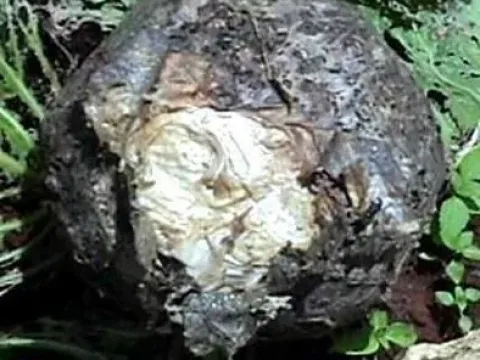
The disease typically presents as the formation of depressed lesions or pits on the surface of the tuberous roots, which resemble pockmarks, giving the disease its common name.
What the section contains
Cassava root rot (Microbial rotting)
Internally, the infected roots undergo a process of microbial tissue degradation. The flesh loses its firmness, becoming soft, spongy, and often discoloring to brown or dark grey.
In advanced stages of the infection, the entire root structure may collapse. The tissue emits a distinct foul odor, indicating secondary colonization by various opportunistic bacteria and fungi.
Above-ground symptoms often appear as generalized stress, including leaf chlorosis, stunted growth of the stems, and wilting, which suggests the inability of the roots to absorb water and nutrients.
Because the symptoms are located underground, farmers must conduct spot checks by digging up sample roots to assess the health of the crop before harvesting.
##pathogen##The disease is caused by a complex of soil-borne pathogens, primarily bacteria such as Erwinia species, which are often followed by secondary fungal infections.
This is classified as a microbial rot. The transmission occurs through contaminated soil, infected planting stakes, or water runoff that carries pathogens across the field.
The infection initiates when pathogens enter the root tissue through small wounds or cracks, often caused by soil cultivation, insect larvae, or small rodents feeding on the tubers.
The bacterial component causes rapid cell wall breakdown, creating an environment rich in nutrients that allows fungal pathogens to thrive and exacerbate the rot.
These pathogens are highly resilient and can persist in crop residues and soil, ensuring that the inoculum remains present for subsequent planting cycles.
Excessive moisture is the primary catalyst for the development of root rot. Poorly drained soils that remain waterlogged for long periods promote the growth of the pathogen.
Heavy, compact clay soils lack sufficient oxygen, which stresses the cassava plant's roots and makes them more susceptible to anaerobic microbial activity.
High soil temperatures in tropical regions accelerate the metabolic rate of the pathogens, leading to rapid disease progression once a plant has been infected.
The presence of physical injuries on the tuber surface, caused by inappropriate agricultural machinery or pest activity, significantly increases the risk of infection.
Short crop rotation intervals, where cassava is replanted in the same field too soon, lead to an accumulation of high pathogen loads in the rhizosphere.
The economic impact of cassava root rot is severe, as it can result in total crop loss in heavily infested fields, drastically reducing the yield of edible tubers.
Infected roots have a significantly reduced shelf life. If stored with healthy tubers, the rot can spread rapidly, leading to major post-harvest losses during storage and transit.
The quality of the starch extracted from infected cassava is poor, affecting its industrial processing capabilities and market value for food producers.
Increased costs are incurred by farmers due to the need for field sanitation, potential fungicide use, and the loss of labor and inputs invested in the destroyed crop.
The disease undermines food security in regions where cassava serves as a staple crop, leading to shortages and financial instability for smallholder farmers.
The primary strategy for control involves the use of resistant or tolerant cassava varieties that have a natural ability to resist tissue penetration by pathogens.
- Selection of healthy, disease-free stems for propagation (planting stakes).
- Implementation of robust drainage systems to prevent waterlogging of fields.
- Crop rotation with non-host plants to break the disease cycle in the soil.
- Management of soil-borne pests to prevent wounding of the root system.
- Sanitary disposal of infected plant material to reduce the inoculum levels.
The use of biological control agents or targeted seed treatment before planting can help create a protective microflora barrier around the developing root system.
Harvesting should be performed during dry conditions to reduce the risk of mechanical damage, and tubers should be stored in clean, well-ventilated conditions to prevent secondary rot.