
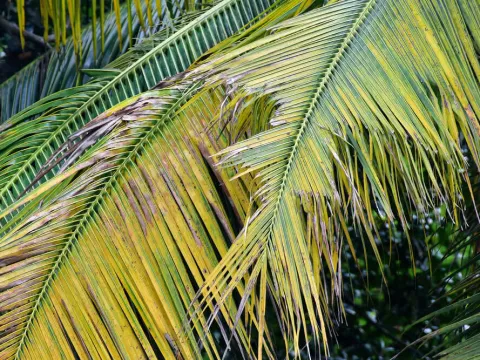
Coconut leaf spot
Bipolaris incurvata
The disease is caused by the fungus Bipolaris incurvata, a pathogen frequently found in tropical regions. It is a member of the Dothideomycetes class and is specifically adapted to parasitize palm species.
What the section contains
Coconut leaf spot
The fungus produces conidia that are disseminated primarily by wind and water splashes. It can survive in soil and decaying plant debris, acting as a persistent source of inoculum for new growth.
Once conidia land on a host leaf, they germinate under humid conditions and penetrate the plant tissue. The hyphae colonize the leaf cells, drawing nutrients and causing tissue degradation.
This pathogen has a high affinity for coconut palms, especially in nurseries where constant moisture levels provide a continuous opportunity for the fungus to multiply and spread.
As a specialized plant pathogen, it focuses on weakening the host by destroying its ability to perform photosynthesis, ultimately leading to significant biomass reduction in young palms.
Initial symptoms are characterized by small, yellow-green spots appearing on the leaves. As the disease progresses, these spots expand into necrotic, brown-to-black lesions.
A classic sign is the presence of a yellow halo around the dark necrotic spots, which indicates the diffusion of toxins produced by the fungal mycelium into healthy tissues.
In high humidity, a velvety or soot-like olive-gray mass of conidia may be visible on the surface of the lesions. This is the sporulation phase, facilitating the rapid spread of the disease to adjacent leaves.
As the infection becomes severe, leaves begin to wither, curl, and turn brittle. The dieback typically starts from the tips and moves toward the base of the leaf blade.
Heavy infections can result in the complete collapse of affected leaves, significantly reducing the overall canopy health and the structural integrity of the palm plant.
Humidity is the most important factor in the epidemiology of Bipolaris incurvata. Leaf wetness duration is directly correlated with the infection rate of the palm leaves.
Temperatures between 25°C and 30°C provide the ideal metabolic rate for the fungus to colonize host tissues effectively. In such climates, the incubation period is significantly reduced.
High-density planting is a major risk factor, as it restricts airflow and creates pockets of stagnant humid air. This prevents the leaf surfaces from drying quickly after rainfall.
Poorly managed nurseries with inadequate drainage or overhead irrigation systems are hotspots for this disease, as these practices maintain constant leaf surface moisture.
Host stress, whether from nutrient deficiency or drought, further weakens the palm's natural defense mechanisms, making it much more susceptible to the initial infection.
The primary impact of the disease is the destruction of leaf tissue, which is essential for solar energy conversion. This leads to stunted growth and reduced vigor in coconut palms.
In seedlings and young palms, the disease can be fatal, leading to significant economic losses in the nursery and plantation sector by increasing mortality rates.
Reduced leaf surface area limits the palm's ability to produce sugars and starches, which negatively impacts fruit yield, size, and the overall longevity of the productive tree.
Secondary infections often follow, as the weakened plant cannot effectively fight off opportunistic pests or other localized fungal and bacterial pathogens.
The aesthetic degradation of the foliage also leads to rejection of plants in ornamental contexts, creating further financial distress for growers and nursery owners.
Effective control requires an integrated approach starting with strict sanitation. Removing and burning infected leaves prevents the buildup of fungal spores in the immediate vicinity.
Improving air circulation through wider spacing and proper pruning helps to keep leaf surfaces dry, which is critical to stopping the fungal cycle of infection.
Chemical control involves the use of protective and systemic fungicides. Copper-based products are often used for general protection, while triazoles provide curative activity.
- Utilize disease-free, high-quality seedling stock.
- Implement drip irrigation instead of overhead watering.
- Apply fungicides regularly during high-humidity seasons.
- Disinfect pruning tools between plants to avoid mechanical spread.
Continuous monitoring is essential to detect the earliest signs of infection, allowing for localized treatments before the disease spreads to the entire plantation.