
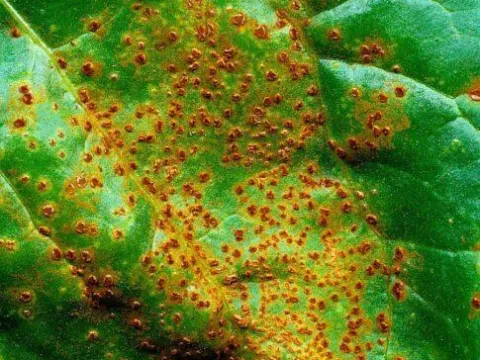
Parsley rust
Puccinia nitida
The causal agent of parsley rust is the specialized fungus Puccinia nitida, which belongs to the Basidiomycota phylum. It is an obligate parasite, meaning it requires living host tissues to complete its life cycle and obtain nutrients.
What the section contains
Parsley rust
This pathogen specifically affects plants in the Apiaceae (carrot) family, including parsley, dill, celery, and various wild umbelliferous weeds that can serve as infection reservoirs.
The fungus produces different types of spores, which are typically wind-dispersed, allowing the disease to spread rapidly across fields during periods of favorable weather.
Upon infection, the fungus enters the leaf through stomata and develops an extensive mycelium network within the host's intercellular spaces, effectively hijacking the plant's resources.
Due to its high level of specialization, Puccinia nitida can be extremely persistent in environments where its host plants are grown consecutively without adequate break cycles.
The initial symptoms are visible as small chlorotic (yellowish) spots appearing on the upper surface of the leaves, which gradually increase in size over time.
The underside of the infected leaves develops distinctive circular pustules (uredinia), which contain a rusty-brown or orange powdery mass of spores.
As the infection progresses, the pustules merge, leading to extensive yellowing, tissue necrosis, and premature wilting of the leaves, rendering them unmarketable.
Stems can also be affected, showing similar pustule formation, which disrupts the vascular transport of nutrients and water to the leaves.
- Yellow or chlorotic spots on the leaf tops.
- Rusty-orange spore pustules on the leaf undersides.
- Premature drying and death of the foliage.
High relative humidity is the primary driver for rust development. Prolonged periods of rain, heavy dew, or overhead irrigation create the perfect conditions for spore germination.
The fungus thrives in moderate temperature ranges, typically between 15°C and 22°C, which is common during the active growth phases of parsley in spring and autumn.
Poor air circulation, often caused by overcrowding or thick foliage, allows moisture to linger on the leaves, facilitating the penetration of the fungal hyphae.
The presence of nearby weeds, such as wild carrot or hemlock, provides a continuous source of inoculum that can easily spread to cultivated parsley beds via air currents.
Plants suffering from nutrient deficiencies or soil compaction are generally more susceptible to infection, as their natural defense mechanisms are weakened.
The most immediate harm caused by parsley rust is the total loss of aesthetic value for fresh market produce, as the spores and lesions are impossible to remove.
The disease significantly reduces the leaf surface area available for photosynthesis, leading to stunted plant growth and lower biomass yields.
In severe cases, if conditions favor the pathogen, the entire crop can be lost within a short period, resulting in significant economic damage to growers.
Infected plants may also show signs of premature senescence, which reduces the shelf life and overall quality of the herbs post-harvest.
Furthermore, plants weakened by rust are more vulnerable to secondary opportunistic pathogens, including soft rot bacteria and other soil-borne fungi.
Cultural practices are the first line of defense; implementing a strict crop rotation cycle of at least 3 to 4 years away from Apiaceae crops is essential.
Thorough sanitation, including the removal and destruction of all infected crop residues, prevents the survival and overwintering of the fungus in the soil.
Maintaining proper spacing between plants ensures adequate ventilation and keeps the foliage dry, which significantly inhibits the germination of fungal spores.
When applying fungicides, it is critical to select products registered for herbs and strictly adhere to pre-harvest intervals to ensure consumer safety.
Monitoring for the first signs of disease and removing early-infected leaves can help delay the spread and allow for a more manageable approach to the infestation.