
Passalora leaf spot
Passalora melanochaeta
Description
Symptoms
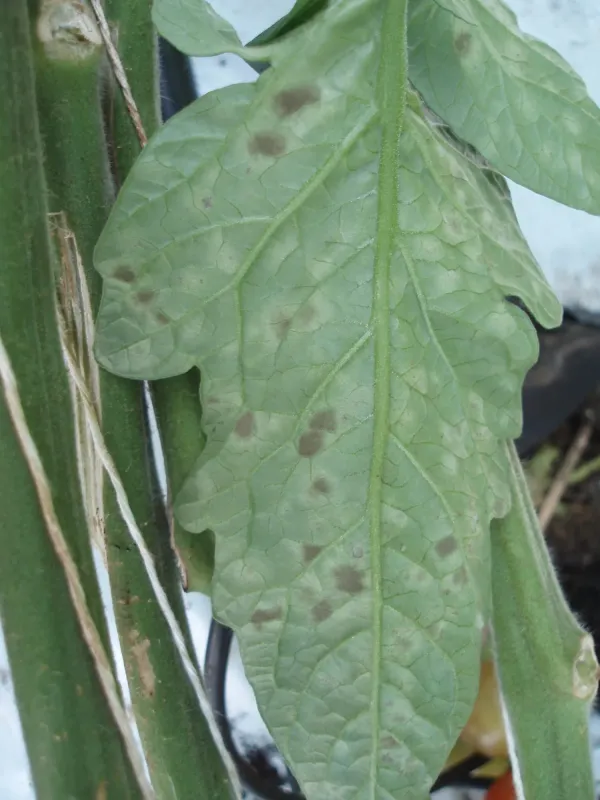
The primary symptom of the disease is the appearance of specific spots on leaves, which gradually increase in size. These spots can have an irregular or circular shape, often surrounded by a dark border, a trait typical for many cercosporoid fungi.
In the center of the affected areas, leaf tissues gradually die off (necrosis). Over time, a characteristic moldy coating, consisting of the fungus's conidiophores and conidia, forms on the surface of the spots, giving the affected areas a velvety or powdery appearance.
As the disease progresses, affected leaves prematurely turn yellow, dry out, and fall off. This leads to a significant decrease in the plant's photosynthetic surface area, which directly impacts its overall physiological health.
The infection usually begins in the lower foliage and gradually moves up the stem. In high humidity conditions, symptoms manifest more intensely, covering larger areas of the leaf blade.
Visually, the disease can be easily confused with other types of leaf spots, so microscopic analysis of the pathogen's spores is required for accurate diagnosis. It is crucial to monitor any changes in leaf color during the growing season.
Pathogen
The pathogen responsible for the disease is the parasitic fungus Passalora melanochaeta, which belongs to the group of imperfect fungi (deuteromycetes). This pathogen specializes in infecting the vegetative organs of plants.
The fungus's mycelium develops within the leaf tissues, gradually penetrating through stomata or wounds on the epidermis. During its lifecycle, the pathogen releases toxins that cause chlorophyll destruction and subsequent cell necrosis.
Fungal reproduction occurs through conidia, which are dispersed by wind, raindrops, and insects to healthy plants. This ensures rapid spread of the infection within a field or greenhouse.
The fungus survives in infected plant debris, soil, or seeds as mycelium or conidia until the next season. The high viability of the spores allows it to survive harsh winter conditions.
Passalora melanochaeta is a highly specialized parasite that adapts to specific host plants, utilizing the host's resources to complete its own life cycle.
Conditions for development
The most favorable condition for the development of Passalora leaf spot is high air humidity, exceeding 70-80%. Frequent rains, fog, and heavy dew create an optimal microclimate for spore germination.
Temperature plays a key role: the fungus is most active in the range of +18°C to +25°C. Sudden temperature fluctuations and weakened plant immunity make the crop more vulnerable to the disease.
Crowded plantings, where ventilation is restricted, promote moisture accumulation in the root zone and on leaf surfaces. Poor air circulation is a primary factor in the rapid epiphytotic development of the disease.
Insufficient or unbalanced plant nutrition, particularly an excess of nitrogen fertilizers, results in succulent, loose tissues. This makes it easier for fungal hyphae to penetrate the leaf and accelerates the infection process.
Neglecting crop rotation leads to the accumulation of inoculum in the soil. The longer a susceptible crop is grown in the same area, the higher the risk of a pathogen outbreak when weather conditions are favorable.
Why it matters
The primary damage lies in the drastic reduction of the green leaf surface, which is critical for yield formation. Without healthy leaves, the plant cannot maintain normal photosynthetic activity.
Disruption of nutrient and respiratory processes leads to a slowdown in overall plant growth. If the disease hits the crop during the active growth phase, it inevitably leads to a loss in the marketability of the harvest.
Affected plants experience a significant drop in immunity, making them susceptible to secondary infections and pest attacks. Weakened plants are less capable of coping with unfavorable abiotic factors.
In cases of severe infection, a significant decrease in fruit or seed weight is observed. Depending on the susceptibility of the variety, yield losses can reach 30-50% or more if left uncontrolled.
The economic impact of Passalora leaf spot is significant, as the disease necessitates additional expenditure on fungicide treatments, which increases production costs and reduces the profitability of cultivation.
Protection
The main preventative measure is strict adherence to crop rotation, returning the crop to the same site no sooner than every 3-4 years. This interrupts the pathogen's life cycle in the soil.
It is necessary to perform thorough removal and destruction of all plant debris after the season ends. Deep autumn plowing helps bury the debris where fungal spores might otherwise persist.
Using disease-resistant varieties and hybrids is the most effective method of protection. Plant breeding allows for the minimization of infection risks at the genetic level.
If the first signs of the disease are detected, systemic fungicide spraying should be applied. It is important to rotate preparations from different chemical classes to avoid the development of pathogen resistance.
Agricultural practices, such as maintaining optimal plant density and timely application of phosphorus-potassium fertilizers, promote cell wall strengthening and increase the crops' overall resistance to fungal infection.
Discussion
No discussions yet — be the first.