
Pseudopezicula
Pseudopezicula
The causative agent of the disease is the ascomycete fungus Pseudopezicula tracheiphila, known historically for its impact on viticulture. This pathogen specifically targets the vascular system of grapevines.
What the section contains
Pseudopezicula
The fungus overwinters as mycelium in fallen leaves and other plant debris. In the spring, it produces apothecia, which release ascospores that initiate primary infections under wet conditions.
Once the ascospores land on the leaves, they germinate and penetrate the tissue, eventually reaching the vascular bundles. The colonization of xylem tissues prevents the transport of water and nutrients.
This process results in the typical chlorotic and necrotic symptoms that spread outward from the vascular veins. The pathogen's ability to remain dormant on debris makes it a persistent threat.
Different strains of the fungus may vary in virulence, but the primary mechanism of injury remains consistent across various grape cultivars, leading to progressive tissue decline.
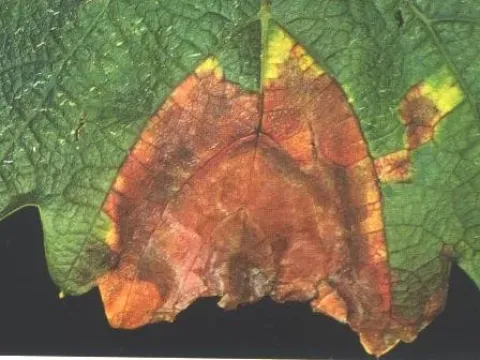
The initial signs of infection appear as yellow or reddish spots on the leaf blades. In white grape varieties, these spots are typically yellowish-brown, while in red varieties, they are deep red.
A distinctive feature of the disease is the angular shape of the lesions, which are strictly limited by the leaf veins. This gives the leaf a patchy, scorched appearance.
As the disease advances, the necrotic areas expand, and the leaves curl and drop prematurely. This premature defoliation is a classic indicator of a severe infection.
In cases of high infection pressure, flowers and young berries may wither and drop off. The entire vine takes on a stunted and sickly appearance due to vascular disruption.
Microscopic examination of the tissue can confirm the presence of the fungus within the vascular system, distinguishing it from nutrient deficiencies or other leaf spot diseases.
Cool, wet springs are the most critical period for the development and spread of Pseudopezicula tracheiphila. Persistent rain allows the ascospores to infect fresh leaf tissue.
Poor ventilation within the vineyard canopy creates high-humidity microclimates that favor the pathogen. Air stagnation prevents leaves from drying, facilitating fungal growth.
Vineyards with significant amounts of unburied leaf litter from the previous season provide a high inoculum density. This facilitates the rapid spread of the disease once the temperature rises.
Temperatures ranging from 15°C to 20°C are optimal for the maturation of apothecia. During this time, constant moisture is required for the spores to remain viable and infective.
Agrotechnical failures, such as lack of pruning or overcrowding, increase the risk by maintaining high moisture levels for extended periods during the early vegetative stage.
The primary harm caused by this disease is the significant reduction in photosynthetic leaf area due to premature defoliation. This limits the vine's ability to accumulate sugars.
Water and nutrient supply to the developing clusters is restricted, leading to shriveled grapes and poor yield quality. This often results in grapes with lower sugar content and undesirable acidity.
Infected vines exhibit reduced vigor and weakened root systems, making them highly susceptible to other pests and harsh winter conditions, which can lead to vine mortality.
Persistent infections lead to a long-term decline in the vineyard's productivity, often requiring intensive efforts to rehabilitate or replant the affected sections.
Economic damage is substantial, encompassing lost harvest volume, lower quality grades for winemaking, and the cost of repeated fungicide applications throughout the season.
Sanitation is the most effective preventive measure. Raking and burning or burying infected leaf litter eliminates the primary source of the fungal inoculum.
Cultivation practices that bury plant debris deeply in the soil accelerate the decomposition of fungal structures and reduce the risk of secondary infections.
Timely application of fungicides, particularly copper-based or systemic products, during the early stages of bud break and leaf development is crucial for protection.
Effective canopy management, including proper leaf thinning and shoot positioning, improves air circulation and lowers humidity, making the environment less favorable for the fungus.
Maintaining a balanced nutritional program, avoiding excessive nitrogen that promotes lush, soft growth, helps vines develop a stronger natural resistance to vascular pathogens.