
Pseudopeziza
Pseudopeziza
Description
Symptoms
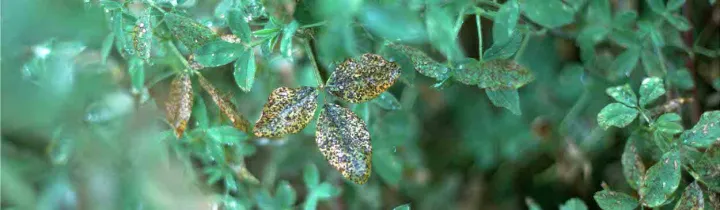
The primary symptoms of Pseudopeziza infection appear as small, circular, dark brown to black spots on the leaves. These spots are typically clearly demarcated from the healthy surrounding tissue and remain small throughout their development.
A distinctive diagnostic feature of this disease is the presence of a tiny, raised, disc-like structure in the center of each spot. This is the apothecium, where the fungus produces its spores, distinguishing it from other types of fungal leaf spots.
As the infection progresses and spot density increases, individual spots may coalesce. This leads to generalized leaf chlorosis, followed by the premature yellowing and dropping of the lower leaves, which is typical for alfalfa and clover crops.
While the infection starts on the lower foliage, it can spread upwards through the canopy under favorable conditions. Severely infected fields often appear sparse at the base, with significantly reduced photosynthetic capacity due to massive defoliation.
During periods of high humidity, a thin, whitish to grayish layer of fungal structures may be visible on the surface of the lesions. This appearance signifies active sporulation and high potential for further spread within the field.
Pathogen
Pseudopeziza is a genus of fungi belonging to the order Helotiales. The most economically significant species, Pseudopeziza medicaginis, is the primary cause of leaf spot in alfalfa, while Pseudopeziza trifolii predominantly affects various clover species.
The disease is classified as a foliar leaf spot, characterized by the development of specialized fruiting bodies known as apothecia. The fungus survives unfavorable conditions as mycelium or apothecia within infected crop debris remaining on the field surface.
During cool and moist weather, the mature apothecia release ascospores, which are dispersed by wind or splashing water droplets. Upon landing on healthy host leaves, these spores germinate and initiate new infections.
The life cycle of the pathogen involves both sexual and asexual reproduction, ensuring persistent pressure throughout the growing season. The fungi are highly host-specific, primarily targeting legumes that provide the necessary nutrients for their development.
Once the fungal hyphae penetrate the leaf cuticle, they colonize the intercellular spaces of the mesophyll tissue. This cellular disruption eventually leads to the formation of necrotic spots that characterize the visible symptoms of the disease.
Conditions for development
Pseudopeziza thrives in cool to moderate temperatures, typically ranging from 15°C to 25°C. These temperatures are optimal for the rapid germination of spores and the development of the fungal mycelium within the plant host.
Abundant moisture is a critical requirement for the disease to reach epidemic levels. Frequent rainfall, heavy dew, and high atmospheric humidity provide the water film necessary for spore infection and subsequent rapid development.
Poorly ventilated fields with high plant density create a microclimate that traps moisture on the leaf surfaces. This extended leaf wetness period is the most significant factor in promoting the successful colonization of the host plant.
Accumulation of infected plant debris in the field is a major contributor to the disease cycle. Since the fungus overwintering on dead tissue, undisturbed fields with heavy residue are prone to earlier and more severe outbreaks.
Host susceptibility is increased by nutrient deficiencies, particularly in potassium and phosphorus, which weaken the plant's natural defense mechanisms. Vigorous, well-fertilized plants are generally more resilient against fungal penetration.
Why it matters
The economic impact of Pseudopeziza is largely attributed to the reduction in forage yield and quality. Premature defoliation significantly decreases the amount of harvestable green biomass per hectare.
Because leaves contain the highest concentration of proteins and essential nutrients, the loss of foliage severely lowers the nutritional value of the hay. This results in poor-quality feed that requires expensive supplementation for livestock.
Chronic infection affects the plant's overall vigor and root system development by reducing the flow of photosynthates. Consequently, affected plants often exhibit reduced cold tolerance, leading to increased stand decline over successive winter seasons.
In seed production fields, the disease causes shriveled, low-viability seeds. This directly impacts the profitability of seed crops, as the quality standards for germination and vigor are difficult to achieve with diseased material.
The cumulative damage often forces growers to harvest earlier than planned to avoid further leaf loss, which may interfere with the optimal cutting schedule and result in a lower total seasonal yield.
Protection
Implementing a long-term crop rotation cycle is essential to break the survival cycle of the pathogen. Rotating legumes with non-host crops for at least 3 years significantly reduces the primary inoculum levels in the soil.
Sanitation practices such as deep plowing or burning of crop residues can effectively bury or destroy infected debris. This prevents the apothecia from releasing spores into the air during the next growing season.
Early harvesting, especially when initial symptoms appear in the lower canopy, is a tactical approach to minimize leaf drop and remove the pathogen biomass before it spreads further across the field.
Utilizing resistant or tolerant cultivars is the most sustainable and efficient strategy for long-term management. Breeding programs continue to prioritize resistance to Pseudopeziza to ensure yield stability.
- Maintaining optimal soil fertility to enhance natural plant resistance.
- Ensuring proper planting density to improve air circulation and reduce humidity.
- Applying recommended fungicides as a preventive measure in high-risk seed production areas.
Discussion
No discussions yet — be the first.