
Late blight
Phytophthora hybrids
The causative agent of late blight is Phytophthora infestans, an oomycete known for its rapid spread and destructive potential on Solanaceae crops.
What the section contains
Late blight
The pathogen reproduces via sporangia and zoospores that move efficiently in water films, allowing for explosive epidemic growth in field conditions.
It can persist as oospores in the soil, surviving harsh winter conditions and providing a recurring source of primary infection for subsequent planting seasons.
The pathogen utilizes complex biochemical mechanisms to suppress plant immune responses, allowing it to colonize host tissues effectively before symptoms become visible.
Constant evolution of the pathogen leads to new lineages that are often more virulent and less sensitive to traditional chemical control methods used in agriculture.
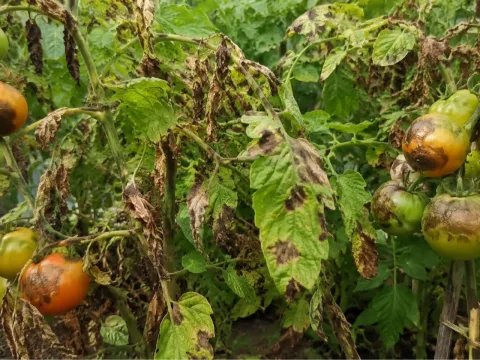
Initial symptoms include irregular, water-soaked lesions on leaves that rapidly darken into brown or black necrotic spots surrounded by a pale green or yellow halo.
Under high humidity conditions, a white, fuzzy fungal-like growth appears on the undersides of infected leaves, consisting of dense clusters of sporangia.
Stem infections manifest as dark, elongated streaks or lesions that can girdle the stem, causing the entire plant or upper foliage to wilt and die quickly.
Potato tubers exhibit depressed, purplish-brown lesions on the skin, while the internal tissue displays a characteristic dry, reddish-brown granular decay.
- Rapid leaf necrosis.
- White fuzzy sporulation.
- Stem collapse.
- Dry rot of tubers/fruit.
Late blight thrives in cool to moderate temperatures ranging from 15 to 22 degrees Celsius accompanied by high humidity or prolonged leaf wetness.
Frequent rainfall, irrigation sprays, and heavy dew periods are critical environmental triggers that facilitate the germination and dispersal of zoospores.
Dense plant canopies that restrict airflow and increase internal humidity create micro-environments perfectly suited for pathogen proliferation.
Cloudy, overcast weather conditions that minimize UV radiation exposure increase the longevity of spores on the plant surface, furthering the infection cycle.
Low soil potassium levels and high nitrogen availability can sometimes predispose crops to increased susceptibility by altering plant growth rates and foliage density.
Late blight is considered one of the most devastating plant diseases globally, capable of destroying entire potato or tomato fields within a few weeks.
The disease drastically reduces crop yields by killing foliage, which prevents photosynthesis and hinders the development of tubers and fruits.
Infected produce often suffers from secondary bacterial rot during storage and transport, leading to significant post-harvest losses and economic waste.
Control costs are substantial, requiring growers to invest in intensive fungicide programs and regular field scouting to mitigate the risk of epidemic spread.
The rapid nature of the disease often leaves little room for intervention, meaning that once an outbreak starts, total crop loss is a frequent outcome.
Integrating resistant cultivars into the farming system is the primary defense strategy, significantly delaying the onset of the disease during the season.
Cultural practices such as removing volunteer potato plants and nightshade weeds reduce the initial inoculum load in the local environment.
Implementing strict irrigation management, such as morning watering and drip irrigation, helps keep foliage dry and reduces the window for infection.
A proactive fungicide spray schedule, utilizing both contact and systemic modes of action, is essential for managing the disease in high-pressure regions.
Sanitation measures, including the proper destruction of infected plant debris, prevent the build-up of oospores and long-term soil contamination.