
Late waxcap
Hygrophorus hypothejus
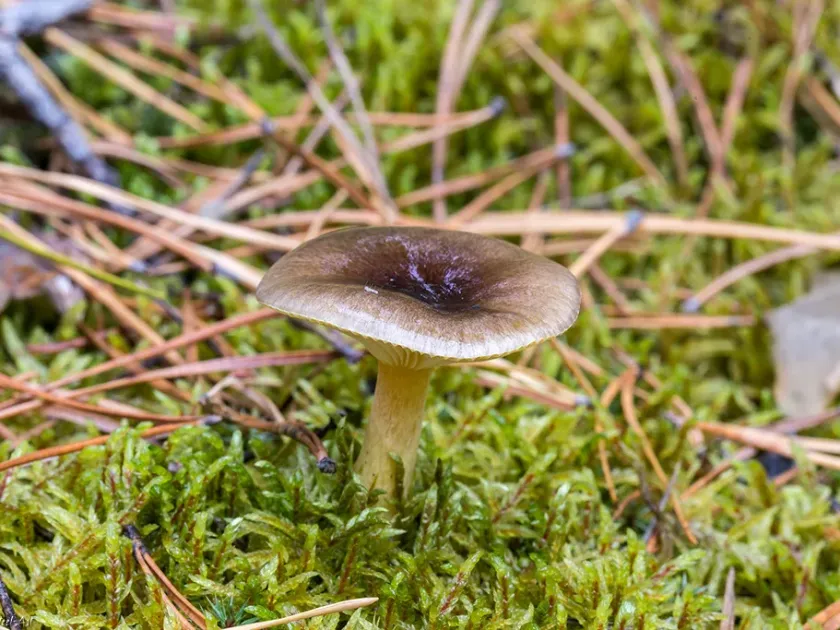
Description
Pathogen
The late waxcap (Hygrophorus hypothejus) is not a plant disease. It is an edible gilled mushroom that plays a crucial role in forest ecosystems as a symbiotic organism.
It acts neither as a pathogen nor as a primary agent for any botanical disorder. Its primary biological function is the formation of ectomycorrhiza with tree roots.
As a mycorrhizal fungus, it develops a complex network of hyphae that exchanges nutrients for carbon with host pine trees. This relationship is strictly mutualistic.
From an agronomical and forestry standpoint, this fungus does not damage plants. It does not cause root rot, leaf spots, or any necrotic tissues in trees.
Any classification of this fungus as a disease-causing agent is factually incorrect. It is a vital component of the rhizosphere, promoting the health of coniferous trees.
Conditions for development
The late waxcap typically thrives in association with pine trees, often found in coniferous woodlands. It prefers sandy or loamy soils with high organic content.
Fruit body development occurs primarily during the late autumn months. It requires high levels of soil moisture and cool temperatures for optimal growth.
Spore dissemination occurs via wind currents during periods of high humidity. The mycelium remains dormant in the soil until the specific temperature triggers fruiting.
The fungus is notably resilient to light frosts, allowing it to fruit well into the late autumn season when many other fungal species have ceased activity.
No agricultural management or intervention is needed for this organism. It integrates into the local ecosystem without requiring human assistance or control.
Why it matters
The late waxcap causes zero harm to plants. It is not capable of penetrating healthy plant tissues or causing physiological stress to trees.
There is no economic damage associated with this fungus. It does not compete for resources in a way that depletes the tree's health or vitality.
It does not secrete phytotoxins that would impede agricultural productivity or forestry growth. It remains entirely benign to both wild and cultivated flora.
The economic significance of this fungus is limited to its culinary value as an edible mushroom. It has no negative impact on timber quality or growth rates.
Protective measures against this fungus are non-existent, as there is nothing to control or prevent. Forest health is actually bolstered by the presence of such symbionts.
Discussion
No discussions yet — be the first.