
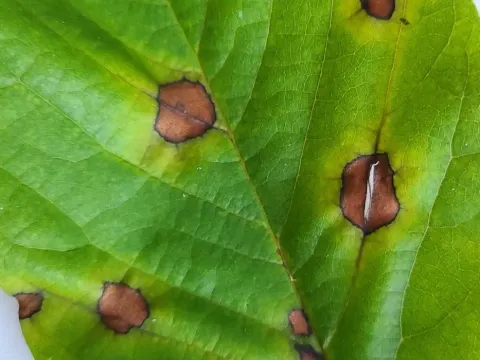
Phyllosticta leaf spot
Phyllosticta gaultheriae
The primary symptom of Phyllosticta leaf spot is the appearance of distinct lesions on the foliage. These spots typically start as small, circular, or irregular brown dots on the leaf surface.
What the section contains
Phyllosticta leaf spot
As the infection progresses, the spots expand and develop a lighter, tan-colored center, often surrounded by a dark purple or reddish-brown border, which is characteristic of this fungus.
Tiny black fruiting bodies, known as pycnidia, eventually emerge in the center of the necrotic spots. These appear as pinhead-sized dots and are crucial for the fungus's life cycle.
Infected leaves often show signs of premature senescence, turning yellow and eventually falling off. Heavy infections can cause significant defoliation, leaving the shrub unsightly.
Symptoms are usually most evident on older leaves located in the lower canopy, where moisture levels remain high for extended periods after rain or irrigation.
The pathogen responsible for the disease is the fungus Phyllosticta gaultheriae. It specifically targets members of the Ericaceae family, causing localized tissue necrosis.
The fungus overwinters in infected leaf debris and soil. When environmental conditions become favorable, the pycnidia release spores that are splashed onto healthy leaves by rain or wind.
Mycelial growth occurs within the leaf tissue, gradually consuming nutrients and expanding the size of the infected area. This leads to the destruction of photosynthetic tissue.
High humidity and moderate temperatures are the most critical factors favoring the spread of the fungus. Extended periods of wet weather provide the perfect environment for spore germination.
Poor air circulation within the shrubbery due to dense planting or low-lying areas contributes to prolonged leaf wetness. This environment allows the pathogen to establish and multiply rapidly.
Cultural practices such as overhead watering, which wets the leaves, can facilitate the spread of spores from the soil to the upper parts of the plant, increasing the severity of the infection.
The main impact of this disease is the reduction of the plant's ornamental value. Since Gaultheria is valued for its evergreen foliage, leaf drop severely affects its aesthetic appeal.
Consistent damage reduces the plant's vigor and photosynthesis capacity. Weakened plants may struggle to survive winter frosts or become prone to secondary infections from other pests.
Sanitation is the most effective management strategy. All fallen leaves must be raked up and removed from the site to reduce the inoculum load for the following season.
Fungicidal treatments, particularly those containing copper or systemic active ingredients, can prevent further disease spread. Application should occur when the first signs of spots appear.
- Improve air circulation by pruning and thinning the shrubs.
- Direct irrigation water to the base of the plant to avoid wetting foliage.
- Remove and destroy severely affected branches.
- Maintain plant health with balanced nutrition and proper watering schedules.