
Phyllosticta leaf spot of blueberry
Phyllosticta vacciniicola
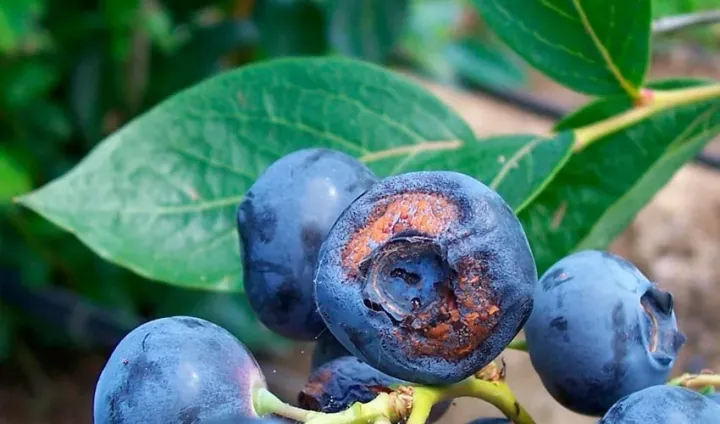
Description
Symptoms
The primary symptom of Phyllosticta leaf spot in blueberries is the development of distinct lesions on the leaves. These spots typically appear circular or irregular in shape, brown or gray in color, and are bordered by a dark purple or black margin.
Under close inspection or with a hand lens, small black specks can often be seen in the center of the necrotic spots. These are pycnidia, the fungal fruiting bodies that contain spores used to propagate the infection.
Over time, the affected tissue may become brittle and crack, causing the center of the spot to fall out, leading to a shot-hole appearance. Severe infestations often result in premature yellowing and heavy leaf drop.
The fungus can also affect young, succulent shoots, causing localized cankers or lesions. These stem injuries can disrupt vascular flow, ultimately weakening the entire bush and making it susceptible to cold damage.
Because the symptoms can resemble other leaf spot diseases, accurate diagnosis often requires microscopic observation or laboratory testing to distinguish the specific pathogen present.
Pathogen
The causative agent of this disease is the fungus Phyllosticta vacciniicola. This pathogen is a specialized fungus that primarily attacks plants within the Ericaceae family, including highbush blueberries.
It belongs to the group of imperfect fungi that reproduce asexually through the formation of pycnidiospores. These spores are housed in pycnidia, which remain on fallen leaves and debris throughout the winter as a source of primary inoculum.
During the growing season, spores are dispersed by splashing rain, heavy dew, wind, and potentially insects. Upon landing on healthy leaf surfaces, the spores germinate in the presence of moisture and invade the plant tissue.
The incubation period varies depending on temperature and relative humidity levels. Once inside, the fungus spreads intercellularly, causing localized tissue death and producing the characteristic lesion morphology.
Multiple cycles of infection can occur throughout the summer if environmental conditions remain favorable, potentially leading to rapid spread within a blueberry plantation.
Conditions for development
The development of Phyllosticta vacciniicola is highly dependent on the presence of free water on leaf surfaces. Extended periods of rain, persistent fog, and heavy morning dews significantly promote spore germination and host infection.
The fungus thrives in moderate temperature ranges, typically between +18°C and +25°C. During this time, the pathogen is most aggressive and spreads rapidly throughout the canopy.
High-density plantings restrict airflow and prevent leaves from drying quickly after wetting events, creating a humid microclimate that is highly conducive to disease development.
Improper irrigation practices, particularly overhead watering in the late afternoon or evening, allow moisture to persist on the foliage for too long, drastically increasing the risk of an outbreak.
General orchard management issues, such as poor weed control or lack of canopy thinning, contribute to moisture retention and provide additional reservoirs for the fungus to persist.
Why it matters
The main impact of Phyllosticta leaf spot is a reduction in functional photosynthetic leaf area. This limits the plant's ability to produce carbohydrates, which are essential for overall growth and fruit development.
Premature defoliation weakens the plant, reducing its ability to store reserves for winter dormancy and leaving it vulnerable to winter injury or secondary infections by other pathogens.
If the infection spreads to floral structures or emerging shoots, it can directly reduce crop yields in the current season and compromise fruit bud formation for the following year.
Uncontrolled spread can quickly lead to widespread plantation decline, resulting in decreased marketability of berries and reduced vigor of the nursery stock.
In younger blueberry bushes, severe infection stunts growth and development significantly, creating a long-term setback that may take multiple seasons to overcome.
Protection
Sanitation is the first line of defense: collecting and removing fallen leaves and pruning away infected shoots helps to significantly reduce the inoculum load at the start of the season.
Maintaining proper canopy structure through regular pruning is essential to improve airflow and facilitate rapid leaf drying. Avoiding overcrowded planting layouts is a key preventative cultural practice.
Preventative applications of copper-based fungicides (such as Bordeaux mixture or copper oxychloride) in the early spring, before flowering, can help suppress initial spore development.
If the infection becomes widespread, systemic fungicides from the triazole or strobilurin classes are often necessary. It is crucial to rotate chemical modes of action to prevent the development of resistant fungal strains.
Balanced plant nutrition is vital; excessive nitrogen fertilization creates soft, succulent growth that is more easily penetrated by the fungus. Phosphorus and potassium applications help improve plant resilience and cuticle strength.
Discussion
No discussions yet — be the first.