
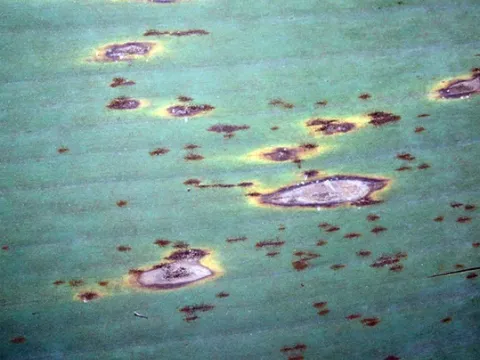
Phyllosticta leaf spot
Phyllosticta cavendishii
The symptoms of Phyllosticta leaf spot typically manifest as small, circular, or irregular lesions appearing on the foliage of the banana plant.
What the section contains
Phyllosticta leaf spot
These spots often exhibit a dark brown or black color, and as they expand, they may develop a distinctive light-colored halo or yellow border.
A key visual indicator is the presence of small, black, pin-head-sized structures called pycnidia, which emerge within the necrotic center of the spots.
In advanced stages of infection, these lesions merge together to cover large areas of the leaf surface, leading to rapid tissue death and yellowing.
Severe infestations cause premature senescence of the leaves, which significantly impacts the overall health and structural integrity of the plant canopy.
The disease is caused by the fungus Phyllosticta cavendishii, a specialized ascomycete pathogen that exclusively targets banana and plantain varieties.
The fungus survives as a saprophyte on decaying plant debris and infected leaf tissues, ensuring the pathogen remains present in the field environment.
Reproduction is asexual, involving the formation of pycnidia that release large quantities of conidia, which serve as the primary inoculum for infection.
Dissemination of the pathogen occurs primarily through rain-splash and wind-driven water droplets, as well as via tools and human activities on the farm.
The biology of this fungus is highly adapted to the moist microclimates found within dense banana plantation canopies.
The development of Phyllosticta leaf spot is highly dependent on high atmospheric humidity and frequent rainfall, which are necessary for spore germination.
Warm temperatures ranging between 22°C and 28°C provide the optimal metabolic environment for the fungus to colonize host tissues rapidly.
Poorly managed plantations with high planting densities restrict airflow, creating persistent moisture on leaves that promotes fungal proliferation.
Conditions that create prolonged leaf wetness, such as early morning fog or heavy dew, significantly increase the infection window for the pathogen.
Nutrient stress or improper irrigation management can weaken the host plant, making it significantly more susceptible to successful fungal colonization.
The primary economic harm results from the reduction of photosynthetic leaf area, which limits the energy available for fruit development and filling.
Chronic infections lead to significant yield losses, as the plant cannot maintain the required leaf area index for optimal bunch sizing and weight.
Reduced plant vigor makes the entire plantation more susceptible to secondary stressors, including other fungal pathogens and environmental extremes.
The cost of implementing integrated pest management programs, including fungicides and sanitation, represents a significant overhead for commercial producers.
Delayed maturity and reduced bunch quality are common consequences of untreated Phyllosticta leaf spot outbreaks in intensive farming systems.
Strict field sanitation is the foundation of management; this involves the removal and burial or destruction of all infected leaf tissues.
Managing the plantation canopy density is crucial to ensure adequate airflow and light penetration, reducing the duration of leaf wetness.
Prophylactic application of contact and systemic fungicides is recommended during peak periods of humidity to prevent the establishment of the fungus.
Using certified, disease-free planting material derived from tissue culture is the most effective long-term strategy for preventing the initial disease outbreak.
- Regular monitoring of leaves for early symptom detection.
- Balanced fertilization to promote rapid, healthy foliage growth.
- Rotation of fungicide chemical classes to prevent pathogen resistance.