
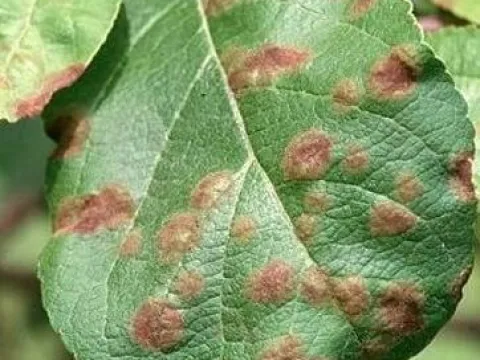
Phyllosticta leaf spot
Phyllosticta capitalensis
The disease is caused by the deuteromycete fungus Phyllosticta capitalensis, a common plant pathogen.
What the section contains
Phyllosticta leaf spot
It acts by infecting plant tissues and producing pycnidia, which are small, flask-shaped structures.
These pycnidia function as the reproductive bodies, releasing numerous conidia during wet conditions.
The fungus survives the winter primarily in leaf litter or on infected plant debris remaining in the soil.
Transmission of the pathogen occurs via rain splashes and wind, facilitating rapid spread across garden crops.
The primary symptom is the appearance of small, circular or irregular spots on the leaf surfaces.
These spots often develop brown, tan, or gray centers with a distinct, darker, or purplish halo.
Visible black, pin-head-sized dots (pycnidia) can usually be found scattered within the necrotic lesion areas.
As the spots expand and merge, large areas of the leaf may turn brown, dry out, and eventually drop off.
Severe infestations cause a ragged look to the foliage, with perforated tissues becoming brittle and tattered.
High humidity and prolonged periods of rainfall are the primary environmental drivers for fungal activity.
The pathogen thrives best when temperatures range between 20°C and 28°C (68°F–82°F).
Poor ventilation within dense or crowded plantings creates a stagnant, humid microclimate favoring infection.
Plants under nutrient stress or physical damage are significantly more susceptible to the entry of the fungus.
Insufficient sanitation, particularly leaving dead foliage around the plant base, ensures the pathogen's survival.
The disease significantly reduces the leaf area available for photosynthesis, stunting the plant's overall growth.
Premature defoliation weakens the host, making it more prone to secondary infections and winter damage.
In ornamental plants, the aesthetic damage caused by leaf spots reduces market value and landscape quality.
Fruit and vegetable yields can be severely compromised if the infection spreads to stems or immature fruits.
Weakened host plants may experience reduced bud development and lower vigor in subsequent growing seasons.
Sanitation is the cornerstone of control; all fallen leaves and infected debris must be collected and disposed of.
Proper pruning practices improve airflow through the foliage, which reduces the moisture necessary for fungal growth.
When necessary, chemical control via copper-based or systemic fungicides helps suppress pathogen development.
Avoiding overhead irrigation, or watering only in the early morning, minimizes the duration of leaf wetness.
- Use disease-free nursery stock.
- Maintain balanced fertilization programs.
- Monitor plants regularly for early signs of lesions.