
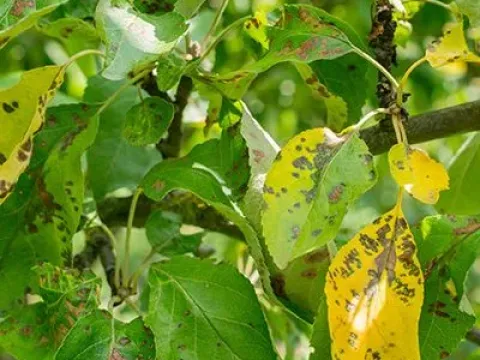
Phyllosticta leaf spot
Phyllosticta beaumarisii
The disease is caused by the fungus Phyllosticta beaumarisii, which belongs to the class of Deuteromycetes (imperfect fungi). It is a specialized pathogen that primarily targets the foliage of various host plants.
What the section contains
Phyllosticta leaf spot
The fungus survives the winter dormant period in the form of pycnidia within infected fallen leaves and other plant debris. When spring conditions arrive, these pycnidia release spores that initiate the infection cycle.
The pathogen enters the plant tissue through natural openings such as stomata or via mechanical wounds. Once inside, the fungal mycelium grows intercellularly, breaking down the plant cells and causing necrotic lesions.
The life cycle can repeat multiple times throughout the growing season. Spores are dispersed primarily by wind-driven rain and water splashes, allowing the disease to spread rapidly within a planting area.
Understanding the biology of this pathogen is crucial, as its specificity to certain plant species necessitates a targeted approach for effective disease management.
The most characteristic symptom of the infection is the appearance of spots on the leaves. These spots vary in shape but are typically light brown, grey, or whitish, often surrounded by a dark margin.
As the infection progresses, tiny black specks appear within the necrotic areas of the spots. These are the pycnidia (fruiting bodies of the fungus) and are the definitive diagnostic feature of Phyllosticta infection.
Over time, the centers of the spots may dry out, crack, and fall away, leaving "shot holes" in the foliage. This reduces the functional photosynthetic leaf area of the plant.
Severe infections can cause the lesions to coalesce, covering large parts of the leaf surface. This frequently leads to premature chlorosis (yellowing) and early leaf drop.
While foliage is the primary target, under favorable conditions, the disease may also manifest as elongated lesions on young twigs, also marked by the presence of pycnidia.
High humidity and moderate temperatures are the primary environmental drivers for the development and spread of this fungal disease.
Dense plantings or garden setups with poor air circulation create stagnant, humid pockets that facilitate the rapid germination of fungal spores on leaf surfaces.
The temperature range between 18°C and 25°C is optimal for the fungal growth. Periodic rain events during this time significantly accelerate the infection cycle and promote the spread of spores.
Plants under physiological stress—due to nutrient deficiencies, poor soil conditions, or physical damage—are generally more susceptible to successful colonization by Phyllosticta beaumarisii.
Persistent dew in the morning hours extends the leaf wetness period, providing the necessary moisture film for the spores to penetrate the plant cuticle effectively.
The primary impact of the disease is the reduction in the plant's photosynthetic capacity, which leads to a general decline in plant vigor, growth rates, and reproductive potential.
Premature leaf abscission drains the plant's energy reserves, reducing its ability to survive winter or successfully initiate new growth in the following season.
For ornamental plant species, Phyllosticta leaf spot significantly reduces aesthetic value, making the plants undesirable for landscaping or retail purposes.
Prolonged annual infection can result in long-term damage, including the dying back of branches and decreased resilience against other biotic and abiotic stressors.
In agricultural settings, significant outbreaks can lead to substantial yield losses and diminished quality of the harvested product due to the disruption of plant metabolism.
Sanitation is the cornerstone of control. Clearing and destroying all fallen leaves at the end of the season is essential to eliminate the primary source of the fungus's overwintering inoculum.
Promoting good airflow by ensuring adequate spacing between plants and implementing proper pruning practices helps maintain a drier microclimate, which inhibits spore germination.
Chemical control involving copper-based fungicides or appropriate systemic treatments can be effective when applied preventively or upon the first sighting of symptoms.
Maintaining balanced fertilization is important, as excessive nitrogen can lead to succulent, fast-growing tissue that is more easily penetrated by the fungus.
Regular monitoring of the garden or plantation allows for early detection, enabling the prompt removal of infected leaves and local treatments to keep the disease from spreading.