
Phyllachora leaf spot
Phyllachora acaciae
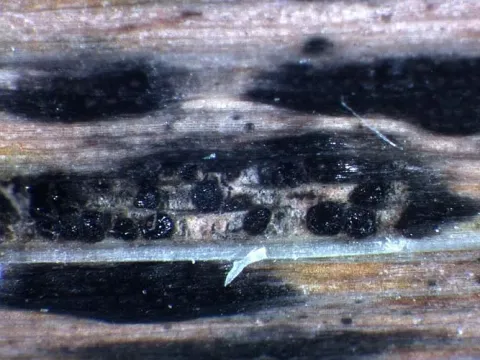
The primary symptom of the disease is the appearance of distinct, circular to elongated black stroma on the leaf blades.
What the section contains
Phyllachora leaf spot
These black spots are firm, slightly raised, and clearly visible on both the upper and lower surfaces of the leaves, often accompanied by a chlorotic halo.
As the infection progresses, the leaves may show signs of premature yellowing, leading to significant foliage loss during the growing season.
The fungal structures are permanent and do not easily wash off, making them a diagnostic feature for identifying the presence of Phyllachora acaciae.
In cases of severe infestation, the aesthetic value of the tree is significantly compromised due to the spotted and dying foliage scattered across the crown.
The disease is caused by the ascomycete fungus Phyllachora acaciae, a specialized pathogen that infects members of the Acacia genus.
The fungus develops internally within the leaf tissue, forming dense black stroma that function as protected structures for spore development.
It survives the dormant season as mycelium or fruiting structures within the fallen leaves, acting as a primary reservoir for the next cycle.
In spring, the pathogen releases ascospores that are disseminated by wind or rain splashes, initiating the infection on new, succulent growth.
This fungus behaves as an obligate parasite, requiring living host tissue to complete its reproductive cycle and perpetuate its presence.
High relative humidity and frequent rainfall are the most critical factors favoring the germination and successful penetration of fungal spores.
Poor aeration within dense stands or thick tree canopies prevents rapid evaporation of moisture, creating a perfect microclimate for the pathogen.
Accumulation of leaf litter under trees allows the fungus to remain in close proximity to the host, ensuring high infection pressure every spring.
Temperatures between 15°C and 25°C are optimal for the mycelial growth and the subsequent development of the characteristic black spots.
Host trees growing in suboptimal soil conditions or stressed by drought show increased susceptibility to rapid fungal colonization.
The disease causes a reduction in the photosynthetic capacity of the plant by covering significant portions of the foliage with fungal stroma.
Premature leaf drop negatively impacts the tree's energy storage, which is vital for winter survival and next season's growth potential.
In nursery settings, affected acacia plants lose their commercial value and might face rejection due to unsightly and damaging spots.
Repeated annual infections can lead to tree decline, characterized by reduced twig growth, sparse foliage, and general physiological weakness.
While rarely fatal, the cumulative impact of the disease can make trees more vulnerable to secondary pests and environmental stressors.
The most important control measure is the sanitation of the area, which involves collecting and burning or burying all fallen leaves to destroy inoculum.
Improving airflow through selective pruning of the canopy helps reduce the humidity levels that favor spore germination.
Fungicide applications, particularly those performed early in the growing season, can effectively prevent the establishment of new infections.
Maintaining tree vigor through proper watering and balanced fertilization helps the plant build natural resistance to the pathogen.
- Strict removal and destruction of leaf litter
- Strategic canopy thinning to improve aeration
- Preventive fungicide sprays before symptom development