
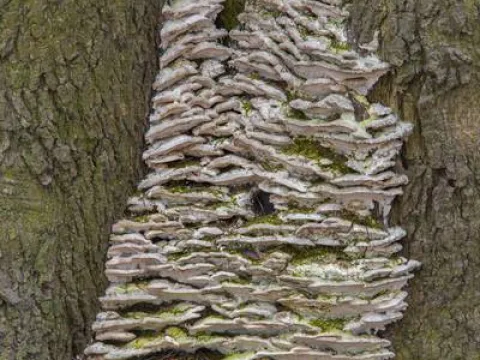
Oxyporus
Oxyporus
The disease is caused by wood-decaying fungi of the genus Oxyporus, which belong to the Basidiomycetes phylum. The most well-known species is Oxyporus populinus.
What the section contains
Oxyporus
This fungus acts as a white rot agent, actively breaking down lignin and cellulose within the host's woody tissues. It typically enters trees through wounds, branch stubs, or mechanical damage to the bark.
The mycelium colonizes the interior of the trunk, establishing a persistent infection. Over time, it forms dense perennial fruiting bodies that emerge from the bark or cracked areas of the stem.
These fruiting bodies, or conks, have a characteristic porous underside and are often white, cream, or pale yellow in color. They are capable of releasing spores during favorable weather conditions.
The life cycle involves long-term survival in decaying heartwood, making the fungus a significant threat to both forest stands and urban landscaping trees.
The primary visual indicator of an Oxyporus infection is the presence of shelf-like fruiting bodies on the trunk. These are often found in clusters or stacked layers on the bark.
Infected wood undergoes a structural change, appearing bleached or white as the lignin is degraded. The wood becomes spongy, light, and loses its inherent structural integrity.
Affected trees often show signs of canopy thinning and premature leaf drop. As the structural support of the trunk weakens, branches may break off even during moderate wind conditions.
Bark abnormalities, such as cracks, depressions, or irregular swellings, often occur in areas where the mycelium is most active. In some cases, localized oozing may also be visible.
Internally, a cross-section of an infected tree reveals a clear demarcation of the decay column, which is usually brittle and friable to the touch.
High moisture levels are essential for the growth and colonization of this fungus. It thrives in humid environments, particularly in areas where rainfall is frequent and air circulation is poor.
Trees that have suffered from physical trauma—such as pruning wounds, frost cracks, or damage from heavy machinery—are much more susceptible to entry by the fungal spores.
The age of the tree is a contributing factor, as older trees have accumulated more wounds and have less capacity to compartmentalize decay compared to younger, vigorous specimens.
Densely planted forests or poorly maintained parks with stagnant air flow facilitate the spread of spores from one host to another, increasing the overall infection pressure.
Environmental stress, including drought or soil compaction, weakens the natural defense mechanisms of trees, making them easier targets for Oxyporus colonization.
The primary economic and environmental impact of Oxyporus is the significant reduction in timber quality. Decayed wood is rendered useless for commercial lumber production.
Public safety is a major concern in urban areas, as the internal rot severely reduces the structural strength of trees, making them prone to unexpected failure or collapse.
The disease contributes to the gradual decline of tree vitality, reducing growth rates and lifespan. This necessitates expensive tree removal operations to prevent accidents.
Beyond timber loss, the death of large, mature trees disrupts local ecosystems and reduces the aesthetic and environmental benefits they provide to the community.
Secondary pests, such as wood-boring insects, are often attracted to the weakened, decaying wood, further exacerbating the damage initiated by the fungus.
Effective management begins with rigorous sanitary inspections. Promptly identifying and removing heavily infected trees prevents the spread of spores to healthy neighbors.
Proper pruning techniques are crucial to prevent infection. All large cuts should be made cleanly, and tools must be sanitized between different trees to stop the transmission of pathogens.
Maintaining high tree health through adequate irrigation, proper fertilization, and soil management helps trees maintain natural defenses against fungal invasion.
If small, localized infections are detected early, it may be possible to surgically remove the decayed tissue, although this is usually limited in success for established cases.
- Monitor trees annually for signs of fruiting bodies.
- Avoid mechanical damage to trunks during landscaping work.
- Utilize wound dressings only when recommended by certified arborists.
- Ensure proper site drainage to avoid overly damp conditions.
- Dispose of infected wood by burning to eliminate spore sources.