
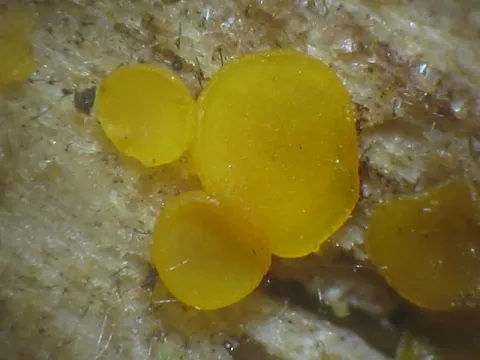
Orbilia xanthostigma
Orbilia xanthostigma
Orbilia xanthostigma is an ascomycete fungus belonging to the Orbiliales order. It is primarily recognized as a saprotrophic organism that thrives on decaying wood of various deciduous tree species.
What the section contains
Orbilia xanthostigma
The fungus is biologically characterized by the development of minute, waxy, disc-shaped apothecia (fruiting bodies) that appear in bright yellow or amber-orange clusters on the bark surface.
While often categorized as a saprotroph, Orbilia xanthostigma can act as an opportunistic pathogen on weakened or damaged trees, colonizing stressed tissues.
The fungal mycelium permeates the wood fibers, utilizing enzymes to break down cellulose and lignin, which are the primary structural components of the woody material.
The presence of this fungus serves as a clear indicator of wood degradation, suggesting that the plant's natural defenses have been compromised.
The most distinctive visual sign is the emergence of dense clusters of tiny (0.5–2 mm diameter) bright yellow to orange-colored fruiting bodies scattered across the bark.
Wood colonized by the fungus often exhibits a noticeable bleaching or discoloration, indicating that the structural integrity of the cell walls is being dismantled.
Affected bark may become soft, spongy, and brittle to the touch, losing its typical protective texture and detaching easily from the cambium layer.
During periods of high humidity, a delicate, thin mycelial mat or film may become visible around the areas where the fruiting bodies have developed.
General tree health often declines as the fungal colonization progresses, particularly if the infection spreads to skeletal branches or the main trunk.
The development of Orbilia xanthostigma is highly dependent on high moisture levels, which are essential for both the germination of spores and the formation of visible fruiting bodies.
Shaded, stagnant environments with poor air circulation create the perfect microclimate for this fungus, preventing bark from drying out sufficiently.
Active growth and sporulation are most intense during seasons characterized by moderate temperatures and frequent precipitation, typical of spring and autumn months.
Physical wounds such as pruning cuts, frost cracks, or sunscald provide optimal entry points for fungal spores to reach the vulnerable inner tissues of the tree.
Neglected landscapes with heavy undergrowth or accumulated dead wood often harbor the fungus, increasing the risk of spread to living ornamental or forest trees.
The primary damage caused by this fungus is the destruction of woody tissue, which impairs the tree's vascular system and reduces its structural stability over time.
In silviculture and horticulture, the fungus contributes to the rapid decay of dead wood, potentially creating pathways for more aggressive pathogens to enter the host.
As the bark softens and breaks down, the tree becomes significantly more susceptible to secondary infestations by wood-boring insects and other pests.
The aesthetic value of parklands and gardens is diminished when trees become covered in the characteristic yellow clusters and display signs of decay.
Ultimately, the prolonged activity of Orbilia xanthostigma can accelerate the decline of weakened specimens, eventually leading to structural failure or death.
The most effective management strategy involves proactive maintenance to ensure tree vigor and minimize the availability of suitable substrates for the fungus.
- Sanitary pruning of all dead, diseased, or damaged branches to reduce fungal load.
- Disinfecting pruning tools between trees to prevent the cross-contamination of spores.
- Treating all major cuts or wounds with antiseptic tree paint or professional-grade pruning sealers.
- Maintaining proper crown thinning to ensure adequate air circulation and rapid bark drying after rainfall.
When localized infections are found, carefully remove the infected bark layer and treat the underlying tissue with a copper-based fungicide to halt progression.
Good cultural practices, including adequate fertilization and irrigation, are essential to boost the tree's natural resilience against saprotrophic colonization.