
Ophiosphaerella patch
Ophiosphaerella narmari
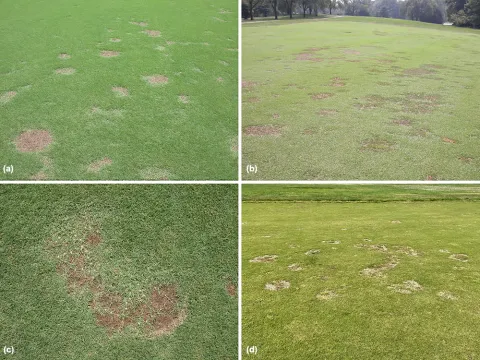
The disease appears as distinct ring-shaped patches or irregular areas of stunted grass. Initial symptoms often look like small chlorotic spots that eventually turn brown and die off.
What the section contains
Ophiosphaerella patch
In the center of the patches, the grass often dies, exposing the bare soil and ruining the aesthetic appeal of the lawn. Upon close examination, roots of the affected plants show darkening and necrosis.
As the disease progresses, patches can expand and merge into larger deformed areas. During the active phase, a bronze or orange discoloration of the leaf blades may appear along the edges of the spots.
The root system in the affected area becomes fragile and weak, causing the grass to pull away from the soil easily. This makes natural recovery during the growing season extremely difficult.
Unlike other lawn diseases, Ophiosphaerella patch can persist in the soil and organic debris for years, reappearing seasonally whenever environmental conditions are favorable.
The pathogen is a fungus named Ophiosphaerella narmari, which belongs to the class of ascomycetes. It is a highly specialized pathogen that targets the root systems of turfgrasses.
The fungus's mycelium grows actively in the soil, penetrating roots, stolons, and rhizomes. This process leads to the clogging of the plant's vascular tissues, cutting off nutrient transport.
The pathogen is capable of surviving for long periods in the form of dormant structures within the soil profile. This makes it exceptionally resistant to unfavorable environmental conditions.
The biology of the fungus is closely tied to the density of the turf, where it uses organic debris as a substrate to accumulate its infectious potential. High humidity and warmth facilitate its rapid spread.
Transmission of the pathogen can occur through irrigation water, contaminated gardening tools, or the movement of infested soil. Secondary infection typically happens through direct contact between healthy and diseased roots.
The disease develops most actively during periods of warm and humid weather, when soil temperatures reach 20–30 degrees Celsius. This range is optimal for fungal growth.
Poor drainage and excessive watering are critical risk factors. The presence of stagnant water in the root zone drastically accelerates the rate of infection and fungal proliferation.
Imbalanced lawn care, particularly a deficiency of potassium and phosphorus, weakens the turf's natural defenses. Stressed plants are significantly more susceptible to Ophiosphaerella narmari.
Mowing the lawn too short injures the root system and reduces the plant's vitality. A low cut prevents the turf from regenerating effectively after an initial infection.
Alkaline soil conditions promote the progression of the disease. Excessive liming without regular soil pH monitoring can inadvertently trigger a severe outbreak.
Ophiosphaerella patch is considered one of the most difficult diseases to manage in sports and ornamental lawns. It leads to the complete destruction of the turf stand in affected areas.
The primary harm is the deep damage to the root system, which prevents the grass from absorbing water and nutrients. Consequently, affected patches become highly sensitive to drought and heat stress.
The loss of lawn uniformity often forces owners to undertake expensive total sod replacement or extensive overseeding. This results in significant financial and time investments.
The disease impairs the durability of the lawn, making sports surfaces unsafe for play due to the weakened grass cover. This limits the operational use of athletic fields.
The long-term persistence of the pathogen in the soil makes simple reseeding ineffective without prior soil fumigation or replacement, complicating long-term site management.
To control the disease, it is essential to ensure high-quality drainage to prevent soil saturation. Regular aeration of the lawn helps improve oxygen access to the roots and reduces humidity.
Implementing a balanced fertilization strategy is crucial. Avoid excessive nitrogen during hot periods and maintain soil pH within a slightly acidic range to bolster turf health.
Fungicide application is effective only if strict treatment schedules are followed. Rotating products from different chemical classes is necessary to prevent the pathogen from developing resistance.
In cases of severe infestation, replacing the top layer of soil on the affected areas is recommended. This allows for a drastic reduction in the local infectious load.
Prevention includes disinfecting all gardening tools after use in areas with signs of the disease. Choosing resistant grass cultivars during the initial lawn establishment is also a key preventive measure.