
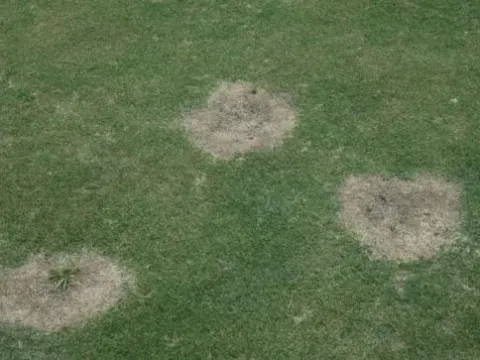
Ophiosphaerella root rot
Ophiosphaerella herpotricha
The causative agent of this disease is the ascomycete fungus Ophiosphaerella herpotricha. It is a soil-borne pathogen that primarily affects the roots and stem bases of cereal crops.
What the section contains
Ophiosphaerella root rot
The fungus survives in the soil as mycelium or as survival structures within crop residues. It is a specialized parasite that thrives when host plants are stressed or weakened.
During its life cycle, the fungus produces pseudothecia within the infected plant tissues. These structures facilitate the spread of spores during subsequent growth stages.
The fungus penetrates the root cortex, causing tissue necrosis and disrupting water and nutrient transport. This leads to the characteristic stunted growth of the plant.
Biological resilience allows the pathogen to persist in the soil for several years. This makes it particularly challenging to manage in continuous cropping systems.
The primary symptoms include darkening and necrosis of the root system and the base of the stem. Infected plants appear stunted compared to healthy ones.
Premature wilting of the lower leaves is often observed during the tillering and elongation phases. Severe infections lead to whiteheads, where the grain fails to fill properly.
Roots become brittle and turn dark brown or black, eventually decaying. A fine fungal mycelium may be visible on the base of the stem during wet weather.
Reduced tillering is a common indicator, often resulting in patchy stands across the field. Affected areas typically show thinning of the crop density.
Plants become unstable due to the loss of root mass and are prone to lodging. This structural damage significantly affects the mechanical integrity of the crop.
The disease development is favored by cool, moist soil conditions. The optimal temperature range for fungal growth is between 15 and 22 degrees Celsius.
Neutral or alkaline soil conditions are conducive to rapid pathogen spread. Heavy, poorly drained soils increase the risk of infection by keeping the root zone wet.
Continuous cereal cropping is the most significant factor contributing to high inoculum levels in the soil. Frequent planting of susceptible hosts leads to epidemics.
Early sowing in cold soils often stresses seedlings, making them more vulnerable to infection. Poor crop management practices significantly increase the risk.
Inadequate soil fertility, specifically low phosphorus and potassium levels, reduces plant resistance. Balanced nutrition is crucial for maintaining plant health.
The economic impact of Ophiosphaerella root rot is primarily due to yield reduction. Infected plants often produce fewer tillers and thinner grains, directly lowering harvest volume.
Total crop failure can occur in localized patches of the field, leading to significant acreage loss. This reduces the overall efficiency of the farm's production.
Increased production costs arise from the need for fungicide applications and intensified soil management. These expenses reduce the profit margin for grain producers.
Infected crops are more susceptible to other secondary pathogens and environmental stressors. This leads to a cumulative decrease in overall crop quality.
Long-term soil contamination forces farmers to rotate out of susceptible cereals. This limits the flexibility of farm operations and strategic planning.
The most effective management strategy is crop rotation, breaking the cycle for 3-4 years. Avoiding susceptible cereals helps reduce the soil inoculum density.
Deep tillage and proper residue management help accelerate the decomposition of infected plant material. This significantly lowers the pathogen survival rate.
Using certified, high-quality seeds treated with systemic fungicides is essential. Seed treatments provide a critical layer of protection during the seedling stage.
- Optimizing sowing dates to avoid cold soil.
- Balanced fertilization to support root strength.
- Effective control of grassy weeds that harbor the fungus.
In-season fungicide applications should be performed based on disease pressure. Constant monitoring is necessary to prevent significant yield losses.