
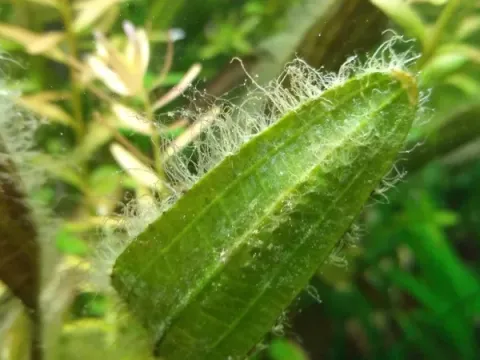
Oedogonium algae infestation
Oedogoniomycetaceae
The disease is caused by filamentous green algae belonging to the genus Oedogonium. These are multicellular organisms that thrive in freshwater environments.
What the section contains
Oedogonium algae infestation
They attach themselves to various substrates, including stems of aquatic crops like rice, or internal walls of irrigation systems.
The life cycle involves both asexual reproduction through zoospores and sexual reproduction, leading to the formation of hardy oospores that survive winter.
While not a traditional plant pathogen, its rapid proliferation creates an ecological imbalance that adversely affects the health of commercial crops.
The high adaptability of these algae allows them to dominate water bodies if nutrient levels are high enough to support massive growth.
The primary symptom is the appearance of bright green, silk-like filaments that form thick, matted layers in the water.
Affected plants are often covered in these slimy filaments, which effectively hide the foliage and block sunlight from reaching the leaves.
A foul, swampy odor often accompanies the presence of large clusters of these algae, especially when they begin to decay.
Crop stunting is common, as the mechanical weight and covering of the algae prevent the normal development of the plant's structural integrity.
In irrigation ditches and rice paddies, the water may appear turbid, and the algae can form massive, floating clumps that drift with the current.
The main driver for growth is eutrophication, caused by excessive nitrogen and phosphorus runoff from agricultural fields into water bodies.
Optimal growth occurs in warm, shallow, and stagnant water where sunlight penetration is high throughout the day.
Temperatures between 20-28 degrees Celsius are ideal for the rapid cell division of Oedogonium, leading to explosive population growth.
Lack of water circulation allows the algae to firmly anchor to plants and submerged surfaces without the risk of being washed away.
Insufficient maintenance of water levels in irrigation systems creates a stable environment for these algae to flourish undisturbed.
The algae compete aggressively with crops for light and nutrients, which are essential for photosynthesis and plant development.
During the night, heavy algae mats consume significant amounts of oxygen, leading to hypoxic conditions that can kill or severely weaken crops.
The physical encasement of plants by filaments restricts growth, hinders normal gas exchange, and can lead to secondary rot infections.
Decomposing algae release toxic organic compounds into the water, which further stress the roots of the crops and degrade water quality.
In aquaculture, these algae are considered a nuisance that decreases the survival rate of fish by interfering with feeding and movement.
Ensuring water movement is the most effective preventative measure, as running water prevents the algae from anchoring to plants.
Selective application of algaecides can be used when infestations reach critical levels, provided they are safe for the specific crop variety.
Biological control includes the introduction of herbivorous fish species, such as grass carp, which graze on filamentous algae efficiently.
Managing fertilizer runoff and practicing precise nutrient application helps prevent the conditions that lead to massive algae blooms.
- Regular mechanical removal using nets or rakes.
- Periodic drainage of irrigation canals to dry out spores.
- Monitoring water quality to detect early signs of eutrophication.