
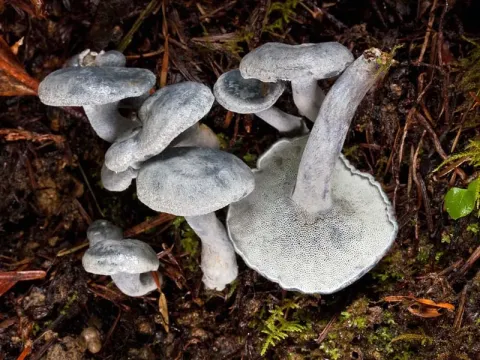
Neoalbatrellus
Neoalbatrellus
Neoalbatrellus is a genus of fungi belonging to the order Russulales, recognized as wood-decaying pathogens. These fungi primarily attack the root systems of various tree species, causing significant structural damage.
What the section contains
Neoalbatrellus
The fungus functions by invading the host's root tissues, where its mycelium secretes specific enzymes to break down cellulose and lignin, effectively dissolving the wood structure.
The reproductive cycle involves the emergence of fleshy fruit bodies (mushrooms) at the base of the tree or on the soil surface, releasing spores into the surrounding environment.
Mycelial spread occurs primarily through root contact between adjacent trees, allowing the disease to move steadily across a forest stand regardless of surface conditions.
Spore dispersal is facilitated by wind and water, which carry the fungal reproductive units to new, often already compromised or damaged, entry points on susceptible host trees.
The most prominent sign of Neoalbatrellus infection is the appearance of fruiting bodies near the base of the trunk, typically occurring in late summer or autumn.
Trees affected by root decay show noticeable foliage discoloration, thinning of the canopy, and a marked reduction in annual growth rates compared to healthy specimens.
Subterranean inspection reveals white or brown mycelial mats covering the roots, often accompanied by soft, spongy textures indicating the degradation of healthy wood fibers.
Increased vulnerability to windthrow is a critical late-stage sign, as the integrity of the root system is compromised, leaving the tree unstable even in mild conditions.
Bark abnormalities, such as weeping or localized necrotic patches at the root collar, may also indicate that the fungal infection has reached the lower stem of the tree.
Fungal development is highly favored by environments with high soil moisture content, poor drainage, or areas where the water table remains close to the surface for extended periods.
High-density, monoculture stands provide the ideal substrate for rapid spread, as the close proximity of root systems facilitates the movement of the mycelium.
Temperatures ranging from 18°C to 26°C are considered optimal for mycelial expansion and the eventual production of reproductive fruiting bodies above ground.
Human activity, particularly logging operations that leave behind root wounds, creates the primary pathway for Neoalbatrellus to infect otherwise healthy trees.
Accumulated woody debris and the presence of stumps serve as long-term reservoirs for the pathogen, allowing it to survive in the soil for several years.
This pathogen causes severe economic losses by reducing timber quality and leading to the eventual death of significant portions of a forest stand.
The insidious nature of root rot means that by the time visible symptoms manifest in the canopy, the internal decay of the root structure is often irreversible.
Beyond timber loss, Neoalbatrellus disrupts local ecosystem stability, causing gaps in the canopy and altering soil chemistry as trees die and decay prematurely.
The disease poses a physical hazard, as infected trees can fall without warning, creating significant safety risks for personnel in managed forest areas.
The persistence of the fungus in the soil makes it difficult to reforest the same area immediately with susceptible species, as the pathogen remains active for extended periods.
Effective management requires strict sanitation practices, including the removal of infected trees and their stumps to break the chain of root-to-root transmission.
Promoting biological diversity through mixed-species planting can significantly slow the spread of the pathogen compared to uniform monoculture forests.
Regular monitoring of forest stands for early signs of decay is crucial for managing potential outbreaks before they become systemic across a plantation.
Applying preventative measures to avoid physical damage to root systems during mechanical forestry operations is essential for limiting infection pathways.
In some cases, the use of targeted biological control agents that compete with Neoalbatrellus in the soil has shown promise in reducing the pathogen's overall virulence.