
Neoascochyta
Neoascochyta
Description
Symptoms
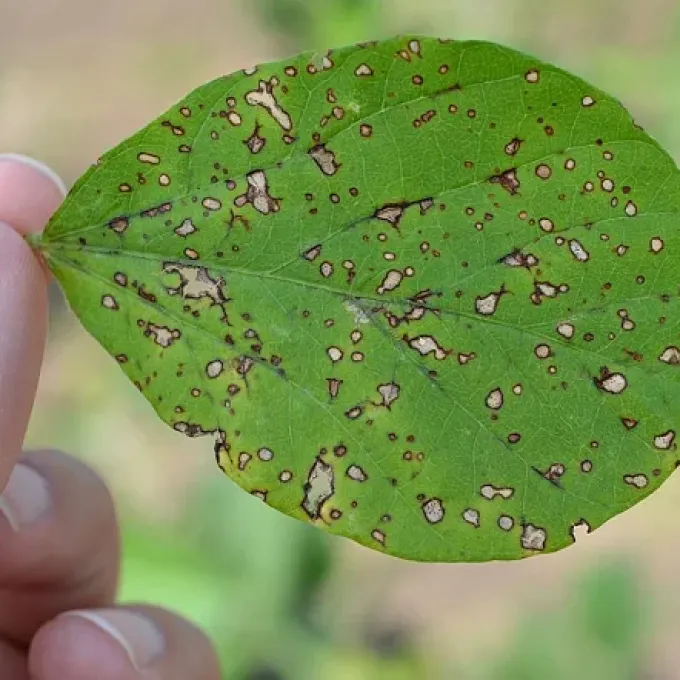
The symptoms of Neoascochyta appear as specific necrotic spots on various plant organs. Lesions are most commonly located on leaves and stems, featuring round or elongated shapes with a lighter center and a dark border.
Over time, the fungus forms fruiting bodies known as pycnidia in the center of the affected tissues. These appear as small black dots, visible to the naked eye or with a magnifying glass, which serve as a key diagnostic sign of the disease.
As the infection progresses, spots can coalesce, leading to premature yellowing and necrosis of the leaf blades. This significantly weakens the plant and disrupts essential photosynthetic processes.
On stems, the infection can cause deep necrosis, leading to lodging and obstructing nutrient flow. In high-humidity conditions, a characteristic grayish fungal bloom may appear on the lesions.
Severe infection by Neoascochyta significantly reduces grain quality, making it shriveled and unsuitable for long-term storage. Affected tissues often become secondary reservoirs for other plant pathogens.
Pathogen
The disease is caused by fungi of the genus Neoascochyta, belonging to the class Ascomycetes. Previously, many species of this genus were classified under Ascochyta, but modern molecular studies have established them as a distinct group.
The infection persists in the soil and on plant debris in the form of mycelium and pycnidia. The pathogen remains viable under unfavorable conditions, overwintering on crop residues in the field.
Conidia are primarily dispersed via splash-dispersal — through raindrops, irrigation splashes, or wind gusts. Transmission via insects and agricultural equipment is also possible.
Primary infection usually begins on the lower leaf layers that come into contact with the soil. Once they land on the plant surface, spores germinate in the presence of free water, penetrating tissues through stomata or micro-cracks.
The fungus life cycle involves active conidia production throughout the growing season, allowing the pathogen to complete several generations, making the disease highly dangerous under favorable weather conditions.
Conditions for development
The development of Neoascochyta is promoted by cool, humid weather with frequent rainfall. High relative humidity (above 80%) is a critical factor for spore germination and successful host infection.
The optimal temperature range for the pathogen's development is between +15°C and +22°C. Under these conditions, the fungus shows maximum activity and aggressiveness, rapidly spreading across the field.
Poor agricultural practices, such as high-density sowing, promote a microclimate with high humidity within the canopy, accelerating the spread of the disease to the lower parts of the plants.
Deficiencies in mineral nutrition, particularly potassium, lower the plant's natural resistance to Neoascochyta. Weakened plants become easy targets for infection even with a low initial pathogen load.
Failure to implement proper crop rotation and planting susceptible crops on the same field more frequently than every 3-4 years significantly increases the risk of epiphytotics due to the accumulation of spores in the soil.
Why it matters
The harmfulness of Neoascochyta is manifested in reduced overall crop productivity. The disease affects both vegetative and reproductive organs, leading to significant yield losses and poor product quality.
Due to the disruption of photosynthesis caused by extensive leaf necrosis, plant growth and development are suppressed. This directly affects thousand-kernel weight and final biological yield.
Stems affected by the fungus lose structural integrity, leading to increased lodging, which complicates harvesting operations and results in direct grain losses.
Infected seeds often exhibit reduced germination energy and viability. Using seeds from contaminated fields facilitates the rapid spread of the disease to new areas.
Economic damage includes not only direct yield loss but also the cost of necessary fungicide applications, which become essential when the infection pressure is high.
Protection
A fundamental control method is crop rotation, excluding susceptible crops from the same field for several years to break the fungus life cycle and lower the pathogen load.
Deep incorporation of plant debris into the soil during autumn is a critical measure. The rapid decomposition of crop residues deprives the pathogen of its primary survival base.
Using resistant or tolerant varieties is the most cost-effective protection strategy. Breeding for resistance to Neoascochyta helps significantly limit damage without excessive input costs.
- Seed treatment with certified fungicides before sowing.
- Applying balanced fertilizer doses to strengthen plant immunity.
- Timely fungicide applications during the growing season upon early signs of disease.
Applying fungicides during active growth effectively suppresses disease development. Treatments are most effective during the tillering and stem-extension phases, preventing early infection of the upper leaf layers.
Discussion
No discussions yet — be the first.