
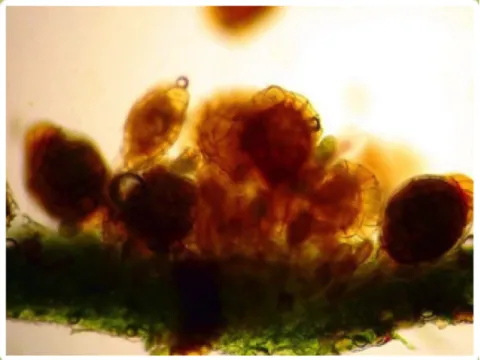
Eleusine smut
Melanopsichium eleusinis
The causal agent of this disease is the fungus Melanopsichium eleusinis, a member of the basidiomycete group known for causing various smut diseases. This pathogen is highly specialized, primarily affecting species within the Poaceae family.
What the section contains
Eleusine smut
The life cycle involves the production of teliospores, which remain dormant in the soil or on the surface of seeds until favorable environmental conditions occur. Once the conditions are right, the spores germinate, forming basidia that release basidiospores.
The fungus develops systemically within the host plant, often colonizing the tissues during the seedling stage. The infection typically remains latent until the plant begins to transition into its reproductive phase.
As the mycelium grows within the plant, it redirects nutrients intended for grain development toward its own growth. This parasitic process severely stunts the plant's overall vigor and physiological development.
Toward the end of the season, the fungus produces a large quantity of dark, powdery spores within the affected floral parts. These spores are then dispersed by wind and rain, completing the infection cycle.
The most prominent symptom of Eleusine smut is the formation of galls or enlarged, deformed structures in place of normal flower heads or spikes. These galls are often initially enclosed in a thin membrane.
As the galls mature, the membrane ruptures, revealing a dense mass of black, powdery spores. The transformation of the reproductive organs is usually complete, rendering the affected areas sterile.
Infected plants frequently exhibit stunted growth, reduced height, and abnormal tillering compared to healthy plants. In some cases, the stems and leaves may also show signs of twisting or chlorosis.
The destruction of internal tissues by the fungus disrupts the transport of water and nutrients throughout the plant. Consequently, even the non-directly affected parts of the plant often suffer from poor development.
Visually, infected fields can be identified by the striking difference between normal panicles and the dark, malformed spore-filled structures that replace the expected grains.
The development of the fungus is heavily influenced by high humidity and moderate temperatures. The most vulnerable period for the host plant is during seed germination and early vegetative growth.
Persistent monoculture of susceptible grass species allows the pathogen to build up high levels of inoculum in the soil. The spores are known for their longevity and can survive for several years in the field.
Wind is the primary vector for the long-distance dispersal of spores. Additionally, splashing raindrops and contaminated farm machinery play a significant role in spreading the infection within a single field.
Dense planting patterns can exacerbate the spread of the disease by creating a humid microclimate in the canopy. This environment is ideal for the germination of basidiospores and subsequent colonization of host tissues.
Neglecting weed management is a critical factor, as many wild grass species act as reservoirs for Melanopsichium eleusinis throughout the growing season.
The primary economic impact of Eleusine smut is a direct reduction in grain yield. Infected panicles produce little to no viable grain, leading to significant losses in total harvest tonnage.
Contamination of healthy grain with smut spores significantly lowers the market value and quality of the harvested produce. This often necessitates intensive cleaning and processing before the grain can be sold.
The presence of the disease undermines the health of the entire crop, making it more susceptible to environmental stress and opportunistic pathogens. This further reduces the overall profitability of the fields.
Increased soil inoculum levels pose a long-term problem for farmers, limiting the rotation options for the affected land. It forces a reliance on chemical interventions or fallow periods.
The cumulative effect of yield loss and increased costs for disease management can significantly reduce the farm's net income if the infection is not controlled promptly.
The use of certified, clean, and high-quality seeds is the first line of defense. Ensuring that the seed lot is free from spores is essential to preventing the introduction of the fungus to new fields.
Seed treatment with systemic fungicides is a highly effective prophylactic measure. Applying the correct fungicide can protect the emerging seedling from both soil-borne and seed-borne inoculum.
- Implement long-term crop rotation to break the pathogen's life cycle.
- Aggressive weed control to eliminate alternate hosts of the fungus.
- Deep plowing to bury infested crop residues and reduce spore survival.
- Monitoring fields during the heading stage to identify and remove early infection sources.
Where necessary, foliar fungicide applications may be considered during the early reproductive stages of the crop. Always follow local agricultural guidelines for the timing and dosage of such treatments.