
Poppy downy mildew
Peronospora arborescens
Description
Symptoms
Early symptoms appear as chlorotic, yellowish spots on the upper surfaces of the leaves, which gradually enlarge as the infection progresses throughout the plant.
A distinctive grayish-violet fuzzy growth appears on the underside of the leaves in the infected areas, representing the sporulation of the pathogen during humid periods.
As the disease advances, leaves become distorted, curled, and withered, leading to a visible retardation in the overall growth and development of the poppy plants.
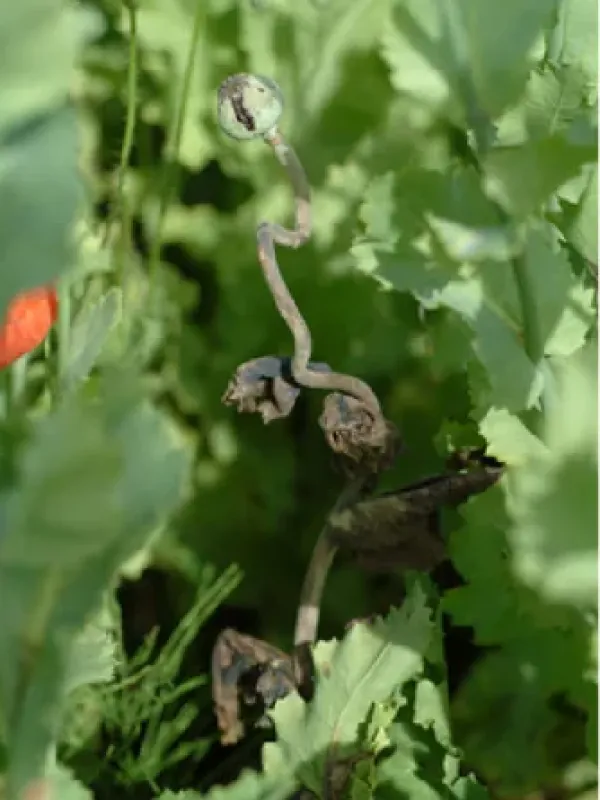
Stems often show signs of bending or twisting, and dark necrotic lesions may develop on their surface, disrupting the transport of nutrients and water.
Buds frequently fail to bloom properly or dry out prematurely, often resulting in deformed seed capsules that contain shriveled, low-quality seeds.
Pathogen
The causal agent of this disease is the oomycete Peronospora arborescens. It is a highly specialized pathogen that exclusively infects plant species belonging to the Papaveraceae family.
The pathogen survives in the soil primarily as oospores, which are extremely resilient and can remain viable for several years even under harsh climatic conditions.
Primary infection typically originates from contaminated seeds or infected crop debris left on the soil surface after harvesting, which acts as a permanent inoculum reservoir.
Under conditions of high humidity, these oospores germinate to produce sporangia, which are then disseminated by wind, rain splashes, or mechanical tools to healthy plant tissues.
Once the pathogen enters the plant, its mycelium spreads through intercellular spaces, systematically colonizing the host and effectively draining nutrients from the plant's cells.
Conditions for development
High relative humidity is the primary driver for the development and rapid spread of the disease, especially during periods of frequent rainfall and persistent morning dew.
The optimal temperature range for Peronospora arborescens sporulation and infection is between 10 and 18 degrees Celsius, making spring weather critical for initial outbreaks.
Overcrowded fields and dense plantings create a microclimate with poor air circulation, which prevents leaf surfaces from drying quickly and facilitates the spread of the disease.
Night-time moisture is essential for the germination of spores, allowing the pathogen to quickly colonize new tissues and spread rapidly across the field.
Short crop rotation intervals, where poppies are grown on the same land too frequently, lead to a massive buildup of inoculum in the soil, increasing the risk of infection.
Why it matters
The primary economic impact is a significant reduction in seed yield, as infected plants cannot produce enough energy to form well-developed, healthy seeds.
The quality of the poppy seeds and the oil content are severely compromised, rendering the harvest unsuitable for food or pharmaceutical industry requirements.
Widespread systemic infection often leads to the death of entire plants, resulting in significant thinning of the crop stand and massive yield losses during epidemics.
Compromised plants are more susceptible to secondary fungal or bacterial pathogens, which further degrade the overall health of the crop and complicate disease management.
The costs associated with repeated fungicide applications and the loss of crop value can significantly reduce the overall profitability of poppy cultivation.
Protection
The most effective strategy for managing downy mildew is strict adherence to crop rotation, ensuring a 4-5 year break between poppy crops to reduce soil-borne inoculum.
Deep plowing after harvest is essential to bury crop residues, which helps accelerate their decomposition and significantly reduces the survival rate of oospores.
Farmers should prioritize the use of high-quality, disease-free seeds and avoid saving seeds from fields that showed symptoms of infection during the growing season.
Maintaining proper plant density through thinning is crucial to ensure good air circulation and lower humidity levels around the foliage, which inhibits fungal development.
- Apply approved fungicides at the first sign of symptoms.
- Remove and destroy volunteer poppy plants from the fields.
- Optimize plant nutrition to increase natural host resistance.
Discussion
No discussions yet — be the first.