
Mastigosporium leaf spot
Mastigosporium
Description
Symptoms
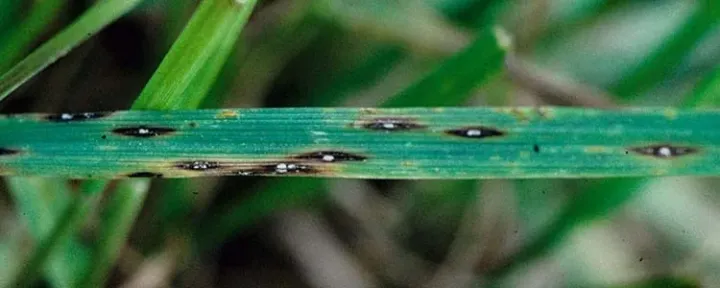
Symptoms initially appear as small, chlorotic spots that gradually expand into elliptical or circular lesions on the leaves.
The center of the lesions typically turns white to light gray, surrounded by a distinct dark brown or reddish-brown border.
Under humid conditions, the pathogen produces characteristic gray or olivaceous sporulation patches, often visible within the necrotic tissue.
As the disease progresses, these spots coalesce, leading to extensive necrosis and yellowing of the foliage, which is often termed "leaf blight."
Lower leaves are usually affected first, but in severe cases, the infection moves up the plant, significantly reducing the green surface area.
Pathogen
The disease is caused by fungi of the genus Mastigosporium, with Mastigosporium album (often linked to Mastigosporium rubricosum) being the primary species identified.
These fungi act as parasites, infecting the leaf blades of various grass species through stomata or wounds caused by environmental stress.
The fungus survives the off-season primarily on crop residues and infected plant debris remaining in the field or pasture.
Spore production (conidia) occurs on the surface of the lesions, allowing the pathogen to spread via wind and rain splash throughout the growing season.
Taxonomically, the fungus is classified within the mitosporic group, known for its specific morphology and preference for cool-season grass hosts.
Conditions for development
The pathogen thrives in cool, moist environments, making it a common issue during spring and autumn seasons in temperate climates.
High relative humidity and frequent rainfall are essential for the germination of spores and the subsequent infection of host tissue.
Dense, poorly ventilated stands of grass provide an ideal microclimate, trapping moisture and allowing the fungus to propagate efficiently.
Cooler temperatures, typically ranging from 10 to 20 degrees Celsius, are optimal for the development and spread of Mastigosporium species.
Prolonged periods of fog or dew on the leaf surface act as a primary catalyst for the widespread dissemination of the disease across a field.
Why it matters
The primary economic damage caused by Mastigosporium leaf spot is the reduction of forage yield and overall biomass quality in grass fields.
Heavy infection leads to the death of leaves, which decreases the nutritional value, palatability, and digestibility of the harvested hay or pasture.
Continuous infections weaken the plants, leading to a loss of vigor and potential death of susceptible grass species in a mixed-stand pasture.
Affected fields may experience decreased longevity, necessitating premature reseeding of the turf or fodder crops, which increases operational costs.
During severe outbreaks, the cumulative loss of photosynthetic tissue significantly reduces the plant's ability to store carbohydrates for winter survival.
Protection
Effective management begins with cultural practices, such as maintaining optimal plant density to ensure adequate airflow and reduce surface moisture.
Deep plowing or burying crop residues after harvest helps eliminate the overwintering source of the fungal inoculum.
Selecting and planting resistant grass cultivars is the most sustainable way to mitigate the impact of the disease in high-risk areas.
Balanced fertilization, particularly ensuring adequate potassium levels, helps strengthen plant cell walls and enhances general disease resistance.
While chemical control is possible via fungicides, it is generally reserved for high-value seed crops or intense forage management scenarios.
Discussion
No discussions yet — be the first.