
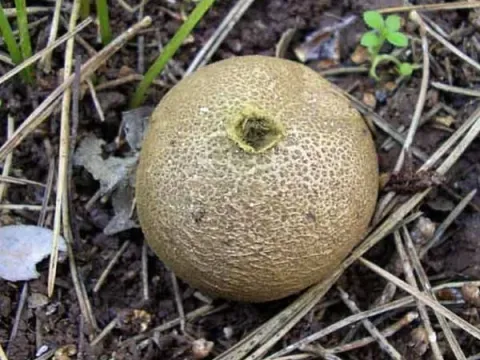
Grey puffball
Lycoperdon lividum
The grey puffball, scientifically known as Lycoperdon lividum, is not a plant pathogen. It is a saprotrophic fungus that feeds on decaying organic matter and does not cause any diseases in agricultural or garden crops.
What the section contains
Grey puffball
As a member of the Agaricaceae family, its biological life cycle is restricted to the decomposition of plant debris. It plays a significant role in ecosystems as a decomposer, breaking down complex organic molecules into simpler substances.
The fungus produces a mycelium that spreads through the topsoil or organic leaf litter. It lacks the ability to penetrate living plant cells, so it poses no risk to the health, vitality, or yield of cultivated vegetation.
Its fruiting bodies are small and globose. Young specimens are typically covered with minute spines or granules, which eventually fall off as the mushroom matures, revealing a smooth or slightly pitted, greyish surface.
Reproduction is carried out through spores. Once the internal tissue reaches maturity, the wall of the puffball ruptures, allowing spores to be released into the environment, primarily aided by external physical disturbances.
Lycoperdon lividum thrives in environments rich in decaying organic material. It is frequently observed in open grassy areas, pastures, and parklands where the soil remains adequately moist.
The development of the fruiting bodies is heavily dependent on moisture levels. Significant rainfall followed by mild temperatures creates ideal conditions for the fungus to appear above the soil surface.
Optimal growth occurs at temperatures ranging from 15 to 22 degrees Celsius. It prefers neutral to slightly acidic soil conditions and avoids extreme saturation or complete dehydration of the substrate.
The fungus shows a preference for well-aerated soils where organic turnover is constant. It does not require dense shade, making it a common inhabitant of meadows and managed landscapes.
Spore dispersal is highly efficient, relying on air currents and rain splashes to spread the species across diverse habitats. This strategy ensures the colonization of suitable areas without threatening plant life.
The grey puffball is completely harmless to agricultural operations. It is not an agent of plant disease, does not reduce crop yields, and requires no phytosanitary or protective control measures.
Unlike pathogenic fungi, it does not produce metabolites that could inhibit plant growth or damage root systems. Its presence is strictly beneficial or neutral to the overall state of the agro-ecosystem.
By breaking down organic debris, the fungus contributes to the natural fertility of the soil. This process of decomposition is essential for nutrient cycling, which ultimately benefits the plants growing nearby.
There is no economic damage associated with this species. In fact, it is often viewed as a sign of a healthy, biodiverse soil environment where organic matter is actively being processed.
Consequently, there is no need for any protection or intervention strategies. The grey puffball exists in harmony with its surroundings, fulfilling its role as a natural recycler in the environment.