
Grifola frondosa
Grifola frondosa
Description
Symptoms
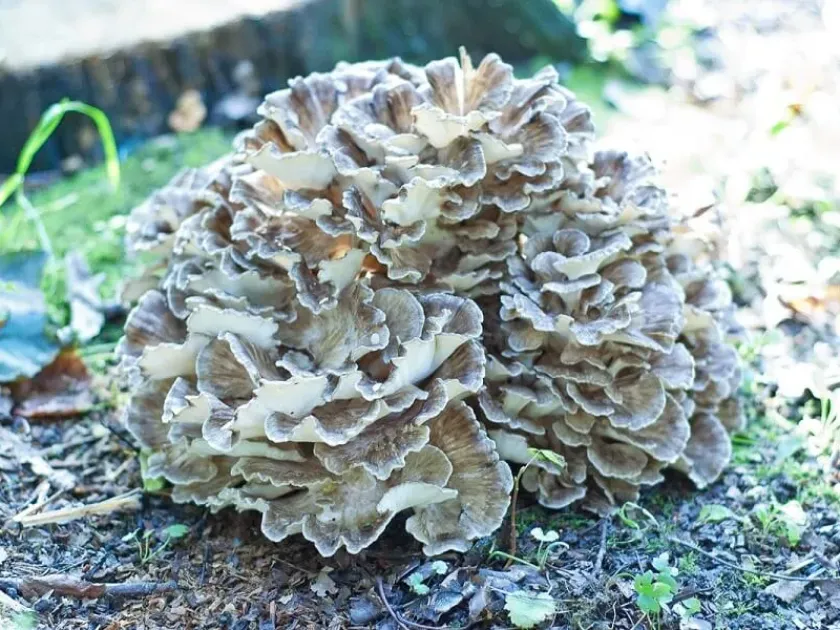
The first clear sign of infection is the appearance of branched fruiting bodies at the base of the trunk or directly on the roots. These bodies have a brownish color and a characteristic frondose shape.
The tree begins to show signs of physiological stress: premature yellowing of leaves, leaf shrinkage, and early defoliation. The canopy becomes sparse, and dieback of the crown is observed.
When the bark is removed near the root collar, a white fungal mat can be detected. Wood in the affected area becomes soft, fibrous, and light in color due to the destruction of lignin.
In advanced cases, the anchorage function of the roots is significantly compromised, making the tree highly vulnerable to windthrow. Even if the bark looks healthy, the tree may be completely decayed internally.
- Appearance of fungal fruiting bodies at the base.
- Changes in root wood structure and color.
- Wilting and premature leaf drop.
- Reduced annual shoot growth.
- Increased risk of stem breakage during storms.
Pathogen
The causative agent of the disease is the fungus Grifola frondosa, belonging to the basidiomycetes group. In forest pathology, this organism is classified as a facultative parasite that can also function as a saprotroph on woody debris.
This fungus causes destructive white rot in the roots and the base of the tree trunk. The mycelium penetrates living wood through wounds, actively degrading both lignin and cellulose.
The biological cycle of the pathogen includes the formation of massive fruiting bodies consisting of multiple overlapping caps attached to a common base. Spores are spread by air currents, infecting healthy trees through micro-injuries.
The fungus exhibits a preference for specific tree species, often targeting hardwoods. Its parasitism leads to a gradual decline in the tree's physiological resistance to other environmental stressors.
Unlike many obligate parasites, Grifola frondosa can persist in the forest floor for extended periods, waiting for suitable conditions to infect weakened hosts.
Conditions for development
The development of the fungus is favored by high soil moisture and humidity in the root zone, as well as an environment rich in humus. The pathogen is most active during periods of prolonged rainfall.
The most favorable conditions for infection involve the presence of mechanical injuries to the roots or bark, caused by human activity, soil cultivation, or damage by rodents.
Temperature ranges from +15 to +25 degrees Celsius are optimal for active mycelial growth and fruiting body formation. High heat and drought tend to inhibit the pathogen's activity.
Tree age is a significant factor: older and stressed specimens are far more susceptible to infection than young, vigorous saplings. Improper tree maintenance creates preconditions for the disease.
Fungal spread within the soil occurs slowly, which is why infection foci are often localized around a single tree, gradually moving to neighboring specimens through root contacts.
Why it matters
Grifola frondosa causes severe damage, leading to root system decay and the eventual death of the tree. The gradual degradation of roots deprives the plant of access to water and essential nutrients.
In forestry and landscaping, this fungus is dangerous because it creates hazardous trees. The loss of structural integrity in the stem and roots can lead to sudden tree failure, endangering nearby structures.
The economic loss involves the destruction of valuable timber, which becomes unsuitable for construction or woodworking due to the deep structural decay of wood fibers.
Infection significantly reduces the aesthetic quality of parks and gardens, making the vegetation look unkempt and necessitating the complete removal of infected specimens.
The consequences of the infection are often irreversible, as once a single tree is infected, the fungus tends to spread to the entire root system of the group of trees growing in the vicinity.
Protection
The primary control measure is the sanitary removal of severely affected trees. It is necessary to remove not only the trunk but also to extract as much of the root system as possible from the soil.
Prevention involves maintaining overall tree health: timely irrigation, fertilization, and protection against mechanical damage. A healthy tree is better able to limit the spread of the fungus.
If fruiting bodies are discovered, they should be removed and destroyed immediately before the sporulation process begins to limit the spread of spores throughout the site.
The application of copper-based fungicides or specific biocontrol agents may provide a preventative effect when applied to root or trunk wounds, although their effectiveness against established rot is limited.
Strict hygiene of gardening tools must be observed; after working with an infected tree, all saws and pruners must be disinfected with alcohol or a chlorine-based solution.
Discussion
No discussions yet — be the first.