
Longididymella clematidis
Longididymella clematidis
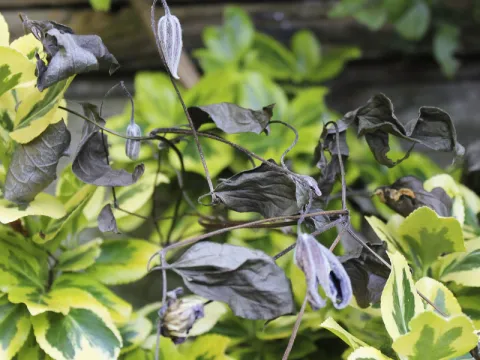
The primary symptom of infection by this fungal pathogen is the development of necrotic spots of varying shapes on the leaf blades. Initial signs often appear as small, water-soaked flecks that gradually darken over time.
What the section contains
Longididymella clematidis
In the center of the spots, pycnidia—fruiting bodies of the fungus—eventually form, appearing as minute black dots. Affected leaf tissue begins to dry out, curl, and drop prematurely, significantly reducing the plant's aesthetic value.
The infection may spread to leaf petioles and young shoots, causing deformation and stunted growth. In severe cases, the disease leads to the wilting of individual branches, leaving the entire shrub weakened and unable to bloom effectively.
Under high humidity, a spore-laden coating may appear on the surface of the spots, which is easily dispersed by wind to healthy parts of the plant. The coloration of the affected areas varies from grayish-brown to dark brown with a distinct border.
A diagnostic feature is the progression of spotting from the lower parts of the plant upward. Upon careful inspection, infection foci are often found to concentrate around areas where the plant tissue has suffered mechanical damage.
The causative agent is the fungus Longididymella clematidis, which belongs to the Ascomycota group. It is a specialized pathogen that primarily targets species within the Clematis genus.
The fungus overwinters in infected plant debris, fallen leaves, and stems as mycelium or pycnidia. Primary infection in the spring occurs via spores dispersed by raindrops or through irrigation splash.
The pathogen's life cycle is closely linked to the clematis plant's immune status. The fungus penetrates tissues through stomata or wounds on the epidermis, after which it initiates active growth within the intercellular spaces.
Throughout the growing season, the fungus can produce several generations of conidia, ensuring rapid disease spread under favorable climatic conditions. The pathogen can persist in the soil for short periods, but plant debris remains the primary reservoir.
Morphologically, the pathogen is adapted to a narrow host range, which is why the most severe outbreaks are observed in specialized nurseries and collection gardens. Genetic diversity allows the fungus to overcome the natural resistance of certain hybrid varieties.
Disease development is promoted by high air humidity, exceeding 80-85% for extended periods. Frequent rain, fog, and evening overhead watering create the ideal environment for spore germination.
A temperature range of +18 to +24 degrees Celsius is optimal for the active growth of Longididymella clematidis mycelium and sporulation. In these conditions, the incubation period of the disease can be reduced to just a few days.
Crowded plantings, where proper air circulation is lacking, become breeding grounds for infection. A lack of ventilation in the lower part of the shrub contributes to moisture stagnation, which is critical for the pathogen's survival.
Poor or imbalanced plant nutrition, especially an excess of nitrogen fertilizer, reduces the natural resistance of clematis to this disease. Weakened plants are infected much faster than those with robust immunity.
Neglecting good horticultural practices, such as failing to perform sanitary pruning and cleaning up fallen leaves, creates a constant source of infection. Spores overwintering in plant debris are ready to infect as soon as temperatures rise in the spring.
The primary damage results from premature leaf drop, which disrupts photosynthesis and weakens the entire plant. Consequently, the shrub enters winter poorly prepared, increasing the risk of cold injury or death.
The disease significantly lowers the ornamental value of clematis, making it unsuitable for vertical landscaping. The abundance of spots and necrosis strips the plant of the aesthetic beauty expected from a healthy bloom.
Systemic infection leads to root system exhaustion, resulting in gradual degradation and death of the shrub over 2-3 years. In young seedlings, the infection can cause a complete cessation of growth.
Economic damage is most noticeable in nurseries, where infected stock is discarded and destroyed. Expenses related to fungicide applications increase the overall cost of production.
In gardening, Longididymella clematidis infection necessitates the removal of significant vegetative mass, which disrupts the structural design and requires time for the shrub to recover its canopy.
The first step in control is strictly adhering to sanitary hygiene: regular removal and destruction of all fallen leaves and infected shoots in autumn. This significantly reduces the overwintering infection load.
Periodic thinning of the shrubs is recommended to ensure proper aeration. Correct plant spacing and placement help prevent the creation of humid micro-environments within the canopy.
During the growing season, at the first sign of the disease, fungicide applications with systemic and contact action should be performed. Copper-based products and specialized spot-control agents are effective.
- Preventative sprays in early spring with a 1% Bordeaux mixture.
- Balanced fertilization with potassium and phosphorus to strengthen immunity.
- Avoiding overhead watering and utilizing drip irrigation systems.
- Timely rogueing and disposal of severely infected plants.
The use of biological control agents based on Bacillus subtilis has shown promising results as a preventative measure. Regular monitoring of leaf condition allows for the detection of the problem at an early stage, enabling containment without heavy pesticide use.