
Lobariaceae
Lobariaceae
The Lobariaceae family consists of large, leafy lichens that are frequently found on the trunks and branches of mature trees in healthy ecosystems.
What the section contains
Lobariaceae
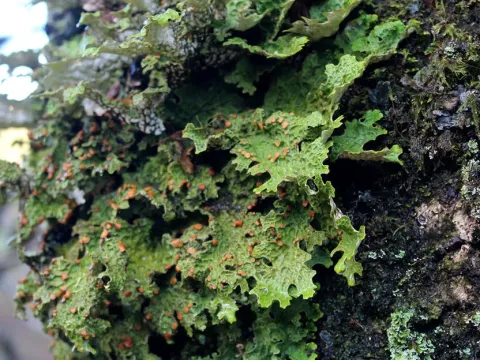
These lichens appear as expansive, lobe-like structures that are securely attached to the bark, featuring a distinct, often wrinkled or pitted surface texture.
Their appearance changes drastically with the weather, shifting from a vibrant, lush green when hydrated to a dull grey or brown when dehydrated.
Unlike parasitic fungi, Lobariaceae do not penetrate deep into the cambium layer or cause structural decay of the host tree's living tissues.
Signs of their presence are purely superficial, as the lichen maintains its own autonomous structure while merely utilizing the bark as a stable substrate.
It is a common misconception in amateur gardening to categorize Lobariaceae as a disease or a pathogen that requires treatment.
In reality, they are strictly epiphytes, meaning they live on the surface of the tree without drawing any nutrients or water from the plant itself.
The relationship between the lichen and the tree is classified as commensalism: the lichen benefits from the elevation and stability, while the tree remains unaffected.
They do not produce necrotic lesions, galls, or vascular wilts, which are typical hallmarks of true phytopathogens.
Therefore, classifying this family as a plant disease is incorrect, and they should be viewed as part of the tree's natural ecological community.
Lobariaceae serve as sensitive bioindicators, and their presence is contingent upon very specific and high-quality environmental conditions.
They require high atmospheric humidity and, most importantly, air that is free from industrial pollutants such as sulfur dioxide and heavy metals.
Growth is exceptionally slow, meaning these organisms only establish themselves in locations where the microclimate has remained stable for decades.
Because they are so vulnerable to air quality shifts, you will almost never find them in heavily urbanized or industrialized areas.
Their distribution is typically restricted to protected forests, old-growth woodlands, or remote rural gardens with clean, humid air.
There is no economic or physiological harm associated with the presence of Lobariaceae on any agricultural or horticultural crops.
They do not compete for minerals, sunlight, or water, nor do they encourage the growth of pathogenic bacteria or harmful insects on the tree.
In some instances, high coverage of lichens might suggest that the tree has a slow growth rate, but the lichen is an indicator of this, not the cause.
Removing them provides no benefit to the tree's yield, health, or longevity and is considered an unnecessary intervention in an orchard.
In fact, the presence of a diverse lichen population is often a sign of a robust and healthy ecosystem surrounding the trees.
Control measures are not applicable for Lobariaceae because they are beneficial indicators of environmental health rather than pests or diseases.
If you prefer a cleaner look for aesthetic reasons, simple branch thinning to improve airflow is sufficient to discourage their development.
Avoid applying fungicides to kill lichens, as these chemicals are far more hazardous to the tree and the beneficial soil microflora than the lichens themselves.
Focusing on the overall tree vitality through proper pruning, mulching, and balanced irrigation is the only recommended horticultural practice.
Embrace their presence as a sign of high air quality and biodiversity rather than trying to eradicate them from your garden.