
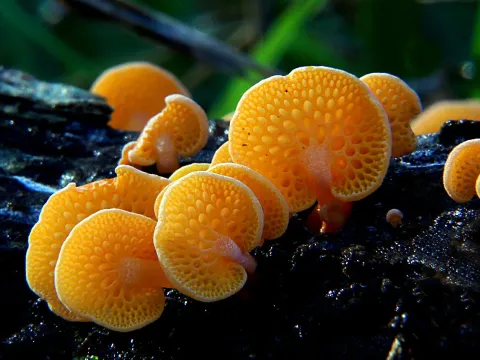
Orange pore fungus
Favolaschia calocera
The primary symptom of infestation is the appearance of small, vivid orange or red fruit bodies growing directly from bark or wood surfaces.
What the section contains
Orange pore fungus
These mushrooms feature a distinct fan-like shape with a deeply pored underside, making them easy to identify in moist environments.
Infected wood tissues often show signs of structural degradation, including softening and discoloration, characteristic of wood-decay fungi.
Clusters of these fungi are frequently found on fallen logs, but they can aggressively colonize live wood if the tree is stressed or damaged.
The presence of these bright fungi is a clear signal that the underlying wood has been compromised and is being actively consumed by the mycelium.
The pathogen is Favolaschia calocera, a basidiomycete fungus that has gained notoriety for its invasive nature in various global regions.
It spreads via spores that are dispersed by wind, water splashes, and potentially by invertebrates that visit the fungal fruit bodies.
The fungus is primarily a saprotroph, but it can behave as a facultative parasite, attacking weakened, stressed, or structurally compromised woody plants.
By producing enzymes that break down lignin and cellulose, the fungus causes white rot, leading to the rapid decay of the host's woody structural components.
The lifecycle of the fungus allows it to quickly adapt to different woody substrates, making it a highly successful colonizer in both natural and managed habitats.
High humidity and consistent rainfall are the most critical environmental drivers for the germination of spores and the development of the fungal mycelium.
Mild to warm temperatures create the perfect climate for the rapid emergence of visible fruit bodies, usually following periods of sustained moisture.
Mechanical injuries, such as pruning wounds, storm damage, or frost cracks, provide entry points for the pathogen to establish itself deep within the wood.
Crowded planting conditions often lead to poor airflow, increasing localized humidity levels and facilitating the spread of spores between neighboring plants.
Stressed or poorly maintained trees that lack adequate nutrients or suffer from other environmental pressures are significantly more susceptible to infection.
The main threat posed by this fungus is the internal weakening of branches and trunks, which significantly increases the risk of mechanical failure and limb drop.
In forest ecosystems, the fungus acts as an invasive species, displacing native fungal flora and potentially altering the natural decomposition cycles.
For ornamental and fruit trees, the infection leads to a gradual decline in vigor, reduced yields, and premature death of the affected plant.
The persistent production of spores creates a continuous infestation pressure, requiring constant vigilance and costly maintenance in managed garden settings.
Decaying wood serves as a reservoir for other secondary pathogens and pests, which can further jeopardize the health of the already stressed tree.
Effective control starts with proper sanitation, which involves the prompt removal and destruction of any wood showing signs of fungal fruit bodies.
Pruning tools must be disinfected with appropriate sanitizing agents between cuts to prevent the mechanical transmission of spores to healthy wood.
Protecting wounds with specialized sealants or horticultural wound paints can help shield exposed woody tissues from potential spore colonization.
Promoting tree health through correct irrigation, fertilization, and site management helps trees develop the natural vigor needed to resist colonization.
Regular monitoring of woody plants, especially during high-humidity seasons, is essential for detecting the fungus before extensive colonization occurs.