
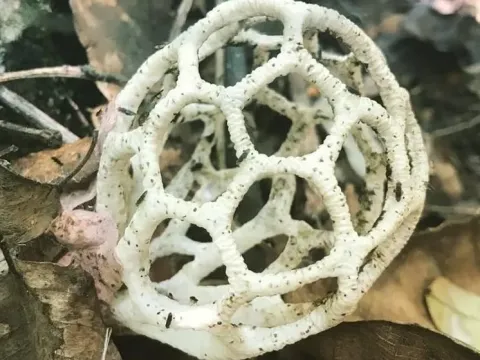
Ileodictyon gracile
Ileodictyon gracile
Ileodictyon gracile, commonly known as the white lattice fungus, is a member of the Phallaceae family. Its fruit bodies begin as small, white, egg-shaped structures buried within soil or mulch.
What the section contains
Ileodictyon gracile
As the fungus matures, the outer layer ruptures, revealing a distinct, white, lattice-like structure. This intricate shape is often mistaken for a structural anomaly or a sign of plant decay.
The fungus emits a noticeable scent, often described as fetid, which serves to attract insects that help disperse its spores. This odor is frequently confused with the smell of rotting plant tissue.
White mycelial threads are often visible in the soil or decaying organic matter. These threads are the vegetative part of the fungus and are a sign of healthy organic decomposition.
It is crucial to note that the presence of these signs does not imply that nearby plants are suffering from a disease, as the fungus is entirely harmless to living tissues.
The organism Ileodictyon gracile is a saprophyte, not a pathogen. It survives by decomposing organic matter rather than feeding on live plant cells.
Unlike true plant pathogens that invade roots, stems, or leaves, this fungus focuses exclusively on dead plant material. It is an essential part of the forest floor ecosystem.
There is no mechanism within the biology of this fungus that allows it to penetrate the cuticle or root cortex of healthy crops. It poses zero risk to plant health.
Spores of the fungus are dispersed through insect activity and water splashes. Once they find a suitable substrate with sufficient moisture and organic matter, they colonize it.
Classifying this fungus as a plant disease is inaccurate. In agricultural terms, it is considered a beneficial decomposer rather than an agent of plant infection.
The development of Ileodictyon gracile is heavily dependent on moisture and humidity. It typically emerges after periods of frequent rain or in consistently damp, shaded environments.
A high concentration of organic debris, such as wood chips, mulch, or leaf litter, is necessary to trigger the production of visible fruit bodies.
The fungus thrives in sheltered spots where airflow is limited, as these locations maintain the humidity levels required for the expansion of its lattice-like body.
Dry conditions effectively halt the growth of the fungus. During hot, dry summer months, the mycelium remains dormant within the soil structure.
Managing soil moisture and ensuring good drainage are the primary ways to limit the appearance of this fungus in a landscape or garden setting.
Ileodictyon gracile causes no physical harm to agricultural or horticultural crops. It does not induce wilting, necrosis, or any form of plant stress.
The only impact is purely aesthetic, as some gardeners may find the appearance and the associated odor of the mature fungus unpleasant.
Ecologically, the fungus is beneficial. By breaking down woody residues, it accelerates the formation of humus and recycles nutrients back into the soil for plants to use.
There is no record of economic losses or harvest reduction associated with this fungus, confirming its status as a non-threatening garden resident.
The presence of this fungus is often a sign of a rich, biologically active soil, which is generally a desirable characteristic for plant cultivation.
No chemical control or fungicide application is necessary for Ileodictyon gracile. Using such substances would be counterproductive and harmful to the soil's natural microbiome.
Mechanical removal is the recommended approach if the fungus is undesired. Simply collect the fruit bodies and move them to a compost pile where they can decompose safely.
Preventative measures involve good horticultural hygiene. Avoid creating excessive accumulations of woody mulch close to the stems of sensitive ornamental or crop plants.
Regular cultivation of the topsoil layer can disrupt the mycelial network and prevent the fungus from forming surface structures.
- Improve soil drainage to reduce the damp environments the fungus prefers.
- Remove stagnant wood debris from high-traffic garden areas if visibility is a concern.
- Practice balanced mulching to maintain soil health without encouraging excess fungal growth.