
Ileodictyon
Ileodictyon
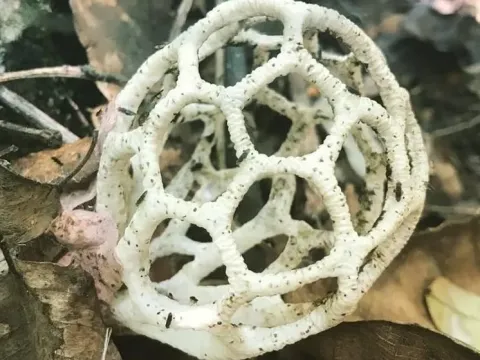
Ileodictyon is a genus of fungi belonging to the family Phallaceae, often referred to as lattice stinkhorns. It is crucial to clarify that, from a plant pathology perspective, this fungus is not a plant disease.
What the section contains
Ileodictyon
Ileodictyon species are saprotrophs, meaning they derive their nutrition from decaying organic matter such as dead wood, forest debris, or humus in the soil. They play a natural role in decomposition.
The life cycle begins with the development of a subterranean or semi-subterranean egg-like structure. As it matures, it ruptures to reveal a sophisticated, cage-like fungal body, which is characteristic of the genus.
These fungi do not possess the biological mechanisms to invade or parasitize living plant tissues. They do not produce phytotoxic compounds, and they do not cause any form of wilting, chlorosis, or tissue decay in crops.
Therefore, classifying Ileodictyon as a disease is scientifically inaccurate. It is merely a component of the soil mycobiota that thrives in nutrient-rich, moist environments.
The most prominent sign is the sudden emergence of strange, lattice-like white or yellowish fungal structures that appear on the soil surface, resembling a hollow sphere or cage.
Prior to the expansion of the lattice, the fungus exists as a rubbery, spherical egg, which is often found slightly buried in the soil or beneath leaf litter.
A notable feature is the pungent, carrion-like odor released during the spore-dispersal phase, which serves to attract flies that act as vectors for its spores.
The fungus is typically found in areas with high levels of decomposing plant material, such as garden beds with heavy mulching, near rotting logs, or in damp, shaded corners.
There are no negative visual symptoms on surrounding plants. The foliage, stems, and roots of nearby crops remain completely unaffected by the presence of this fungus.
Ileodictyon thrives in environments with high humidity and significant soil moisture. Excessive rainfall or over-irrigation are key factors that trigger the development of its fruit bodies.
The presence of organic matter is the primary requirement. Soils enriched with compost, leaf mold, or woody debris provide the necessary substrate for the fungal mycelium to flourish.
Temperature plays a role in its life cycle, as it favors warm, moist conditions which accelerate the decomposition process and the rapid growth of the lattice structure.
Adequate aeration of the topsoil, combined with moisture, creates a stable niche where the fungus can complete its reproductive cycle without competition from other soil microbes.
In shaded environments where organic debris remains consistently damp, the chances of observing Ileodictyon are significantly higher than in sunny, dry locations.
Ileodictyon causes no direct harm to cultivated plants. It is a completely passive resident of the garden ecosystem and does not compete with plants for water or nutrients.
The only minor inconvenience it may cause is aesthetic, or the unpleasant smell when the fungus is in its mature, spore-bearing stage, which lasts for a very short period.
From an agronomic standpoint, there is no economic loss associated with this fungus. It does not reduce yield, affect fruit quality, or compromise plant vigor in any way.
The application of fungicides against saprotrophic fungi like Ileodictyon is entirely unnecessary and can potentially disrupt beneficial soil microbial populations.
Treating it as a disease is a misconception; it does not pose a threat to the long-term health or productivity of any commercial or home garden crop.
Since Ileodictyon is not a plant pathogen, no specific control measures are required. Standard garden hygiene practices are sufficient to manage its presence if desired.
- Remove excessive woody debris, fallen branches, and decaying logs from the garden area.
- Improve soil drainage to prevent waterlogging and reduce surface moisture.
- Maintain proper spacing between plants to ensure adequate airflow and drier soil conditions.
- Monitor mulch levels to prevent an excessive buildup of decomposing material near the plant base.
If the fungus is undesirable for aesthetic reasons, the fruit bodies can be easily removed by hand and discarded along with a small portion of the underlying organic matter.