
Hymenula disease
Hymenula
Hymenula is an infectious fungal disease caused by imperfect fungi of the genus Hymenula (class Hyphomycetes). The pathogen belongs to a group of mycelial fungi that form spore-bearing structures in the form of characteristic flat or slightly convex crusts.
What the section contains
Hymenula disease
The biology of the pathogen is closely linked to the infection of vegetative and generative plant organs. The fungus penetrates tissues through natural openings or mechanical damage to the epidermis, gradually colonizing the intercellular space.
Reproduction occurs asexually through conidia, which are dispersed by wind, raindrops, or insects to healthy parts of the plant. Spores exhibit high survival rates in soil debris, ensuring primary infection in subsequent seasons.
The pathogen is characterized by a pronounced saprophytic stage, allowing the fungus to exist for long periods on dead plant residues while waiting for favorable conditions to move to susceptible living crops.
The genetic diversity of Hymenula species allows them to adapt to various climatic zones, making control a challenging task in intensive farming systems.
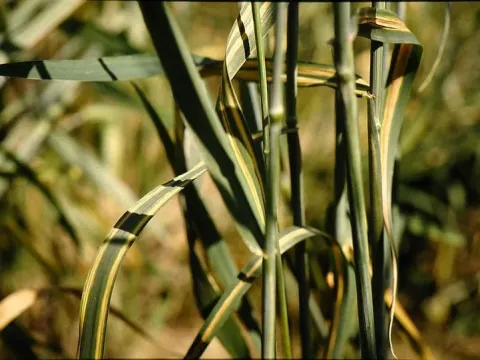
The main sign of Hymenula disease is the appearance of irregular spots on infected organs, such as stems, leaves, or fruits. The surface of the spots becomes covered with a dense coating, ranging in color from whitish to grayish-brown, corresponding to the fungus spore mass.
Tissues in infected areas gradually begin to soften, indicating the action of fungal enzymes that break down cellulose. A yellowish or dark border often forms around the spots, separating healthy tissue from the infected zone.
Under high humidity, the coating becomes more pronounced, sometimes merging into continuous crusts. In dry weather, infected areas may crack, and the epidermis may peel off, exposing the inner tissues of the plant.
When generative organs are affected, premature wilting and deformation are observed. In cases of severe disease progression, it is possible for individual shoots or the entire plant to die off completely.
During visual diagnosis, it is important to distinguish Hymenula from other mycoses, as the characteristic spore-bearing "pads" have a denser, almost leathery consistency compared to the fluffy coatings of powdery mildew.
The development of the disease directly depends on the hydrothermal indicators of the environment. Optimal conditions for spore germination and infection are considered to be moderately high temperatures (+18 to +24°C) and high relative humidity.
Prolonged periods of heavy rain, morning dew, and fog contribute to the accumulation of moisture on leaf surfaces, which is an ideal medium for active sporulation and the spread of infection.
Poor agricultural practices, particularly overly dense planting, hinder air circulation and slow the evaporation of moisture after rainfall, creating a microclimate favorable for the rapid progression of the pathogen.
Imbalanced mineral nutrition, especially an excess of nitrogen fertilizers, reduces the natural resistance of plants, making them more vulnerable to the penetration of fungal hyphae.
The presence of large amounts of undecomposed plant residues on the soil surface is a primary reservoir of infection, which is why disregarding crop rotation rules significantly increases the risk of epiphytotics.
The harmfulness of Hymenula disease is primarily expressed in a significant reduction of the plant photosynthetic area, which inevitably leads to the inhibition of growth and overall development of the crops.
Infection of fruits and seeds reduces their market quality and germination rates, rendering the harvest unsuitable for long-term storage or use as seed stock.
Severe infection of the plant vascular system by the pathogen leads to impaired transpiration and nutrient transport, which causes premature leaf and fruit drop.
Economic damage includes not only crop loss but also additional costs for protective measures, fungicide applications, and the sorting of damaged produce.
In large-scale farming, the spread of the disease can lead to the loss of a significant portion of production if measures for timely localization of infection centers are not taken in the early stages.
Prevention of Hymenula disease begins with strict adherence to crop rotation, which excludes the continuous cultivation of susceptible crops on the same site.
An important agronomic measure is the thorough incorporation of plant residues into the soil or their complete removal from the field after harvest, which deprives the fungus of its food source and overwintering sites.
To prevent the spread of infection, it is recommended to use only high-quality, fungicide-treated seeds and to select cultivars resistant to fungal diseases.
Optimizing plant density and timely thinning allows for the establishment of a normal microclimate, preventing moisture stagnation and creating unfavorable conditions for fungal activity.
In case of widespread symptoms, the use of specialized broad-spectrum fungicides is necessary, while strictly following application protocols and pre-harvest intervals to ensure environmental safety.