
Hypericum Sphaerulina leaf spot
Sphaerulina hyperici
Description
Symptoms
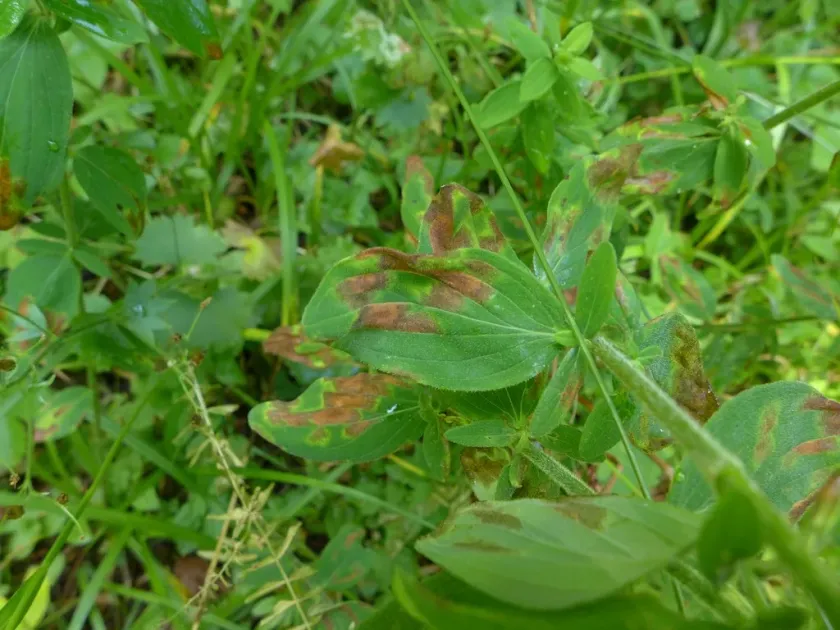
The primary symptom of the disease is the development of characteristic spots on the leaves of St. John's wort. Initially, these appear as small, light-brown circular dots surrounded by a darker margin.
As the infection progresses, the spots expand significantly and often merge, covering a substantial portion of the leaf blade. The dead tissue inside these spots frequently falls away, leaving small holes.
Microscopic examination of these necrotic spots reveals the presence of tiny black structures called pycnidia. These are the fungal fruiting bodies where the pathogen produces its spores.
Under humid conditions, a fine layer of mycelium may become visible on the undersides of the leaves, indicating active sporulation of the fungus.
Severe infections eventually lead to yellowing of the leaves, followed by premature leaf drop, which significantly weakens the overall vitality of the affected plants.
Pathogen
The causal agent of this disease is the ascomycete fungus Sphaerulina hyperici. It is a specialized parasite that exclusively targets plants within the Hypericum genus.
The fungus lives parasitically within the plant tissues, extracting nutrients and disrupting normal cellular functions. Its lifecycle is finely synchronized with the host's seasonal development.
Propagation occurs through the production of conidia, which are efficiently dispersed by wind, splashing rain, or insects to nearby healthy plants during the growing season.
The pathogen overwinters as mycelium or as perithecia (fruiting bodies) on infected plant debris, remaining viable in the soil or on crop residues until the next spring.
The biological success of Sphaerulina hyperici lies in its ability to persist in various environmental conditions and its high degree of host specificity.
Conditions for development
High humidity and moisture are the most critical factors for the rapid spread and development of the disease. Prolonged rainy weather or heavy dew creates an ideal environment for spore germination.
The pathogen thrives in temperatures between +18°C and +25°C, which accelerates the growth of mycelium across the plant's aerial parts.
Densely planted fields prevent proper air circulation, leading to stagnant moisture on leaf surfaces. This creates a highly favorable microclimate for fungal colonization.
Poor soil aeration and lack of sunlight exposure can further weaken the plant's natural defenses, making it more susceptible to penetration by the fungus.
Repeated planting of the same crop on the same site without proper rotation leads to a significant accumulation of inoculum in the environment.
Why it matters
The infection severely compromises the quality of the raw herbal material, which is critical for the pharmaceutical industry, as it reduces the concentration of active compounds.
Premature leaf drop leads to a measurable decrease in vegetative biomass, which translates into lower harvest yields and direct financial losses for farmers.
The disease interferes with the plant's photosynthetic efficiency, preventing it from accumulating the necessary levels of hypericin and essential oils.
Weakened plants are more prone to winter damage and susceptibility to secondary infections, which can lead to patchy and thinning crop stands over time.
In extreme cases, the entire plant can wither and die if the infection persists throughout the entire growing season without intervention.
Protection
Rigorous sanitation is the most effective preventative measure. All infected plant debris should be carefully collected and destroyed after harvest to reduce the overwintering inoculum.
Implementing a crop rotation schedule, with an interval of at least three to four years, is essential to disrupt the life cycle of the fungus in the soil.
Providing adequate spacing between plants ensures better ventilation, which significantly reduces the moisture levels necessary for fungal proliferation.
If environmental conditions favor a massive outbreak, the strategic application of approved fungicides can help suppress the spread of the infection and protect the crop.
- Use only certified, disease-free planting material.
- Maintain a strict weed control program to remove alternative hosts.
- Apply balanced fertilization to support vigorous plant growth.
- Monitor fields regularly for early symptoms of leaf spot.
Discussion
No discussions yet — be the first.