
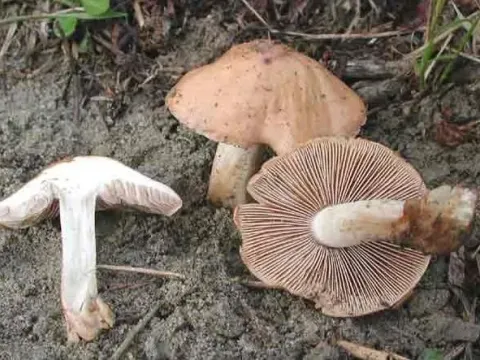
Hebeloma sinapizans
Hebeloma sinapizans
Hebeloma sinapizans is a gilled mushroom characterized by its ochre-brown cap, which often exhibits a distinct incurved margin in younger stages. The flesh is known for its strong, pungent odor, often described as radish-like.
What the section contains
Hebeloma sinapizans
The gills are adnate and frequently exude drops of liquid in humid conditions, a common feature among members of the Hymenogastraceae family. Spore prints appear as a rusty-brown color.
Below the surface, the mycelium forms a network within the soil and leaf litter. Its presence is often indicated by the smell of decaying organic matter or the appearance of fruiting bodies during wet weather.
Unlike parasitic plant diseases, this fungus does not cause wilting, necrosis, or lesions on plants. It grows independently, occupying the space where organic matter is readily available for decomposition.
Fruiting bodies often appear in clusters or fairy rings. This circular growth pattern is a result of the mycelium spreading outward in search of nutrients, which is a natural biological process in undisturbed or mulched soil.
The organism is identified as the basidiomycete fungus Hebeloma sinapizans. In agricultural science, it is categorized as a saprotroph, not a plant pathogen, playing a vital role in organic matter breakdown.
It does not possess the mechanisms required to infect living plant tissue. Its primary biological function is to recycle nutrients from dead organic material, contributing to the formation of humus in the soil.
The fungus secretes specialized extracellular enzymes capable of degrading complex polymers like lignin and cellulose. This process promotes soil aeration and improves the availability of minerals for nearby plant root systems.
Reproduction is achieved through basidiospores that are dispersed by wind. Once they settle in a suitable environment, they germinate to form a primary mycelium, which eventually colonizes the surrounding substrate.
Its ecological significance lies in maintaining soil health. By breaking down complex compounds, it prevents the accumulation of woody debris and supports the complex food web of the rhizosphere.
Hebeloma sinapizans thrives in conditions characterized by high humidity and moderate temperatures. The optimal development range for fruiting bodies is between 15°C and 22°C, usually following periods of rainfall.
It prefers nutrient-rich, organic soils often found near tree lines, parks, or gardens heavily amended with organic mulch. Adequate soil moisture and oxygen levels are essential for the mycelial growth cycle.
In agricultural settings, over-mulching with wood-based materials can create a perfect environment for this fungus. It is rarely found in sterile or highly disturbed soil environments where organic matter is lacking.
The fungus is sensitive to extreme environmental fluctuations. Prolonged drought or temperatures exceeding 28°C will halt the development of fruiting bodies, though the underlying mycelium may remain dormant.
Soil pH levels play a minor role, though the species generally favors slightly acidic to neutral environments. Proper drainage is key to limiting excessive moisture that might otherwise encourage uncontrolled fungal growth.
Hebeloma sinapizans poses no threat to crop health. It is not classified as a disease-causing agent, and it does not affect the vitality, yield, or structural integrity of agricultural plants.
The main concern regarding this species is its toxicity. It is an inedible mushroom that, if ingested by humans or pets, can lead to severe gastrointestinal distress due to its chemical composition.
Some growers mistakenly categorize it as a pathogen, leading to unnecessary fungicide applications. Using chemical control agents against a saprotrophic fungus is detrimental to the overall soil microbiome.
The fungus does not produce toxins that would inhibit seed germination or root development. It exists in a neutral relationship with crops, simply acting as a decomposer within the broader ecosystem.
In greenhouses, its presence is merely an indicator of high organic content and humidity. It does not warrant an emergency response, as it is a natural component of healthy, functioning soil environments.
Because Hebeloma sinapizans is not a pest or a disease, no specific plant protection measures are required. The most effective approach is the physical removal of fruiting bodies if they are undesirable.
To prevent colonization, avoid excessive use of raw wood mulch close to plant stems. Promoting good soil drainage and ensuring adequate air circulation around plants will naturally limit favorable conditions for the fungus.
Maintaining soil health through appropriate moisture management and the use of balanced compost (rather than fresh wood chips) helps prevent unwanted fungal blooms. Regular tilling can also disrupt mycelial networks.
If management is requested, prefer biological soil amendments, such as beneficial bacteria or mycorrhizal inoculants, to promote a competitive environment that discourages opportunistic fungi.
Education is the best control method. Recognizing that Hebeloma sinapizans is an indicator of organic soil activity prevents unnecessary chemical usage and supports sustainable agricultural practices.