
Hedyotis pseudocercospora leaf spot
Pseudocercospora hedyotidis
Description
Symptoms
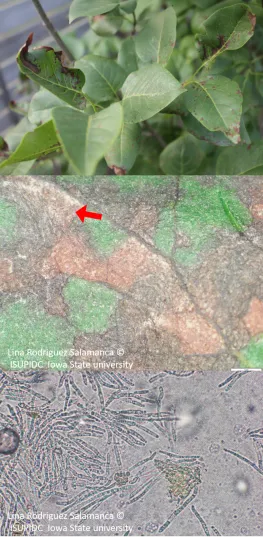
The primary sign of the disease is the appearance of characteristic spots on the leaves, which have a brown or dark gray hue. These spots often feature a chlorotic halo, indicating the plant immune system's response to fungal toxins.
In early stages, spots appear as small, rounded discolorations that eventually increase in size and may coalesce, covering a significant portion of the leaf area.
On the underside of the leaf, a velvety growth is often visible in the affected area, representing a cluster of conidiophores and conidia. This coating can be seen with the naked eye under good lighting conditions.
Severe infestation inevitably leads to premature yellowing, deformation, and leaf drop, which critically reduces the overall aesthetic appeal or productivity of the affected crop.
Diagnosis is confirmed by microscopic examination of scrapings from the spots, revealing the specific morphological features of Pseudocercospora conidia.
Pathogen
The disease is caused by the microscopic imperfect fungus Pseudocercospora hedyotidis, belonging to the order Capnodiales. This pathogen specializes in infecting members of the Rubiaceae family, particularly various species of the Hedyotis genus.
The fungus's biology is closely linked to plant debris, where the pathogen can survive during unfavorable periods. Reproduction occurs asexually via conidia, which spread through wind, rain splashes, or contact with contaminated equipment.
The fungal mycelium develops within leaf tissues, gradually colonizing the intercellular spaces. As spores mature, the pathogen forms characteristic conidiophores that emerge through the stomata to the leaf surface.
In phytopathological terms, this species is an obligate parasite that drains the host plant's resources to sustain its own life cycle. Its activity leads to the disruption of normal plant cell metabolism.
Research indicates that Pseudocercospora hedyotidis exhibits high tropism for vegetative organs, allowing the fungus to rapidly colonize the leaf surface under favorable microclimatic conditions.
Conditions for development
Disease development depends directly on air humidity levels. High humidity (over 80%) and the presence of surface moisture on leaves create ideal conditions for pathogen spore germination.
The optimal temperature range for active mycelial growth is between 20–25 degrees Celsius. In these conditions, the incubation period shortens, and primary symptoms become visible within just a few days.
Densely planted Hedyotis crops contribute to poor aeration and moisture retention, significantly increasing the risk of rapid spread of pseudocercospora within the plant community.
Lack of sunlight and poor ventilation in greenhouses or dense landscape plantings create a favorable microclimate for the buildup of the infectious background.
Periodic rainfall or intensive overhead irrigation accelerates the process of conidial dissemination to adjacent healthy plants.
Why it matters
The main damage caused by pseudocercospora is the significant reduction in leaf assimilation surface, which suppresses photosynthesis and weakens the entire plant.
The disease causes premature wilting, which in decorative horticulture leads to a loss of aesthetic value and potential plant death during chronic infections.
Fungus-weakened plants become more susceptible to other secondary infections and abiotic stressors such as drought or low temperatures.
In commercial cultivation of Hedyotis varieties, the infection leads to direct economic losses requiring additional costs for chemical treatments and waste management.
Reduced root system vitality is an indirect consequence of impaired nutrition caused by foliage damage, which slows down the plant's overall growth and development rate.
Protection
The most important preventive measure is strict adherence to agronomic practices, including ensuring optimal spacing between plants to allow for normal air circulation.
Regular sanitary pruning and the timely removal of all fallen leaves showing signs of infection significantly reduce the pathogen load in the soil and surrounding area.
The application of modern systemic and contact fungicides based on copper or triazoles effectively suppresses mycelial development and prevents further sporulation.
Implementing proper irrigation regimes that avoid wetting the aerial parts of plants is a key factor in reducing the risk of infection.
- Strict quarantine measures when introducing new plant material.
- Using mulch to prevent soil-borne spores from splashing onto leaves during rain.
- Regular monitoring of foliage conditions throughout the growing season.
Discussion
No discussions yet — be the first.