
Greeneria
Greeneria
The first symptoms of Greeneria on grapevines manifest as small, angular spots on the leaves. These spots usually appear dark brown or black and may have a lighter chlorotic halo surrounding them.
What the section contains
Greeneria
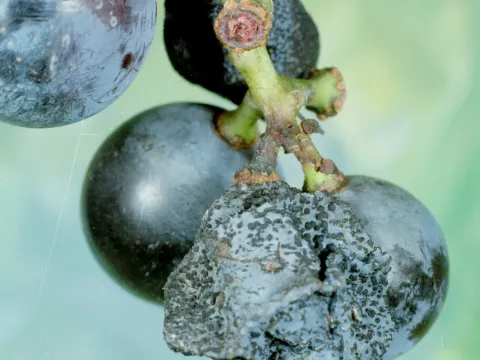
On the berries, the infection causes the formation of small, circular, sunken lesions. As the disease progresses, these lesions darken, and the berries often develop a bitter taste and prematurely drop from the cluster.
In high-humidity environments, small black structures known as pycnidia emerge on the surface of the infected spots. These serve as the spore-producing bodies of the fungus and are a critical diagnostic feature.
The pathogen can also affect the rachis and flower clusters, leading to necrosis. When the rachis is attacked, it becomes brittle, often resulting in the wilting and loss of entire grape clusters.
Leaves may exhibit premature yellowing and senescence. This reduction in effective photosynthetic area significantly weakens the plant's vigor and its ability to store energy for the following season.
The causative agent of this disease is the fungus Greeneria uvicola, which belongs to the group of mitosporic fungi. It is a specialized pathogen that primarily targets grapevines.
The fungus overwinters as mycelium and pycnidia in infected plant debris, including fallen leaves, mummified berries, and woody parts of the vine left in the field.
Infection spreads primarily through conidia, which are disseminated by rain splashes and wind. Upon landing on host tissue, the spores germinate and penetrate the plant through stomata or mechanical wounds.
Throughout the growing season, the fungus produces multiple generations of spores. This allows the pathogen to spread rapidly within a vineyard if environmental conditions remain favorable.
Greeneria uvicola displays high persistence in the environment. Its ability to survive in decaying matter makes long-term sanitation essential for breaking the disease cycle.
High relative humidity is the most significant factor driving the development of Greeneria. Prolonged periods of rainfall or persistent fog provide the surface moisture necessary for spore germination.
The fungus thrives at temperatures ranging from 20 to 25 degrees Celsius. These moderate conditions accelerate the incubation period and lead to rapid symptom development on susceptible cultivars.
Vineyards with dense canopy growth often suffer more severe outbreaks. Poor air circulation keeps the foliage wet for longer periods, which creates an ideal microenvironment for the fungus to establish infection.
Inadequate vineyard maintenance, such as failure to prune or remove weeds, contributes to the disease's persistence. Overgrown canopies provide high humidity and less exposure to sunlight.
Physical injuries caused by insects or hail are key entry points for the pathogen. Once the epidermal layer is damaged, the fungus can colonize the plant tissues much more efficiently.
The primary damage caused by Greeneria is the direct reduction of marketable yield. Affected berries become shriveled and unsightly, making them unsuitable for both fresh market consumption and winemaking.
The disease impairs the plant's overall physiology. Premature leaf loss prevents the vine from accumulating sufficient carbohydrates, leading to poor wood maturation and reduced winter hardiness.
Necrosis of the rachis directly impacts crop potential, as clusters may wither and fall before they reach maturity. This leads to substantial harvest losses in susceptible vineyard blocks.
Economically, the presence of the disease necessitates increased spending on fungicides. Producers must invest more time and resources into monitoring and applying chemical control measures.
In the long term, recurring infections weaken the vine's immune system, making the entire vineyard more susceptible to other secondary pathogens and environmental stressors.
Cultural practices are the foundation of effective management. Removing and destroying infected plant debris in the autumn is crucial for reducing the primary inoculum levels for the next season.
Proper canopy management, including leaf thinning and regular pruning, is essential. These practices improve airflow, lower humidity within the cluster zone, and allow for better spray penetration.
Preventative fungicide applications are necessary in high-risk areas during the growing season. Copper-based products and systemic fungicides are effective when applied according to the stage of infection.
Monitoring the vineyard for early symptoms allows for timely intervention. Spot treatments can often contain the spread of the disease before it reaches epidemic proportions.
Integrated Pest Management (IPM) strategies, which combine sanitation, canopy control, and judicious chemical use, provide the most sustainable long-term solution for managing Greeneria uvicola.