
Glomeromycetes
Glomeromycota
It is a common misunderstanding to categorize Glomeromycetes (Glomeromycota) as a plant disease. In reality, these are essential symbiotic fungi, not pathogens, that play a vital role in terrestrial ecosystems.
What the section contains
Glomeromycetes
They are the primary agents responsible for forming arbuscular mycorrhiza. This is a beneficial mutualistic relationship where the fungus colonizes the root system to facilitate nutrient exchange.
The fungus provides the plant with essential nutrients, particularly phosphorus and minerals, in exchange for sugars and lipids produced by the host plant through photosynthesis.
These organisms are strictly dependent on living plant hosts. They cannot complete their life cycle without a symbiotic partner, which fundamentally differentiates them from parasitic plant diseases.
In agronomy, these fungi are valued as bio-stimulants. They improve crop health and yield rather than causing any form of infection or damage to the plants.
There are no visible signs of damage, such as wilting, necrosis, or chlorosis, caused by Glomeromycetes. Instead, their presence is linked to better crop vigor and stronger root systems.
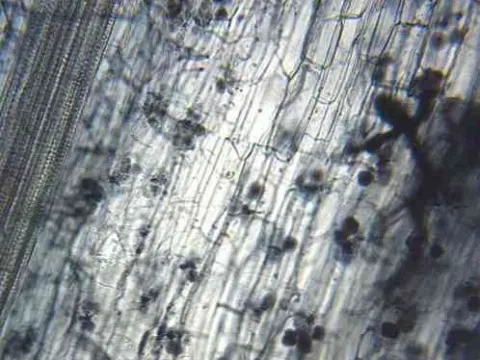
Detection requires laboratory analysis. Roots must be cleared, stained, and examined under a microscope to observe the specific fungal structures within the plant tissues.
Key indicators of colonization include the presence of arbuscules, which serve as the exchange interface, and vesicles, which store lipids for the fungus.
Improved performance under abiotic stress, such as drought or high soil salinity, can serve as a field-level indicator of a healthy mycorrhizal community interacting with the roots.
Essentially, the "sign" of healthy colonization is a well-developed, efficient root system that is better able to explore the soil profile for water and nutrients.
Development of arbuscular mycorrhiza is highly dependent on soil fertility. High phosphorus levels in the soil can trigger a plant to suppress fungal colonization, as the benefit of the symbiosis becomes less critical.
Soil moisture is a crucial factor for the growth of extraradical mycelium. Adequate water availability facilitates the spread of hyphae and improves the overall efficiency of the symbiotic network.
Soil structure and aeration are important for the survival of the fungal network. Tillage practices that disrupt the soil profile can destroy existing mycelial webs, hindering the recolonization of next-season crops.
The use of fungicides can have adverse effects on the community of Glomeromycetes. Farmers should be aware that systemic fungicides may unintentionally reduce the mycorrhizal population.
Crop rotation plays a significant role. Maintaining plant cover helps sustain the fungal spores and mycelium in the soil, ensuring a constant and healthy biological reservoir.
Glomeromycetes cause no harm to agricultural production. They are categorized as beneficial soil organisms that work to improve crop performance and yield stability.
Their primary economic value lies in reducing the need for high-input mineral fertilizers by increasing the efficiency of phosphorus absorption from the soil.
They also contribute to soil health by releasing glomalin, a glycoprotein that acts as a glue, enhancing soil aggregation and improving water-holding capacity and structure.
Plants associated with these fungi are significantly more resilient to root pathogens. The fungus physically occupies the root, limiting the space available for harmful microbes and stimulating plant defense mechanisms.
There is no evidence of harm associated with these fungi; in fact, their absence is often considered a limiting factor in intensive agricultural systems that rely heavily on chemical interventions.
Agronomic management should focus on fostering and conserving Glomeromycetes rather than controlling or eliminating them, as they act as natural growth enhancers.
Conservation tillage practices, such as No-Till, are highly recommended to keep the fungal network intact, allowing for immediate symbiotic interactions with young plant roots.
Farmers should aim for balanced fertilization strategies. Reducing excessive phosphorus input allows the plant to maintain its natural, beneficial relationship with the mycorrhizal fungi.
Incorporating diverse crop rotations, especially those involving mycorrhiza-dependent plants, helps to maintain a diverse and robust population of these beneficial fungi in the soil.
If soil degradation has significantly reduced fungal populations, the application of bio-inoculants containing spores of Glomus species can be used to re-establish the beneficial symbiotic community.