
Glomeromycota
Glomeraceae
Description
Symptoms
There are no visible "symptoms" of damage because Glomeraceae are beneficial symbionts. Plants colonized by these fungi generally show enhanced growth, vigor, and better color compared to non-mycorrhizal plants.
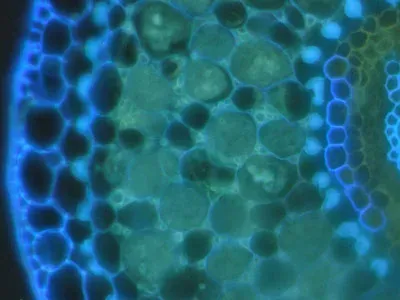
To confirm the presence of these fungi, researchers must use specific staining techniques on root segments and examine them under a microscope. The arbuscules are clearly visible within the root cells.
In the field, you will not see spots, wilting, or necrosis associated with these fungi. Instead, you may observe a higher density of root hairs and more robust root architecture.
Unlike parasitic fungi that cause tissue death, the colonization by Glomeraceae maintains the structural and physiological integrity of the root cells.
The visual evidence of success is the overall performance of the crop, including higher tolerance to abiotic stresses like drought or heavy metal toxicity in the soil.
Pathogen
Glomeromycota (specifically the family Glomeraceae) are not plant pathogens. They are essential arbuscular mycorrhizal (AM) fungi that establish symbiotic relationships with the majority of terrestrial plants worldwide.
The fungus colonizes the plant root cortex, developing specialized structures called arbuscules. These tree-like structures facilitate the efficient exchange of nutrients, primarily phosphorus and micronutrients, for plant-derived carbohydrates.
These fungi are obligate symbionts, meaning they require a living host to complete their life cycle. They exist in the soil as spores, germinating only when chemical signals from a developing root are detected.
AM fungi play a critical role in the global carbon and phosphorus cycles. They form extensive networks of hyphae in the soil, effectively extending the plant's root system surface area.
Their presence is a indicator of a healthy, biologically active soil, as they are highly sensitive to industrial agricultural practices like intensive tillage.
Conditions for development
The development of Glomeraceae is highly dependent on the availability of a living host root. Fallow periods without cover crops lead to a significant decline in fungal populations.
Soil moisture levels are crucial; while they tolerate varying conditions, optimal colonization occurs in well-drained, moderately moist soil. Waterlogging can suppress their development.
The levels of soil phosphorus regulate the symbiosis. Plants often reduce the colonization rate if they can easily access high levels of soluble phosphorus from fertilizers.
Temperature is a key factor, with most Glomeraceae species showing peak activity in the temperate range of 15°C to 25°C. Excessive heat or cold can inhibit spore germination.
The use of broad-spectrum fungicides can be detrimental to the mycorrhizal network, reducing the plant's capacity to access nutrients from the soil matrix.
Why it matters
Glomeromycota do not cause harm to agricultural crops. They are considered one of the most beneficial groups of organisms for plant health and agricultural sustainability.
Some growers may mistakenly view any soil fungus as a threat. However, distinguishing between mycorrhizal fungi and pathogens is vital for effective soil management.
While the plant does allocate some photosynthetic carbon to the fungus, this is not a disease but an investment that provides the plant with higher access to essential resources.
There is no economic damage associated with these fungi; in fact, their absence is often a limiting factor for yield potential in low-input farming systems.
Glomeraceae act as a biological defense system, often protecting roots from colonization by true pathogenic fungi through competitive exclusion and the stimulation of systemic resistance.
Protection
Management focuses on promoting and conserving the native mycorrhizal population. Protecting the soil environment is the most effective approach.
- Utilizing no-till or conservation tillage to maintain hyphal network integrity in the soil.
- Maintaining living roots in the soil throughout the year by using cover crops.
- Moderating phosphorus fertilization to ensure plants maintain the symbiotic relationship.
- Using organic matter and compost to support a diverse microbial community.
- Applying mycorrhizal inoculants in disturbed or sterile soils to restore beneficial fungal populations.
Discussion
No discussions yet — be the first.