
Ectrogellaceae
Ectrogellaceae
Ectrogellaceae is a family of obligate parasitic organisms belonging to the class Oomycetes. These microscopic pathogens are highly specialized, targeting primarily diatom algae within freshwater and marine ecosystems.
What the section contains
Ectrogellaceae
The pathogen completes its life cycle by invading the host cell, where it develops its thallus and eventually consumes the cellular content. The production of motile biflagellate zoospores allows the pathogen to disperse effectively through the water column in search of new hosts.
Biological studies indicate that Ectrogellaceae have evolved to recognize specific chemical signals from their hosts, ensuring high precision in infection. Once a cell is infected, the parasite rapidly utilizes the available nutrients to produce new generations of spores.
As oomycetes, they are distinct from true fungi, possessing cellulose in their cell walls rather than chitin. This classification is crucial for determining appropriate biological control strategies in aquatic environments.
The persistence of these pathogens in water bodies is largely dependent on the availability of susceptible host populations, making them significant regulators of algal blooms in natural and managed waters.
Infection by Ectrogellaceae is first characterized by a loss of chlorophyll intensity and translucency in diatom cells. The algae stop their normal metabolic activity, leading to a visible degradation of the chloroplast structure.
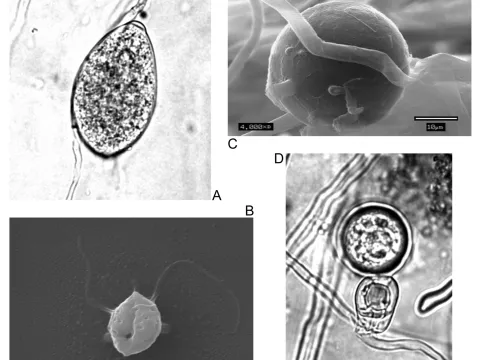
Microscopic examination reveals the internal presence of parasitic sporangia within the diatom frustule. As the infection progresses, the host cell becomes completely hollow, losing its structural integrity and vitality.
On a population level, the symptoms manifest as a sudden die-off of diatom colonies, resulting in discolored or murky water. Large clusters of once-healthy algae lose their buoyancy and start to clump together or settle to the bottom.
The release of zoospores is often preceded by a weakening of the host cell wall. Observations in affected water samples show a high density of mobile zoospores surrounding the decaying remains of the algae.
Advanced stages of the disease are marked by the presence of secondary bacteria and organic debris as the remnants of the infected host cells disintegrate, contributing to rapid water quality deterioration.
The development of Ectrogellaceae is highly dependent on environmental conditions, specifically water temperature and nutrient concentrations. Warmer temperatures generally accelerate the metabolic rate of the parasite.
High host density is a major factor that facilitates the rapid spread of the disease. In environments where diatoms grow in high concentrations, such as during seasonal blooms, the chances of successful host contact increase exponentially.
Water quality parameters like pH and light availability influence the stress levels of the host. Algae that are already weakened by unfavorable light conditions are significantly more susceptible to successful invasion by the parasite.
The presence of water currents plays a critical role in the transmission of zoospores. These mobile spores can be transported over long distances, effectively spreading the infection across large sectors of a pond or lake.
Seasonality often dictates the presence of the parasite, as the life cycle of Ectrogellaceae is synchronized with the natural growth cycles of their primary diatom hosts.
The primary impact of Ectrogellaceae on aquatic ecosystems is the depletion of essential primary producers. Diatoms serve as a foundational food source for zooplankton and many larval fish species.
In aquaculture, an uncontrolled outbreak can lead to significant economic losses by disrupting the food chain. The sudden decay of massive amounts of algae can cause severe fluctuations in oxygen levels, threatening the survival of fish populations.
The accumulation of decomposition products releases toxins or increases biological oxygen demand (BOD), which can negatively affect the overall health and immune status of aquatic life in the system.
In high-density aquaculture systems, Ectrogellaceae can cause total collapse of phytoplankton cultures, which are critical for the growth of high-value aquatic species during their early developmental stages.
Continuous presence and re-infection cycles can shift the microbial balance of a water body, making it less resilient to other environmental stressors and harder to manage long-term.
Managing Ectrogellaceae involves primarily preventative measures, such as monitoring phytoplankton populations and ensuring that algal blooms do not reach excessive, uncontrollable densities.
In closed systems, ultraviolet (UV) sterilization is a highly effective tool. It neutralizes motile zoospores before they can infect new host colonies, providing a reliable barrier against the spread of the disease.
Routine water chemistry monitoring is essential. By controlling the levels of nitrates and phosphates, managers can prevent the explosive growth of diatoms that serves as the perfect substrate for the parasite.
Biological control strategies, such as introducing or encouraging natural predators of the pathogens or using specific beneficial bacteria, can help maintain an ecological balance that suppresses the parasite's development.
- Regular microscopic monitoring of water samples for early detection.
- Optimizing nutrient loading to prevent massive algal blooms.
- Utilizing UV filtration systems in aquaculture facilities.
- Implementing quarantine procedures for new water sources or stock.