
Description
Symptoms
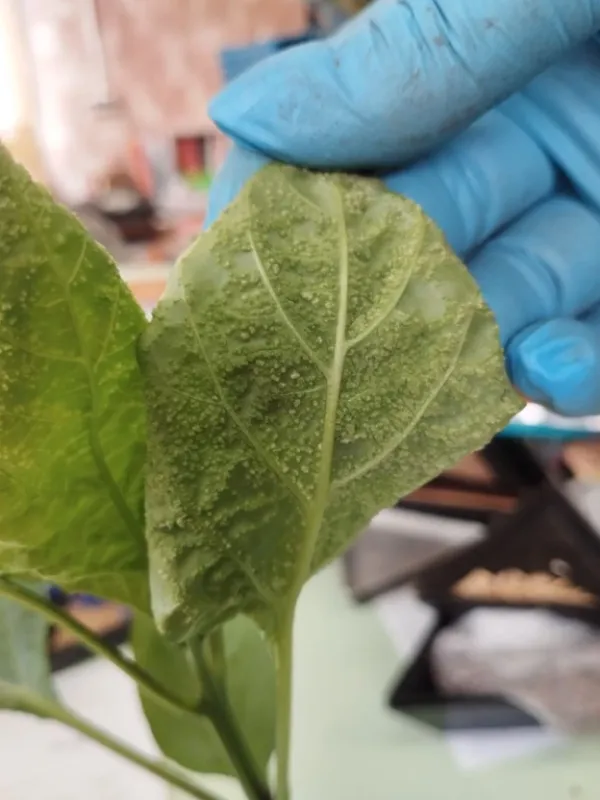
The primary symptom of edema (dropsy) is the appearance of small, raised bumps, blisters, or spots on the underside of leaves. Over time, these formations may turn yellowish, brown, or beige, resembling corky tissue.
The appearance of affected areas is often mistaken for fungal diseases or pest attacks, but in the case of edema, the damage does not spread rapidly throughout the plant. Affected areas may feel firm to the touch, and in severe cases, leaves become deformed, curl, and drop prematurely.
In orchids, such as Cattleya, symptoms manifest as depressed or raised spots that look like watery blisters. These manifestations are located primarily on young leaves that are receiving excess moisture.
It is important to distinguish edema from infectious diseases: with dropsy, spots do not have a characteristic "halo" or the fuzzy growth typical of fungi. When the tissue is cut, there is no sign of rot or a specific smell, confirming the physiological nature of the problem.
In the late stages, if conditions do not change, plant cells rupture due to excessive internal pressure, leading to tissue necrosis. The tissues become brittle, and the ornamental appearance of the plant is significantly reduced, which is critical for flowering crops.
Pathogen
Edema is not an infectious disease and is not caused by pathogens such as viruses, bacteria, or fungi. It is a strictly physiological disruption of the plant's water balance that occurs when cultivation standards are not met.
The essence of the process is that the roots absorb water faster than the plant is able to evaporate it through the stomata. This creates excessive turgor pressure inside the cells, leading to their physical rupture.
This problem is biologically linked to the plant's metabolism and transpiration rate. When moisture evaporation mechanisms are blocked by external factors, epidermal cells become overfilled with liquid and deform.
In agricultural practice, edema is often classified as a functional disorder characteristic of crops grown in greenhouses or indoor environments. It is incorrect to consider it a disease in the classical sense of transmission from plant to plant.
Understanding that edema is not a contagious pathogen allows gardeners to avoid using fungicides and insecticides, which are useless and even harmful to the state of a physiologically weakened plant.
Conditions for development
The key condition for the development of edema is a combination of high ambient humidity and overwatering of the substrate or soil. If the plant is in a cold and damp environment, the processes of moisture evaporation from the leaf surface almost stop.
The disorder most often appears during periods of rapid temperature changes or due to insufficient lighting in the winter. At low light levels, photosynthesis slows down, which directly affects the intensity of transpiration and moisture consumption by the plant.
Specific conditions for indoor plants, including Cattleya, are created when using excessively dense, water-retaining substrates that stay wet for a long time after watering. Lack of adequate air circulation around the leaves also exacerbates the problem.
Watering with cold water in a cool room triggers a slowdown in metabolic processes, making plant tissues more vulnerable to internal water pressure. Even short-term moisture stagnation at the roots can trigger the development of symptoms.
To prevent the development of edema, it is important to control not only the frequency of watering but also the quality characteristics of the plant's environment: lighting, root system aeration, and humidity levels in the room.
Why it matters
The harm caused by edema lies primarily in reducing the aesthetic appeal of ornamental plants, making them unsuitable for sale or exhibitions. Leaves lose turgor and become uneven.
Severe tissue damage opens the door to secondary infection. The cell ruptures caused by the swelling are an ideal environment for bacteria or fungal spores to settle, which would normally not be able to penetrate through the intact leaf cuticle.
In orchids like Cattleya, edema can lead to a cessation of growth in young pseudobulbs and the development of necrotic areas on the leaves. This slows down the overall development of the plant and may lead to a lack of flowering in the current season.
When the problem is systematically ignored, the plant becomes exhausted. A prolonged state of stress disrupts carbohydrate metabolism, making the plant more susceptible to any external negative environmental factors.
In commercial greenhouses, a massive outbreak of edema can lead to the write-off of a significant percentage of stock. Although most specimens can recover, their commercial value is often lost forever.
Protection
The primary control measure is the adjustment of the watering regime. It is necessary to wait for the substrate to dry out before the next watering and to exclude watering at night, when the plant's water evaporation processes are minimal.
It is important to provide good ventilation where plants are kept. Installing fans or organizing constant airflow helps to increase transpiration and prevent moisture stagnation around the leaf blades.
Lighting intensity should be increased, as active photosynthesis stimulates the opening of stomata and promotes the normal evaporation of excess water. Supplemental lighting with phyto-lamps is recommended during the winter.
When growing orchids like Cattleya, it is necessary to use loose, well-aerated substrates (large bark, sphagnum moss, perlite). If the disease has already manifested, repotting into a more suitable soil with the removal of severely damaged roots is recommended.
Edema prevention includes creating balanced conditions:
- Optimizing watering based on light and temperature levels.
- Ensuring air circulation around plants.
- Using loose soil mixes with excellent drainage.
- Monitoring humidity levels in the greenhouse or room.
Pathogens and affected parts
Affects crops · 1
Discussion
No discussions yet — be the first.