
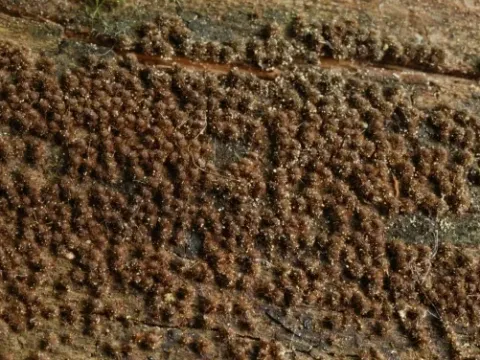
Echinosphaeria
Echinosphaeria
The disease is caused by fungi belonging to the genus Echinosphaeria, which are members of the Ascomycota phylum. The pathogen survives as mycelium within host plant debris or in the soil, ready to infect new vegetation.
What the section contains
Echinosphaeria
The lifecycle involves the production of perithecia, small fruiting bodies that embed themselves into the host plant tissue to release spores. These spores are primary vectors for the spread of the infection during the growing season.
The fungus functions as a localized parasite, invading the epidermal cells and deriving nutrients from the host plant, eventually leading to cellular degradation.
Laboratory diagnosis often involves observing the specific morphology of the perithecia under a microscope to distinguish Echinosphaeria from other similar fungal pathogens.
Understanding the biology of this pathogen is crucial for predicting potential outbreaks and timing the application of control measures effectively.
Initial symptoms typically appear as small chlorotic spots on the leaf surface, which gradually expand and darken into brown or necrotic lesions.
As the disease progresses, tiny black fruiting bodies develop within these lesions, giving the surface a speckled or pimpled appearance.
Tissue death within the spots can result in 'shot-hole' symptoms, where necrotic areas dry up and fall out of the leaf blade, leaving characteristic holes.
Symptoms on stems and petioles manifest as elongated, dark streaks or lesions that can impede the flow of nutrients and water to the upper parts of the plant.
Severe infestations often result in premature yellowing, withering, and drop of foliage, significantly weakening the plant's overall vigor.
High humidity and moderate temperatures are the most critical environmental drivers for the development and spread of Echinosphaeria.
Periods of prolonged leaf wetness, such as after heavy rain or morning dew, are essential for the germination of fungal spores on plant surfaces.
Poor air circulation within dense canopies creates a microclimate that allows the fungus to proliferate rapidly and infect adjacent healthy tissue.
Plants that are already under stress due to nutrient deficiencies, waterlogging, or physical wounds are significantly more prone to infection.
The pathogen thrives during the growing season when the temperature ranges consistently between 18°C and 24°C, which facilitates optimal fungal growth.
The primary damage caused by this disease is the reduction of the plant's photosynthetic capacity, which directly translates into lower crop yield.
The quality and marketability of the produce are significantly compromised, as lesions can cause fruit or leaf tissue to become unappealing or unmarketable.
Plants weakened by the disease are more susceptible to secondary infections by other pathogens and are less resilient to environmental stresses.
Systemic damage to the foliage leads to accelerated senescence, shortening the active growing period and preventing the plant from reaching its full potential.
In high-intensity agricultural systems, an outbreak can lead to significant economic losses if the infection is not monitored or controlled in time.
The most effective strategy for controlling Echinosphaeria is the implementation of a diverse crop rotation system to break the disease cycle.
Sanitation practices, including the removal and destruction of crop residues, help to significantly reduce the primary inoculum levels in the field.
Choosing resistant varieties or hybrids is a key preventative measure, as it provides a robust defense against the establishment of the pathogen.
- Deep plowing to bury infested plant material.
- Application of preventative fungicides during high-risk periods.
- Maintaining proper spacing to ensure adequate air circulation.
Chemical intervention should be strategically timed and used as part of an Integrated Pest Management (IPM) program to achieve the best results.