
Echinodontiaceae
Echinodontiaceae
The Echinodontiaceae family comprises specific wood-decaying fungi that act as serious pathogens for a wide variety of tree species. These fungi are known for their slow but destructive growth within woody tissues.
What the section contains
Echinodontiaceae
This type of disease is classified as heart rot or wood decay. The fungi function as obligate parasites, feeding on the lignin and cellulose within the host tree.
The pathogen enters the tree through physical wounds, broken branches, or cracks in the bark. Once inside, the mycelium gradually colonizes the interior of the trunk.
The life cycle involves the formation of large, perennial, woody fruiting bodies. These bodies often feature a distinct toothed or spine-like underside, which is characteristic of the family.
Because the infection develops over many years, the tree may appear healthy from the outside even while its structural integrity is being compromised from within.
The most visible sign of infection is the presence of large, shelf-like or hoof-shaped fruiting bodies protruding from the trunk of the tree.
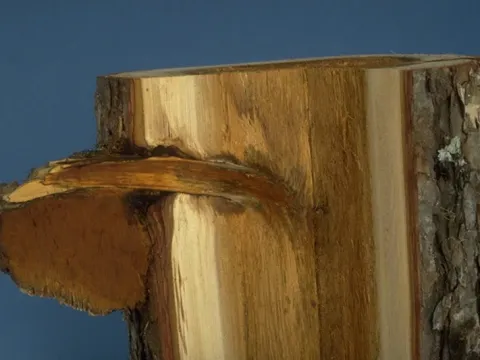
Internally, the disease manifests as a progressive white or yellow rot. The wood becomes soft, loses its density, and develops a fibrous texture.
On early stages of the disease, external signs are minimal, but deep fissures or sunken patches in the bark may indicate internal decay.
A change in the shape of the trunk, such as swelling or abnormal growths, is often a symptom of severe internal structural damage caused by the mycelial network.
Late stages of the disease are marked by top-dieback, sparse foliage, and the increased vulnerability of the tree to breaking during high winds.
High humidity levels and poor air circulation within a forest or plantation create the ideal conditions for the colonization and spread of these fungi.
The disease is most prevalent in old-growth or over-mature forests, where trees are naturally weaker and more susceptible to pathogen establishment.
The presence of fresh wounds on the tree is the primary factor for successful spore infection. Moist environments keep the spores viable for longer periods.
Clustered planting schemes where trees grow close together facilitate the spread of the mycelium through root grafting or direct contact between branches.
Lack of proper forest hygiene and the accumulation of decaying timber provide a continuous reservoir for spores to reach healthy trees.
The primary damage is the complete loss of the commercial value of the wood, rendering it unsuitable for construction, furniture making, or any timber-based industry.
Echinodontiaceae cause significant structural decay, which poses a safety hazard in public parks, forests, and residential areas due to the risk of falling branches or trunks.
The disease reduces the overall growth rate and vigor of the tree, causing significant economic losses in silviculture and forest management.
Weakened trees become highly susceptible to secondary pests, including wood-boring insects, which accelerate the process of tree death.
The presence of the fungus in a stand serves as an ongoing source of infection, slowly degrading the health of the entire forest ecosystem.
Effective management begins with strict sanitation practices, including the prompt removal of infected trees and stumps from the stand.
Minimizing mechanical injury to standing trees during logging or thinning operations is crucial, as any open wound is an entry point for the fungus.
In ornamental or valuable trees, the application of protective sealants to pruning wounds or existing injuries can prevent spore colonization.
Routine forest surveys and monitoring for the presence of fruiting bodies allow for early detection before the decay becomes critical.
- Sanitary removal of infected and dead trees.
- Prevention of bark and trunk wounds during work.
- Application of fungicides on pruning cuts.
- Regular monitoring and forest health assessments.
- Clearance of woody debris to reduce spore sources.