
Echeveria rust
Puccinia echeveriae
Description
Symptoms
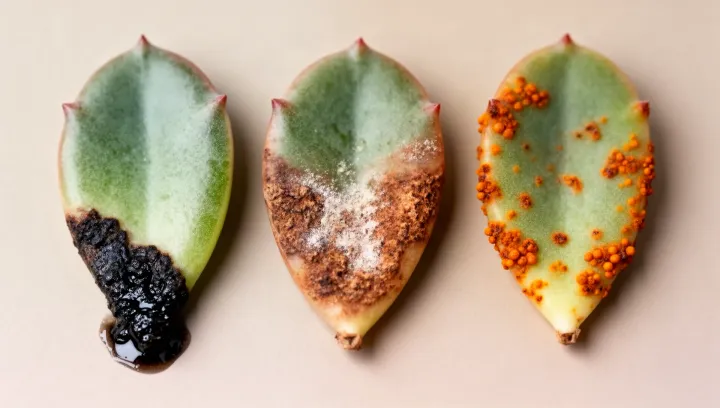
The primary symptom of Echeveria rust infection is the appearance of distinct pustules on the leaves and stems of the succulent.
Initially, small chlorotic spots develop on the epidermis, which soon transform into raised, reddish-brown or orange lesions.
As the disease progresses, these lesions rupture the plant tissue to release powdery spores, giving the plant a classic "rusty" appearance.
Affected leaves eventually turn yellow, lose their turgor, become shriveled, and may eventually drop off the main rosette.
In severe cases, the infection causes extensive tissue death, leading to a stunted growth habit and the loss of the plant's ornamental appeal.
Pathogen
The disease is caused by the fungus Puccinia echeveriae, which is an obligate parasite belonging to the order Pucciniales (rust fungi).
This pathogen specifically targets succulent species, extracting nutrients directly from the living cells of the host through specialized haustoria.
The fungus propagates through spores that are easily disseminated by air currents, water splashes, or contaminated gardening tools.
It can persist within the plant tissue in a latent state, manifesting as visible pustules only when environmental conditions become favorable.
Due to its specialized life cycle, this rust fungus can rapidly adapt to greenhouse environments, making it a persistent threat to collections.
Conditions for development
High relative humidity and stagnant air are the primary drivers of Echeveria rust development in indoor or greenhouse settings.
Water droplets left on the leaf surfaces after overhead watering provide the necessary moisture for spores to germinate and infect the plant.
Poor ventilation prevents the surface of the plant from drying quickly, which creates an ideal microclimate for fungal proliferation.
Overcrowded conditions in collections reduce air circulation and facilitate the rapid spread of spores from one plant to another.
Environmental stress, such as low light or improper temperature fluctuations, can further weaken the plant's defenses against the fungus.
Why it matters
Echeveria rust causes significant damage to the aesthetic value of the plants, making them unsightly and unsuitable for display or sales.
The infection creates a metabolic drain on the host plant, as the fungus continuously siphons resources away from the plant's growth processes.
If left unchecked, the rust can spread throughout an entire succulent collection, causing significant financial loss and the death of rare specimens.
Wounds caused by rust pustules serve as entry points for secondary bacterial and fungal pathogens, which can lead to rapid rot.
Severely infected plants struggle to recover, often showing long-term damage and a failure to thrive or produce offsets.
Protection
Cultural control includes maintaining low humidity levels, ensuring proper ventilation, and avoiding overhead irrigation entirely.
Regular monitoring of the collection is essential to catch early signs of infection and isolate the affected specimens immediately.
Systemic fungicides containing triazoles or copper-based formulations are effective in suppressing the fungus and preventing further spread.
When treating, ensure thorough coverage of the entire plant surface to reach both the active lesions and the dormant spores.
- Prune and destroy severely infected plant parts.
- Sterilize all gardening tools after handling diseased plants.
- Quarantine new acquisitions before introducing them to the main collection.
Discussion
No discussions yet — be the first.