
Chromista
Chromista
Chromista is a diverse group of organisms that includes the class Oomycetes in the context of phytopathology. While often historically grouped with fungi, they are genetically distinct and more closely related to brown algae.
What the section contains
Chromista
Major phytopathogenic genera within this group include Phytophthora, Pythium, Plasmopara, and Peronospora. They possess coenocytic (non-septate) mycelia and reproduce via zoospores that swim actively in water.
These pathogens invade plant tissues through stomata or by mechanically destroying cell walls. Their life cycle includes both rapid asexual reproduction and the formation of resilient oospores, which allow them to persist in soil for many years.
Unlike true fungi, the cell walls of Chromista are primarily composed of cellulose rather than chitin. This fundamental biological difference makes them resistant to many standard fungicides that target chitin synthesis in true fungi.
Understanding the biology of Chromista is essential for managing crops like potatoes, grapes, and various vegetables, as they are responsible for some of the most destructive agricultural epidemics worldwide.
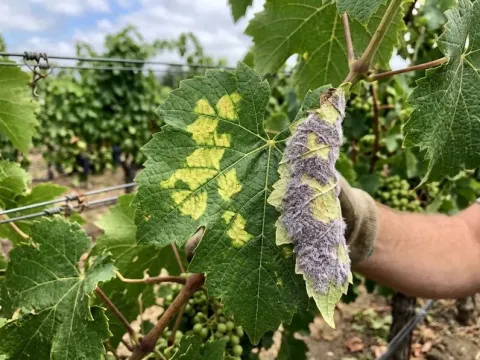
Symptoms of Chromista infection often begin as chlorotic lesions that eventually turn necrotic and brown. A characteristic white or grayish fungal-like fuzz, consisting of sporangiophores, often appears on the underside of leaves in humid conditions.
For soil-borne pathogens like Pythium, a classic symptom is "damping-off" or "black leg" in seedlings. The stem base becomes soft and dark, leading to the collapse and death of young plants.
Infection of fruits and tubers, such as in the case of potato late blight, manifests as firm, depressed brown lesions. The internal tissue quickly decays as the disease progresses, especially if secondary bacteria invade the affected areas.
In vineyards, downy mildew (Plasmopara viticola) causes oily-looking spots on leaves. During high humidity, these spots develop a white, downy layer, followed by tissue necrosis and premature leaf drop.
Systemic infections cause wilting, stunted growth, and general decline, as the pathogen interferes with the plant’s vascular system and impairs nutrient uptake by the roots.
Moisture is the primary driver for the development of Chromista pathogens. Zoospores require free water to move and reach the host plant, making heavy rainfall, persistent dew, or overhead irrigation critical triggers for outbreaks.
The optimal temperature range for the rapid development and spread of most Chromista species is between +15°C and +25°C. Within this range, the incubation period is significantly reduced, facilitating quick secondary infections.
High planting densities and poor aeration create a humid microclimate within the crop canopy, which is highly conducive to spore germination and establishment of the disease.
The presence of water films on plant surfaces for several consecutive hours is typically sufficient for successful infection, even in the absence of prolonged rain.
The persistence of the pathogen in soil or plant debris ensures that the disease can re-emerge year after year, particularly in continuous cropping systems where susceptible species are grown repeatedly.
Chromista pathogens cause significant economic losses in agriculture, capable of devastating global harvests of essential crops such as potatoes, tomatoes, and grapes.
Late blight outbreaks can destroy entire fields within a few weeks if not managed, leading to severe yield losses and food security concerns.
Root rot caused by Pythium species leads to thinning of stands, forcing farmers to reseed or manage gaps in production, which increases operational costs.
The quality of harvested produce is often severely compromised; fruits and tubers lose their marketability, and storage rot leads to further post-harvest losses.
High costs associated with specialized fungicides and the frequency of necessary applications significantly impact the profitability of agricultural enterprises.
Crop rotation is a fundamental management strategy. Avoiding susceptible crops on infested fields for several years helps deplete the pathogen inoculum in the soil.
Utilizing resistant or tolerant cultivars is the most sustainable and cost-effective method of control, significantly reducing the reliance on chemical treatments.
Agronomic practices such as improving soil drainage, timely removal and destruction of crop residues, and maintaining proper plant spacing are crucial for disease prevention.
Chemical control requires specific active ingredients. Fungicides from the phenylamide, strobilurin, or copper-based groups are effective against Chromista, provided they are applied at the correct growth stages.
Integrated Pest Management (IPM) using weather-based monitoring models allows for precise timing of fungicide applications, preventing unnecessary chemical use and ensuring better efficacy against the pathogen.