
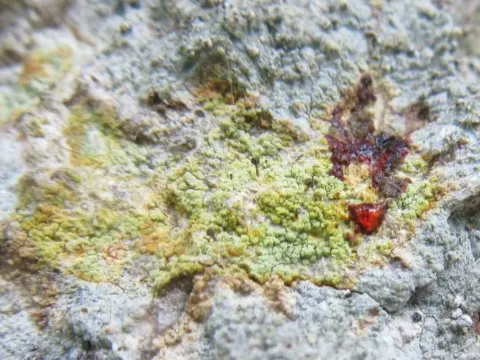
Chaenotheca ferruginea
Chaenotheca ferruginea
Chaenotheca ferruginea is not a plant pathogen and does not cause diseases in agricultural crops or forest trees.
What the section contains
Chaenotheca ferruginea
It is scientifically classified as a lichen, which is a symbiotic association between a fungus and algae, functioning as an epiphyte on tree bark.
The organism obtains nutrients from the atmosphere, rainfall, and dust particles rather than extracting them from the host tree.
The common name, rusty pin lichen, refers to the distinctive color of its thallus, which is a natural characteristic rather than a sign of infection.
In agronomy, this species is correctly identified as a beneficial or neutral ecosystem component rather than a target for pest or disease control programs.
The visual signs include a fine, granular, or crustose coating on the bark surface, usually appearing in patches.
The color is typically rusty-brown or greenish-grey, which creates the impression of a stained bark surface.
Tiny reproductive structures called apothecia appear as small black pins, which are a defining feature for identification under magnification.
It is predominantly found on the bark of old conifers and hardwoods, specifically within deep cracks and fissures.
Unlike fungal pathogens, it causes no rotting, wilting, tissue necrosis, or structural deformation of the tree bark.
Chaenotheca ferruginea thrives in shaded, humid environments where bark surfaces retain moisture for extended periods.
It avoids direct sunlight, which is why colonies are most frequently observed on the northern or protected sides of tree trunks.
The presence of this lichen is highly dependent on air quality, as it acts as a bioindicator and is sensitive to atmospheric pollution.
It prefers a specific acidic pH level on the bark substrate, which is common in older, mature trees in stable ecosystems.
Spread is facilitated by wind-dispersed spores that colonize new areas when environmental humidity and substrate conditions are favorable.
This lichen is considered harmless to trees as it does not penetrate the cambium or vascular tissues.
It does not compete with the tree for water or nutrients and is purely dependent on the bark surface for physical support.
There is no evidence that Chaenotheca ferruginea leads to decreased yield or poor health in fruit or timber trees.
While some people worry that heavy growth could inhibit bark breathing, this is not documented as a significant risk to tree survival.
The lichen is actually beneficial for biodiversity, providing habitat for various micro-organisms within the forest ecosystem.
There is no requirement to control or eradicate Chaenotheca ferruginea, as it poses no threat to plant health.
If aesthetic management of garden trees is desired, manual removal using a soft brush is sufficient to clear the surface.
Preventative measures to limit excessive growth involve proper tree care, including pruning and spacing to maintain airflow around trunks.
The use of fungicides is not recommended, as these chemicals are ineffective against lichen biology and can be harmful to the environment.
Focusing on overall tree vitality through proper nutrition and watering remains the best strategy for managing bark health.